
In short
Your build pipeline can push code straight to production, so it holds powerful keys. If attackers compromise it, they can slip malicious code into every release unnoticed.
CI/CD pipelines have broad access to build, test, and deploy code — a compromised pipeline can inject malicious code directly into production, making pipeline security a high-value attacker target.
Think of it like this
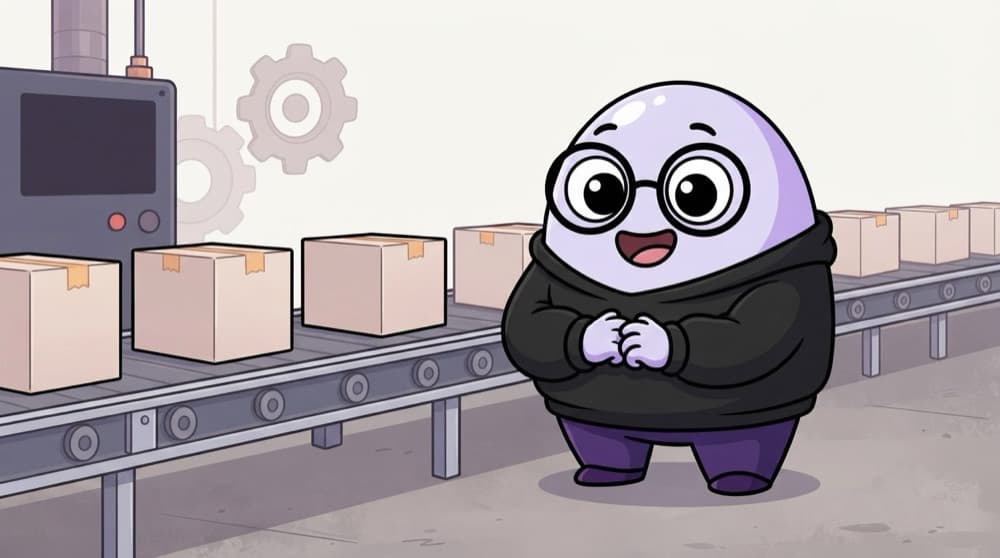
The factory conveyor belt
A factory conveyor takes raw parts and ships finished products. If a saboteur tampers with the belt, every product that follows is affected. A CI/CD pipeline is that belt for software, so guarding it protects everything it ships.
Watch it happen
A secured pipeline
1/5Code is committed, ideally reviewed and protected by branch rules.
The big ideas
What you need to know
No secrets in code
Pull keys and tokens from a secrets manager at run time. Hard coded secrets leak into git history forever.
Least privilege runners
Give the pipeline only the deploy permissions it needs, with short lived credentials, not god mode keys.
Verify what you ship
Sign artifacts and check the signature before deploy, so swapped or tampered builds are caught.
Protect the source
Require reviews and branch protection, so one bad commit cannot sail into production unseen.
Save yourself the pain
Common mistakes
Oops
Storing deploy keys as plain text in the pipeline config.
Do this instead
Use a secrets manager and inject at run time. Plaintext keys in config leak the moment the repo is shared.
Oops
Giving the CI runner broad, permanent cloud admin.
Do this instead
Scope its permissions tightly and use short lived credentials, so a compromised runner cannot own the account.
Your mission
Harden a sample pipeline
Quick check
Why is a CI/CD pipeline an attractive target for attackers?
Go deeper
- 1Audit a sample CI/CD pipeline configuration for hardcoded secrets or overly broad permissions.
- 2Learn why supply chain attacks (compromising a build pipeline) are an increasingly common real threat.
- 3Understand secrets management (not hardcoding credentials in pipeline configs) as a core defense.
More topics at this stop
 Shared Responsibility Model
 Cloud IAM Security
 Securing Cloud Storage
 Cloud Network Security (VPCs, Security Groups)
 Cloud Security Posture Management (CSPM)
 Container & Kubernetes Security
 Cloud Compliance Basics
 Multi-Cloud Security Considerations

Stuck on this topic? Ask an Insider
Get 1:1 guidance from people who've walked this exact path — on the InsideEdge app.
