
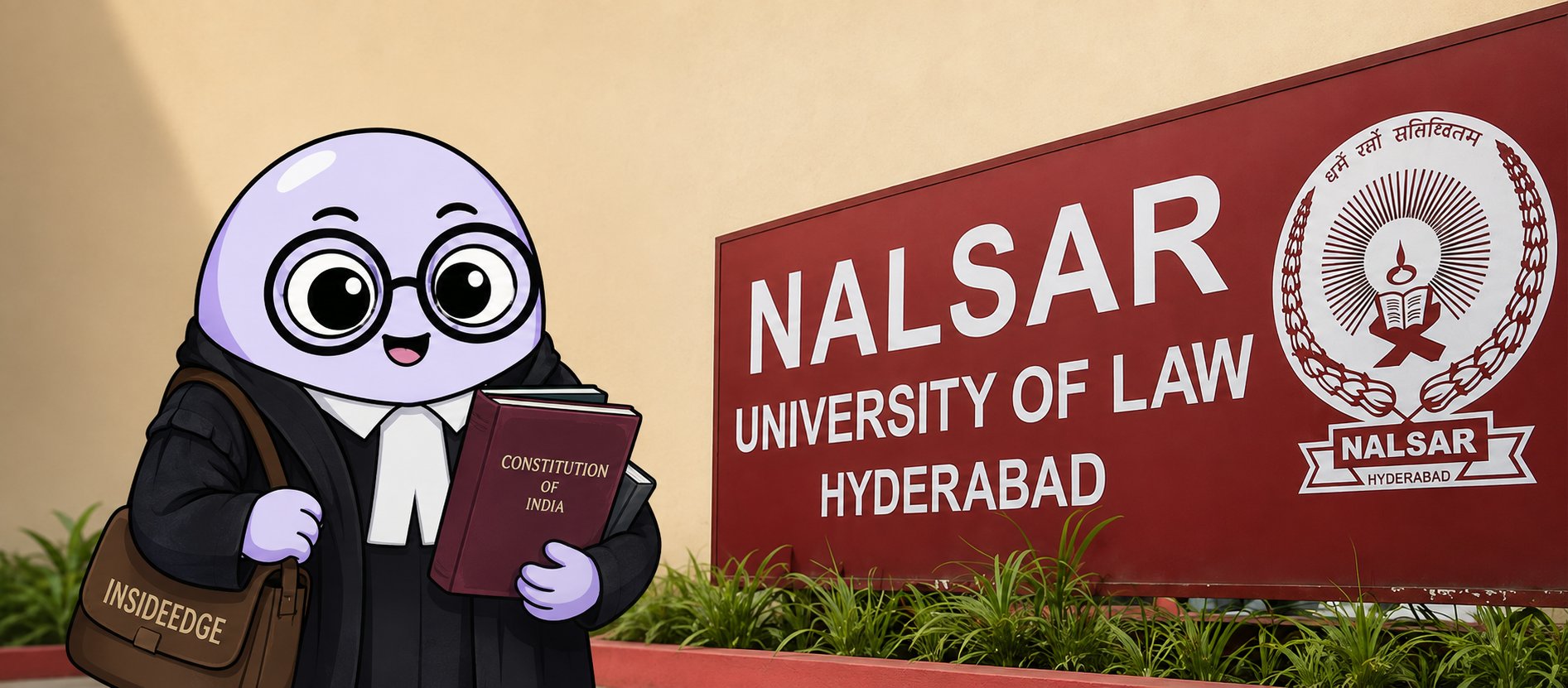
Imagine spending five years studying constitutional law, freedom of speech and the right to protest, only to be told that protesting could stop you from becoming a lawyer.
That is roughly where NALSAR University of Law’s 2026 graduating batch found itself on August 13.
What started as a disagreement over Chief Justice of India Surya Kant being proposed as a convocation chief guest quickly escalated into a national debate involving NALSAR students, the Bar Council of India (BCI), senior lawyers and eventually the Supreme Court itself.
Here is how the controversy unfolded.
July 22–23: A Supreme Court Hearing Triggers the First Objection
The roots of the dispute go back to a Supreme Court hearing concerning allegations of police excesses against protesters at Jantar Mantar.
During an urgent mentioning on July 22, CJI Surya Kant reportedly declined an offer to watch videos of the alleged police action and told the lawyer not to waste the Court’s time.
That did not sit well with some students at NALSAR.
On July 23, the first student representation was submitted to the university administration asking it to reconsider the proposed invitation to the CJI for the convocation. Students argued that a graduation ceremony should reflect values such as constitutional rights, access to justice and engagement with grievances.
This was not initially a boycott or disciplinary battle. It was a representation to the university asking it to reconsider its choice.
The Protest Grows: Hundreds of Students Back the Demand
The first representation did not remain an isolated letter.
According to reports, about 70 outgoing students signed the original representation. Around 380 students from the 2027 to 2031 batches later extended support. Other reporting put the combined support for multiple representations at roughly 350 to 450 students.
That matters because NALSAR has around 1,400 students. The disagreement had become a significant campus issue rather than the opinion of a handful of students.
The students’ argument was fairly direct: they respected the office of the CJI but believed they should be able to question whether a particular person should be the face of their convocation.
Then the BCI entered the picture.
August 13: BCI Says the 2026 Batch Cannot Enrol as Advocates
On August 13, the Bar Council of India issued a circular that dramatically raised the stakes.
The BCI directed State Bar Councils not to enrol any NALSAR student who obtained a law degree in 2026 as an advocate until further orders. It also asked NALSAR to provide a report identifying people involved in organising, drafting or mobilising the campaign.
Think about what that meant for a graduating student.
Enrolment with a State Bar Council is the gateway to entering legal practice. A campus dispute about a convocation guest had suddenly become connected to whether an entire graduating batch could formally enter the profession.
The BCI said it was acting in its role as the regulator of legal education and raised concerns about organised intimidation, boycott and disruption. It also sought details about possible involvement of students, faculty members, researchers, alumni and outsiders.
A final decision had initially been proposed for August 19 after receiving NALSAR’s report.
Hours Later: The BCI Reverses the Enrolment Ban
The blanket restriction did not last long.
Following criticism and internal discussion, the BCI issued another communication allowing the students of the 2026 batch to enrol with State Bar Councils.
It said the “vast majority” of graduating students were innocent and had not participated in the alleged move to disrespect the institution.
But there was still a catch.
The BCI initially kept alive its demand for an inquiry into those who had organised or mobilised the campaign.
So while students could once again enrol, the larger question remained: could a professional regulator investigate students for participating in this kind of campus protest?
NALSAR Pushes Back on the Inquiry
NALSAR did not immediately agree to conduct the inquiry.
Vice-Chancellor Srikrishna Deva Rao said the university would first consider whether conducting such an inquiry would itself be constitutional and permissible under NALSAR’s governance framework.
The issue was to be placed before the university’s Executive Council, its highest decision-making body.
This shifted the dispute again.
It was no longer only about whether the students were right or wrong to protest. It became a question about the boundaries between a university’s autonomy and the powers of the regulator overseeing legal education.
August 13 Night: BCI Drops the Inquiry Too
Then came another reversal.
BCI Chairman Manan Kumar Mishra announced that the proceedings would be closed altogether and that there would be no further inquiry against the NALSAR students.
He said the decision came after reactions and representations from senior advocates, lawyers, students and citizens, and after the BCI was satisfied that the 2026 batch had no role in any disturbance or movement.
Within a matter of hours, the situation had moved from:
No enrolment → enrolment allowed but inquiry continues → inquiry dropped entirely.
But the story still was not finished.
August 14: The CJI Himself Criticises the BCI’s Action
On August 14, the controversy reached the Supreme Court.
A Bench led by CJI Surya Kant criticised the BCI’s action. The CJI said the dispute was essentially between the students and him and questioned why the BCI had intervened.
More importantly for students, he said that even if young people make incorrect statements, they still have a right to protest.
The Supreme Court issued notice and directed that no punitive action be taken by the BCI against NALSAR students or faculty, or students and faculty of other national law universities, in connection with the incident. The BCI was asked to file its response within two weeks.
The CJI even encouraged NALSAR graduates to enrol, join the Supreme Court Bar and participate in legal-aid work.
Why This Matters Even If You Don’t Study Law
The NALSAR row raises a question that exists on almost every college campus:
How much space should students have to disagree with the institutions that control their education and careers?
For law students, the example was especially sharp. A student representation concerning a convocation guest briefly became connected to their ability to enter the profession they had spent years studying for.
The immediate enrolment threat and BCI inquiry have now been withdrawn. But the Supreme Court proceeding means the larger questions around regulatory power and protection from punitive action have not simply disappeared.
The Takeaway
The NALSAR controversy began when students asked the university to reconsider a convocation guest. Within weeks, it became a debate about professional enrolment, university autonomy, regulatory authority and the right of students to protest.
For students, there is a bigger lesson here: your college experience is shaped by much more than rankings, placements and brochures. Campus politics, administration, student bodies and institutional culture can matter just as much.
Want to know what a college is actually like before spending years there?
Join InsideEdge and talk directly to current students, alumni and people who have already lived the experience.
Find an Insider. Ask anything
App Download Link - https://join.insideedge.club/VKbh/h8ft8hxo