
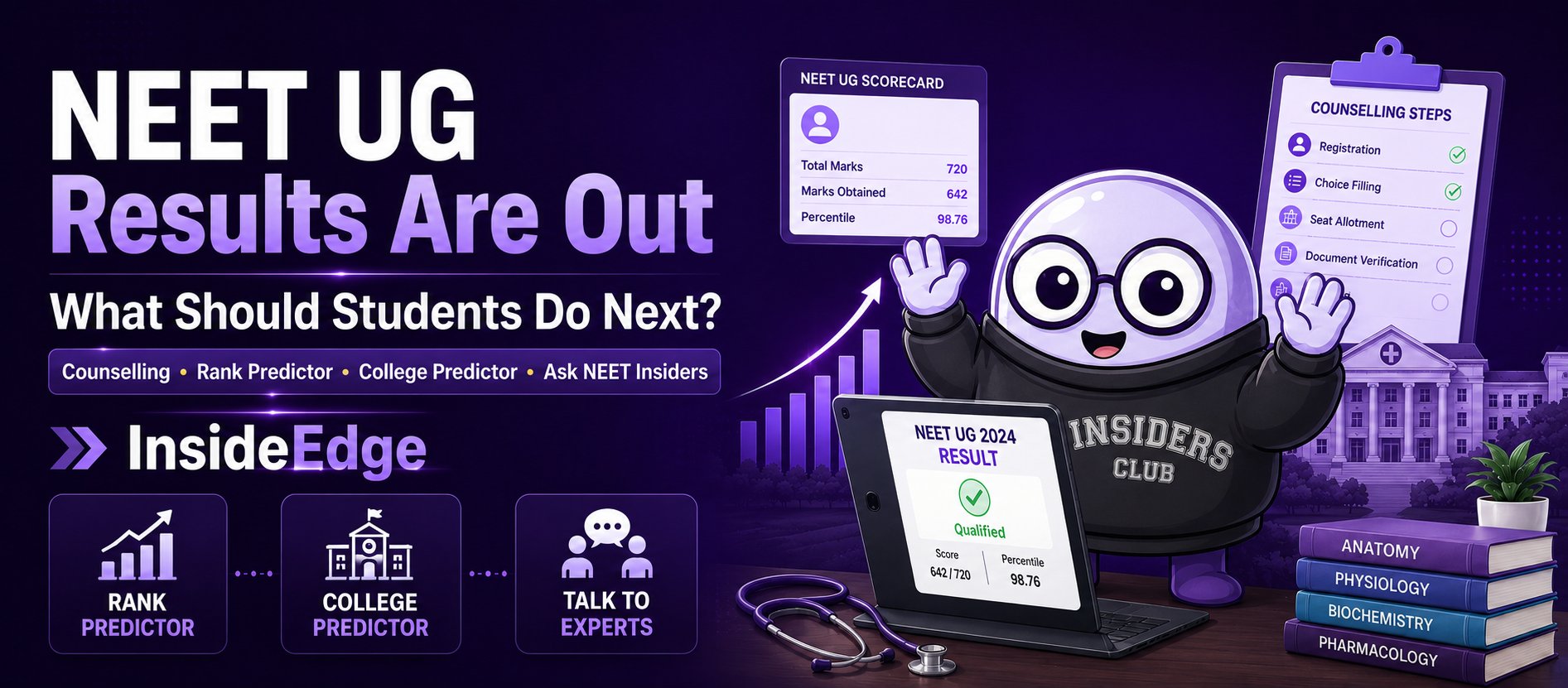
The NEET UG 2026 results have been announced, but the admission journey is not over yet. Students must now prepare for counselling, research colleges, organise documents and create a smart preference list.
Here is a step-by-step guide to what NEET aspirants should do after the results.
1. Download and Verify Your NEET UG 2026 Scorecard
Download your scorecard from the official NEET website and check:
NEET UG 2026 score and percentile
All India Rank
Category rank
Qualifying status
Name, roll number and personal details
Save multiple digital and printed copies. Contact the official NTA helpdesk immediately if you notice any discrepancy.
2. Understand Your Rank and Admission Chances
Your marks show your performance, but your rank will largely determine the colleges and courses available during counselling.
Consider your:
All India Rank and category rank
State domicile
Preferred course
Government or private college preference
Budget
Previous years’ closing ranks
Students can use the InsideEdge NEET Rank Predictor to estimate their possible rank range and start planning accordingly.
The prediction should be treated as a planning tool—not a guarantee. Final admission chances depend on official ranks, seat availability, category, counselling rounds and that year’s competition.
3. Register for the Right Counselling Process
NEET admission does not happen through a single counselling portal.
I. MCC Counselling
The Medical Counselling Committee conducts counselling for seats covered under the All India Quota and participating institutions, including several central and deemed universities.
Students should regularly check the official MCC portal for:
Registration dates
Counselling schedule
Seat matrix
Choice-filling window
Allotment results
Reporting guidelines
II. State Counselling
Students seeking state-quota seats must separately register with the relevant state counselling authority.
State counselling rules may differ based on:
Domicile requirements
Reservation policies
Registration fees
Document formats
Bond conditions
Choice-filling and reporting dates
Registering for MCC counselling does not automatically register a student for state counselling.
4. Keep All Documents Ready
Start preparing documents before counselling registration opens.
Commonly required documents include:
NEET scorecard and admit card
Class 10 and Class 12 certificates
Class 12 marksheet
Government-issued identity proof
Passport-size photographs
Domicile certificate
Category, EWS or PwBD certificate, if applicable
Migration and character certificates
Medical fitness certificate
NRI or sponsorship documents, where applicable
Check the official counselling bulletin for the exact format and validity requirements. Incorrect or outdated certificates may lead to rejection of the claimed category or benefit.
5. Identify Colleges You May Get Into
After understanding your rank, use the InsideEdge NEET College Predictor to explore medical colleges that may be available based on your rank and other admission factors.
A college predictor can help you:
Discover suitable colleges
Identify dream, realistic and safer options
Prepare before choice filling begins
Build a more informed preference list
Predictions may change because of seat availability, reservation rules, student preferences and movement across counselling rounds.
6. Research Colleges Beyond Their Cut-Offs
Do not choose a college based only on its name or previous cut-off. Research the complete student experience.
Check:
Recognition and approval status
Attached teaching hospital
Patient inflow and clinical exposure
Faculty and academics
Internship experience
Hostel conditions
Location and safety
Tuition and additional charges
Service bond and penalties
Campus culture
PG preparation environment
For private and deemed universities, calculate the complete cost of the course. Hostel fees, security deposits, examination charges and other expenses can significantly increase the total amount.
7. Speak to Medical Students and Experienced Professionals
Official websites can provide fees, infrastructure and admission rules. They may not reveal what clinical exposure, hostel life, faculty support or academic pressure are actually like.
Through InsideEdge, NEET aspirants can connect one-to-one with medical students, alumni and experienced professionals to ask questions such as:
Which colleges are realistic for my rank?
Is a particular private college worth its fees?
How are the patient inflow and clinical exposure?
What are the actual hostel conditions?
Should I prioritise the college, city or hospital exposure?
How will the service bond affect my plans?
Should I choose another medical course or take a drop?
What mistakes should I avoid during counselling?
A practical three-step approach is:
Use the NEET Rank Predictor to understand your rank range.
Use the NEET College Predictor to shortlist possible colleges.
Connect with an Insider to understand the reality of those options before making a decision.
8. Fill Choices in Your Genuine Preference Order
During counselling, arrange colleges according to where you genuinely want to study—not according to where you think you are most likely to get admission.
Create three categories:
Dream colleges: Competitive but preferred options
Realistic colleges: Options that match your rank range
Backup colleges: Safer choices you would genuinely accept
Before locking your choices, verify the college, course, fee structure, location, seat category and bond conditions.
Do not include a college you would never join, and avoid waiting until the final minutes to lock your choices.
9. Understand the Rules of Every Round
Counselling may include multiple rounds and stray-vacancy stages. Each round can have different rules for:
Fresh registration
Seat upgradation
Free exit
Resignation
Security-deposit forfeiture
Eligibility for later rounds
Reporting requirements
Read the current year’s official counselling scheme before accepting, upgrading or resigning from a seat.
10. Complete Reporting on Time
After receiving a seat allotment, students may need to:
Download the allotment letter
Select the acceptance or upgradation option
Report online or physically
Submit original documents
Complete medical-fitness formalities
Pay the admission fee
Collect confirmation of admission
Receiving an allotment does not complete admission. Missing the reporting or payment deadline can result in cancellation of the seat.
What If Your Rank Is Lower Than Expected?
Do not make an immediate decision based on disappointment.
Depending on your interests and eligibility, you can consider:
Participating in all relevant counselling rounds
Exploring private or deemed universities
Considering BDS, BAMS, BHMS or other healthcare programmes
Taking a structured drop year
Reassessing your budget and location preferences
Before taking a drop, consider the academic, financial and emotional commitment involved. Speak to students and professionals who have already experienced the process.
Final Checklist
Before counselling begins, make sure you have:
Downloaded and verified your scorecard
Understood your rank and category position
Used the rank and college predictors
Registered for the applicable counselling processes
Prepared all required documents
Researched fees, bonds and clinical exposure
Created dream, realistic and backup college lists
Spoken to experienced medical students or professionals
Set reminders for every official deadline
Final Word
The NEET result is only one part of the admission journey. Counselling choices, college research and timely action can significantly influence the outcome.
Use the InsideEdge NEET Rank Predictor and NEET College Predictor to understand your possible options. Then connect with experienced professionals and medical students on InsideEdge to ask anything about counselling, colleges, fees, clinical exposure and medical careers.
Find an Insider. Ask anything. Make a better-informed decision.