
Bias & Fairness in AI
Part of the AI Engineer Roadmap
In short
Models learn from past data, and past data carries past unfairness. A loan or hiring model can quietly treat groups differently. You have to measure it, because it won't announce itself.
Systematic, unfair skew in model outputs across groups — often inherited from training data — a real risk that requires deliberate testing, not assumption of neutrality.
Think of it like this
The selector who watched one city
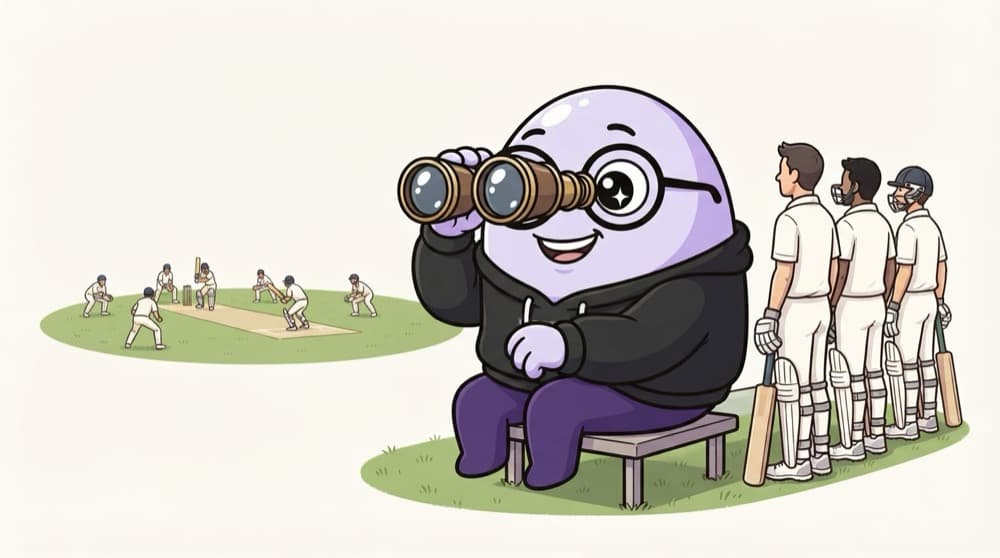
Imagine a cricket selector who only ever watched matches in one city. He'd pick great players, but almost all from that city, and miss talent everywhere else. He isn't evil, his data was narrow. Models trained on narrow or skewed data behave the same way.
Watch it happen
Selection rate by group (example data)
1/5A shortlisting model is run on 3,000 applicants. We split the results by a sensitive attribute.
The big ideas
What you need to know
Bias starts in data
Skewed samples, historical decisions and missing groups all teach the model unfair patterns.
Removing the column isn't enough
Drop gender and the model may still learn it from proxies like hobbies, names or pincode.
Pick a fairness metric
Equal selection rates, equal error rates and equal precision can't all hold at once. Choose what fits the decision.
Test by slice
Always report accuracy and errors for each group, not just one overall number.
See it in code
Walk through the code
1import pandas as pd2 3df = pd.DataFrame({4 "group": ["A", "A", "A", "B", "B", "B", "B", "A"],5 "shortlisted": [1, 1, 0, 0, 1, 0, 0, 1],6})7 8rates = df.groupby("group")["shortlisted"].mean()9print(rates)10 11ratio = rates.min() / rates.max()12print(f"Selection rate ratio: {ratio:.2f}")13if ratio < 0.8:14 print("Flag for review: one group is selected much less often")1/3Each row is one applicant: their group and whether the model shortlisted them.
A first fairness check: selection rate per group and the ratio between them. Libraries like Fairlearn add many more metrics.
Save yourself the pain
Common mistakes
Oops
Reporting one overall accuracy of 92% and calling the model fair.
Do this instead
Break metrics down by group. 92% overall can hide 70% for a smaller group.
Oops
Assuming an LLM is neutral because nobody programmed bias into it.
Do this instead
LLMs learn from internet text, which has stereotypes. Test outputs across names, genders and regions.
Your mission
Probe an LLM for bias
Quick check
You removed the gender column, but your model still shortlists women less. What's a likely cause?
Go deeper
- 1Test a model with prompts that vary only demographic-related terms and compare outputs.
- 2Learn common sources of bias: training data imbalance, labeling bias, proxy variables.
- 3Read a case study of a real AI fairness failure and what caused it.
More topics at this stop
 LLM Evaluation Metrics (BLEU, ROUGE, Perplexity)
 Human Evaluation & LLM-as-Judge
 AI Safety Principles
 Guardrails & Content Moderation
 Hallucination Detection & Mitigation
 Explainable AI (XAI)
 Data Privacy in AI Systems
 Responsible AI Governance

Stuck on this topic? Ask an Insider
Get 1:1 guidance from people who've walked this exact path — on the InsideEdge app.
