
Data & modeling trade-off discussions
Part of the AI Engineer Roadmap
In short
"Why XGBoost and not a neural net?" "Why not just collect more data?" Interviewers push on your choices to see if you understand consequences. A calm, structured answer beats defending your pick at all costs.
Interviewers often push on trade-offs to see if you understand consequences, not just techniques — expect 'why this and not that' throughout a conversation.
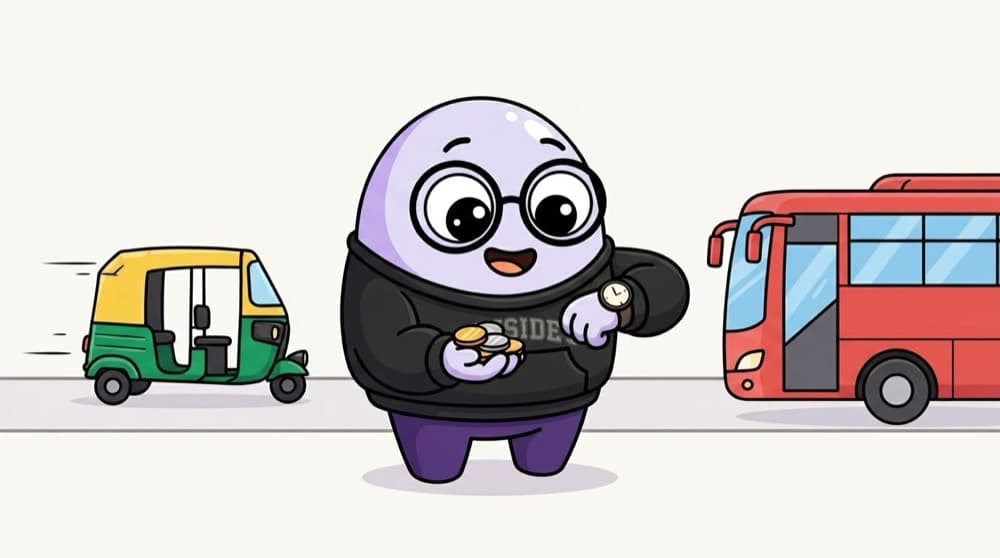
Think of it like this
Auto or bus to college?
Late for an exam? Take the auto, even though it costs more. Normal day with time to spare? The bus is fine and cheaper. Neither is always right; it depends on what matters today. Good modelling choices work the same way: name what you're optimising, then choose.
Watch it happen
Structure of a trade-off answer
1/5"For a churn model, we had 50,000 rows of tabular data and needed predictions explained to the sales team."
The big ideas
What you need to know
Name the criteria out loud
Accuracy, latency, cost, explainability, data needs, maintenance. Saying them shows you think beyond one metric.
Say what you gave up
Every choice has a cost. Admitting it honestly sounds senior, not weak.
Back it with evidence
"Boosting beat logistic regression by 4 points of recall on validation" beats "boosting is usually better".
Say when you'd change your mind
"If we needed real-time predictions on a phone, I'd pick the smaller model."
Save yourself the pain
Common mistakes
Oops
Defending your choice as if it were the only correct answer.
Do this instead
Agree the alternative has merits, then explain why your criteria pointed the other way in that situation.
Oops
Talking only about model accuracy.
Do this instead
Bring in data size, labelling cost, latency, explainability and who has to maintain it.
Your mission
Prepare three trade-off stories
Quick check
The interviewer asks "Why didn't you just use a neural network?" What's the strongest kind of reply?
Go deeper
- 1Practice articulating trade-offs for decisions you made in real projects.
- 2Prepare to defend a choice while also acknowledging its downsides honestly.
- 3Avoid one-sided answers — strong candidates show they considered alternatives.
More behavioral at this stop
 Explain your projects
 Team collaboration
 Handling ambiguous problem statements
 Communicating results to non-technical stakeholders

Stuck on this topic? Ask an Insider
Get 1:1 guidance from people who've walked this exact path — on the InsideEdge app.
