
Automated Testing in Pipelines
Part of the Backend Developer Roadmap
In short
A test you have to remember to run is a test you'll forget to run. Put tests in the pipeline and broken code can't reach main, even on a Friday evening.
Running your test suite automatically as part of CI, so broken code is caught before it ever reaches production — and often blocking merges/deploys if tests fail.
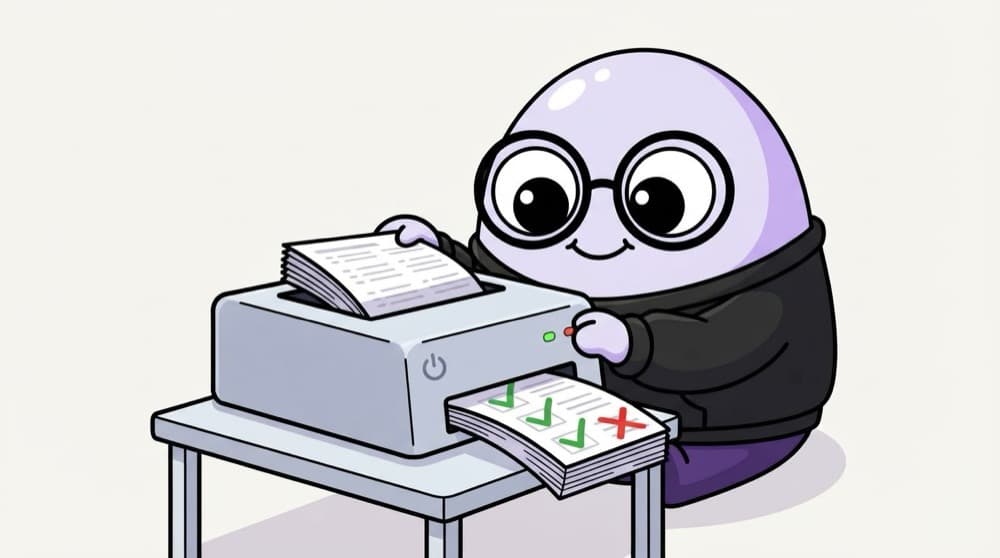
Think of it like this
The OMR checking machine
Board exams don't trust one tired teacher with lakhs of answer sheets. An OMR machine checks every sheet the same way, in seconds, with no mood swings. Pipeline tests are your OMR machine: same checks, every push, no favourites.
Watch it happen
Fail fast, cheapest checks first
1/5ESLint and tsc run first. They take seconds and catch typos before slower tests waste time.
The big ideas
What you need to know
The test pyramid
Many fast unit tests, fewer integration tests, a handful of end-to-end tests. Speed keeps people from skipping them.
Fast feedback wins
Run cheap checks first and stop at the first failure. A pipeline that takes 40 minutes gets ignored.
Real dependencies in CI
Service containers give each run a fresh Postgres or Redis, so tests never fight over a shared test database.
Make the check required
Turn on branch protection so the test job must pass before merging. Optional checks get skipped.
See it in code
Walk through the code
1jobs:2 test:3 runs-on: ubuntu-latest4 services:5 postgres:6 image: postgres:177 env:8 POSTGRES_PASSWORD: test9 ports: ["5432:5432"]10 options: --health-cmd pg_isready --health-interval 5s11 env:12 DATABASE_URL: postgres://postgres:test@localhost:5432/postgres13 steps:14 - uses: actions/checkout@v415 - run: npm ci && npm run lint && npm test1/4Start a Postgres 17 container next to the job, reachable on localhost:5432.
Every run gets its own empty Postgres. When the job ends, the database is thrown away, so tests can't leave a mess for the next run.
Save yourself the pain
Common mistakes
Oops
Treating flaky tests with 'just re-run it'.
Do this instead
A flaky test trains everyone to ignore red. Fix it, or quarantine it with a ticket, the same day.
Oops
Running integration tests against one shared, long-lived staging database.
Do this instead
Tests then fail because of someone else's data. Give every pipeline run its own fresh database container.
Your mission
Make tests a gate
Quick check
Your pipeline has lint (10 s), unit tests (1 min) and E2E tests (8 min). What order makes most sense?
Go deeper
- 1Configure your CI pipeline to fail the build if any test fails.
- 2Add a required status check so pull requests can't merge with failing tests.
- 3Include linting and type-checking alongside tests in the same pipeline.
More topics at this stop
 CI/CD Concepts
 GitHub Actions
 Environment Configs
 Blue-Green Deployment
 Rolling Deployments
 PM2
 Nginx as Reverse Proxy
 Load Balancing Basics

Stuck on this topic? Ask an Insider
Get 1:1 guidance from people who've walked this exact path — on the InsideEdge app.
