Caching strategies
Part of the Backend Developer Roadmap
In short
"How would you make this faster?" usually leads to caching. The follow-up is where interviews are won: when does the cache go stale, and what happens when it does?
Being able to discuss where and how you'd add caching to a system, and the trade-offs of different invalidation strategies — a very common follow-up in system design interviews.

Think of it like this
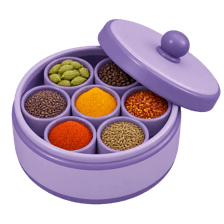
The masala dabba next to the stove
Haldi, jeera and mirchi sit in a small box right by the stove, because you use them every day. The big jars stay in the storeroom. Refill the dabba when it runs low, and don't forget it when you switch brands.
Watch it happen
Cache-aside: read, then update
GET product:42
1/6First, check the cache.
The big ideas
What you need to know
Cache-aside
The app checks the cache, falls back to the database and fills the cache. The most common pattern.
Write-through and write-behind
Write-through updates cache and database together. Write-behind writes the cache first and the database later, faster but riskier.
TTL and invalidation
Every key should expire. On updates, delete or refresh the key. Decide how stale is acceptable.
Stampedes
When a hot key expires, thousands of requests may hit the database at once. Use locks, early refresh or jittered TTLs.
See it in code
Walk through the code
1async function getProduct(id: string) {2 const key = `product:${id}`;3 const cached = await redis.get(key);4 if (cached) return JSON.parse(cached); // hit: no DB query5 6 const product = await db.product.findUnique({ where: { id } });7 if (product) await redis.set(key, JSON.stringify(product), "EX", 300); // 5 min TTL8 return product;9}10 11async function updatePrice(id: string, pricePaise: number) {12 await db.product.update({ where: { id }, data: { pricePaise } });13 await redis.del(`product:${id}`); // invalidate after the write14}1/3Try the cache first. A hit returns immediately.
Deleting after the write is simpler and safer than writing the new value into the cache, which can race with a concurrent read.
Save yourself the pain
Common mistakes
Oops
Caching without a TTL and hoping invalidation always works.
Do this instead
Always set a TTL as a safety net, even if you also delete keys on updates.
Oops
Caching per-user data under a shared key like "dashboard".
Do this instead
Include the user or tenant in the key, like dashboard:user:7, or users see each other's data.
Your mission
Measure a cache
Quick check
With cache-aside, what should the API do after updating a product's price in the database?
Go deeper
- 1Prepare a real example from your own projects where caching mattered.
- 2Be ready to explain cache-aside, write-through and TTL-based invalidation from memory.
- 3Practice reasoning about what NOT to cache — highly personalized or frequently changing data.
More technical at this stop
 Node.js, Express, Databases, APIs
 System design (backend)
 Database design & normalization
 HTTP & REST fundamentals
 Concurrency & the event loop
 Security (OWASP Top 10)
 Debugging distributed systems

Stuck on this topic? Ask an Insider
Get 1:1 guidance from people who've walked this exact path — on the InsideEdge app.
