AI Tools for Requirements Writing
Part of the Business Analyst Roadmap
In short
A blank requirements page is the slowest part of any BA's week. AI can give you a decent first draft in a minute. Your job moves from typing to checking, which is where your value always was.
Using AI to draft initial requirement statements, user stories, or acceptance criteria — accelerating first drafts while still requiring human review for accuracy and business context.
Think of it like this
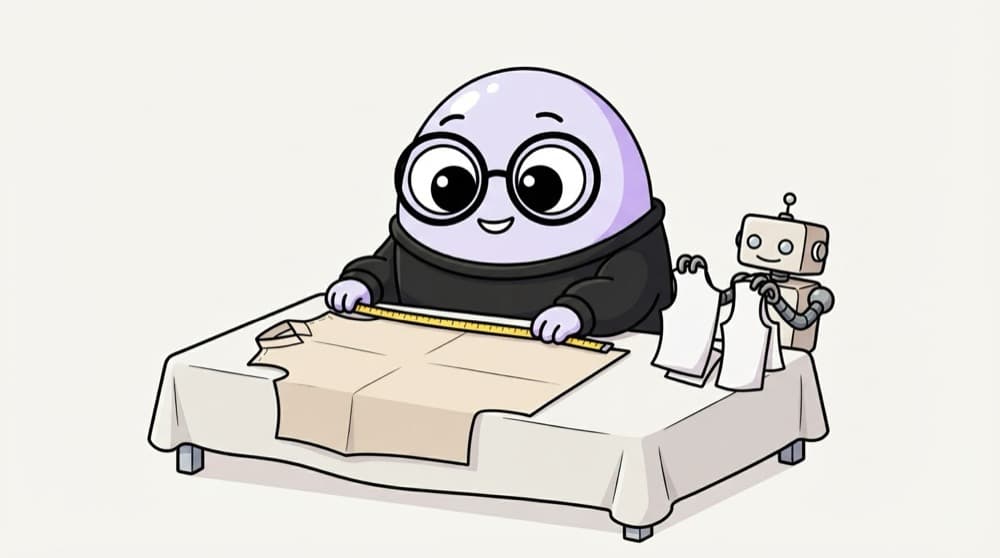
The tailor's helper
In a busy tailoring shop, the helper cuts cloth fast from the pattern. The master tailor still measures the customer, checks every piece and fixes the collar. AI is the quick helper. You are the master who knows this customer's shoulders.
Watch it happen
Drafting user stories with an AI assistant
Context + 3 rules
1/5The BA pastes the goal, the user roles and three business rules, with no customer data in it.
The big ideas
What you need to know
Speed on first drafts
AI is great at turning rough notes into tidy user stories, acceptance criteria and glossary entries you can then correct.
Context in, quality out
Give it the goal, roles, rules and an example story. A vague request gets you generic stories that fit any app.
You own every line
Check each requirement against what stakeholders actually said. AI happily invents features and rules that sound right.
Mind the data
Use only tools your company has approved, and strip out customer names, numbers and secrets before pasting anything.
See it in code
Walk through the code
1Role: You are helping a business analyst.2Context: A college canteen wants pre-ordering3 of lunch through its app.4Users: student, canteen staff, admin.5Rules: orders close at 11:00; payment by UPI only;6 max 3 items per order.7Task: Write 5 user stories in the format8 "As a <user>, I want <goal>, so that <reason>".9Add 2 Given/When/Then acceptance criteria each.10Do not invent features beyond these rules.1/4Set the role and the business context in plain words.
A requirements-drafting prompt. Notice it gives context, users, real rules, the output format and a fence against invented features.
Save yourself the pain
Common mistakes
Oops
Copying AI-written stories straight into Jira because they look polished.
Do this instead
Read every story against your notes. Polished wording can hide a wrong rule or a feature nobody asked for.
Oops
Pasting a client's full requirements document with names and pricing into a public chatbot.
Do this instead
Use your company's approved tool, and remove personal and confidential details before you paste.
Your mission
Draft, then disagree
Quick check
Your AI draft includes a story about 'cash on delivery', but the client only accepts UPI. What went wrong and what do you do?
Go deeper
- 1Use an AI tool to draft a set of user stories from a rough feature description.
- 2Compare the AI draft against your own Phase 3 requirements writing skills for gaps.
- 3Learn where AI drafts tend to miss business-specific nuance that only a human BA would know.
More topics at this stop
 AI for Meeting Notes & Summarization
 AI for Data Analysis & Reporting
 Prompt Engineering for BAs
 AI-Assisted Process Mapping
 Evaluating AI Output Quality
 Ethical Considerations of AI in Business Analysis

Stuck on this topic? Ask an Insider
Get 1:1 guidance from people who've walked this exact path — on the InsideEdge app.
