
Understanding Technical Debt
Part of the Business Analyst Roadmap
In short
Ever wondered why a 'tiny change' takes the team two weeks? Often it's technical debt: past shortcuts the team now has to work around. BAs who understand it make fairer plans.
Shortcuts taken to ship faster now that cost more to maintain or extend later — a BA benefits from understanding this concept to have informed conversations about why 'just add one small feature' isn't always simple.
Think of it like this
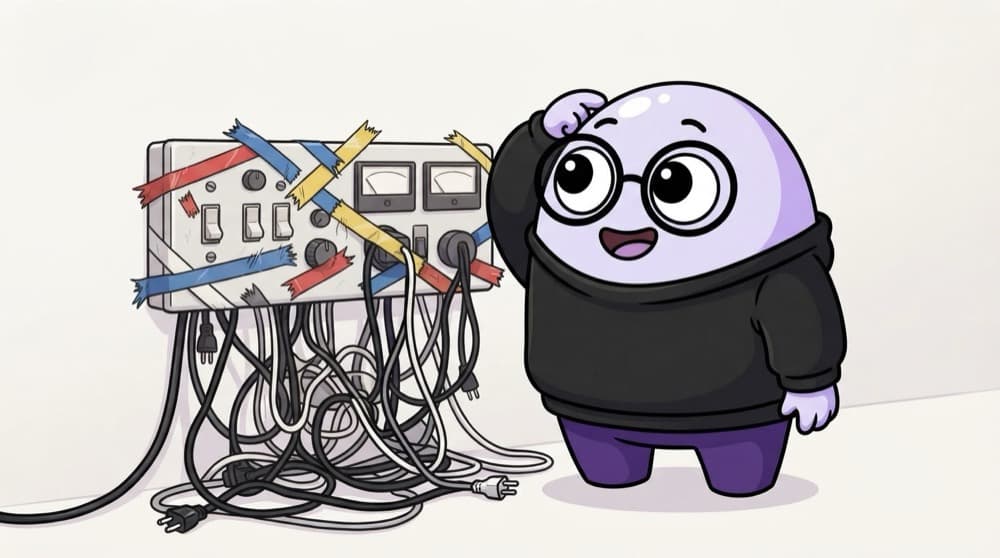
The hostel room switchboard
The switch broke, so someone taped it. Then an extension cord for the kettle. Then another one plugged into that for a heater. Each fix was quick. Now adding a lamp means untangling everything first, and one wrong tug trips the whole floor.
Watch it happen
Features shipped per sprint as debt piles up
1/5A new team ships about 10 small features each sprint. Code is clean and easy to change.
The big ideas
What you need to know
Like a loan
A shortcut borrows time now. Interest is paid later as slower, riskier changes until the debt is fixed.
Not always bad
Taking on debt to hit a real deadline can be a smart choice, if it's tracked and repaid.
Make it visible
Debt items belong in the backlog with a business reason, so the PO can prioritise them.
Translate it
'Refactor billing' means little to stakeholders. 'Cuts billing bugs and speeds up GST changes' gets a yes.
Save yourself the pain
Common mistakes
Oops
Pushing every sprint to be 100% new features.
Do this instead
Support the team reserving some capacity for debt, so delivery stays steady over time.
Oops
Dismissing 'it's tech debt' as an excuse.
Do this instead
Ask what the debt is, what it costs and what fixing it would allow. Then help make the business case.
Your mission
Spot debt in real life
Quick check
A team skipped automated tests to launch on time. What's the most likely long-term effect?
Go deeper
- 1Ask an engineer to walk you through a real example of technical debt they're managing.
- 2Learn to frame technical debt paydown in terms of future velocity, for non-technical stakeholders.
- 3Understand why a rushed requirement can directly contribute to technical debt down the line.
More topics at this stop
 How Software Systems Work (Client-Server Basics)
 Databases 101 for BAs
 APIs Explained for Non-Engineers
 System Integration Basics
 Reading a Technical Architecture Diagram
 Working With Developers & QA
 Basic Wireframing for Requirements
 No-Code / Low-Code Tools Overview

Stuck on this topic? Ask an Insider
Get 1:1 guidance from people who've walked this exact path — on the InsideEdge app.
