Common Table Expressions (CTEs)
Part of the Data Analyst Roadmap
In short
Long queries become unreadable fast. A CTE lets you name each step at the top, so your query reads like a recipe, and the next person can follow it.
A WITH clause that names a temporary result set for readability — functionally similar to a subquery, but far easier to read and reuse within a long, complex query.

Think of it like this
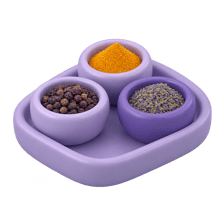
Prep bowls before cooking
Good cooks chop onions, tomatoes and spices into separate bowls before lighting the stove. Then cooking is just 'add bowl one, then bowl two'. A CTE is a prep bowl: a named, ready result you use in the final query.
Watch it happen
A query built from named steps
1/3First CTE: paid_orders keeps only paid orders from this year.
The big ideas
What you need to know
WITH name AS (...)
Starts with WITH, gives a result a name, and the main query uses it like a table.
Chain several
Separate CTEs with commas. Each can use the ones defined above it.
Readability first
CTEs mostly make queries easier to read and debug. Performance is usually similar to subqueries.
Easy to debug
Run SELECT * FROM one CTE on its own to check each step before moving on.
See it in code
Walk through the code
1WITH paid_orders AS (2 SELECT customer_id, amount3 FROM orders4 WHERE status = 'paid' AND order_date >= '2026-01-01'5),6per_customer AS (7 SELECT customer_id, SUM(amount) AS total_spent8 FROM paid_orders9 GROUP BY customer_id10)11SELECT customer_id, total_spent12FROM per_customer13ORDER BY total_spent DESC14LIMIT 10;1/3Step one: filter to paid orders this year and name it paid_orders.
Top 10 spenders this year, split into two readable steps.
Save yourself the pain
Common mistakes
Oops
Forgetting the comma between two CTEs.
Do this instead
WITH a AS (...), b AS (...) SELECT ... The comma separates CTEs. No comma before the final SELECT.
Oops
Giving CTEs names like t1, t2, x.
Do this instead
Use names that say what's inside: paid_orders, monthly_revenue, active_users.
Your mission
Refactor a messy query
Quick check
What's the main reason analysts use CTEs?
Go deeper
- 1Rewrite a nested subquery from the previous topic as a CTE and compare readability.
- 2Practice chaining 2-3 CTEs together in a single query.
- 3Adopt CTEs as your default for any query beyond a couple of joins.
More topics at this stop
 SQL Basics (SELECT, WHERE, ORDER BY)
 Aggregate Functions (COUNT, SUM, AVG)
 GROUP BY & HAVING
 Joins (INNER, LEFT, RIGHT, FULL)
 Subqueries
 Window Functions
 Date & String Functions
 Query Optimization Basics
 Database Design Basics (ER Diagrams)

Stuck on this topic? Ask an Insider
Get 1:1 guidance from people who've walked this exact path — on the InsideEdge app.
