CI/CD Pipeline Design Questions
Part of the DevOps Roadmap
In short
'Design a CI/CD pipeline for 20 microservices' tests whether you think in stages, gates and speed. They want to hear why each step is there, not just tool names.
'Design a CI/CD pipeline for a microservices application' — testing structured thinking about build, test, security, and deployment stages from Phase 6.
Think of it like this
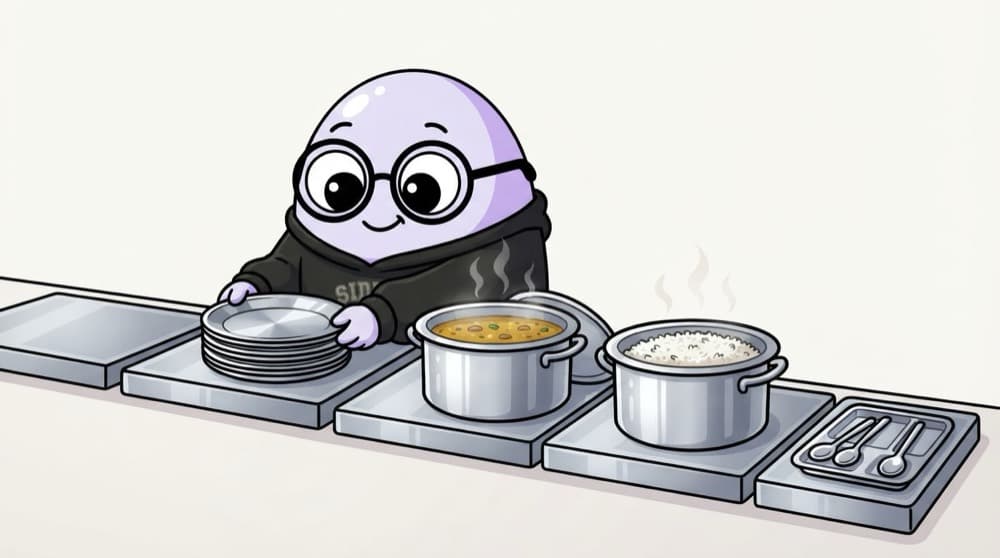
Setting up the hostel mess line
A good mess line runs in order: plates first, then dal, rice, sabzi, with a taste check before the food goes out. Put the plates at the end and the whole line jams. Pipeline design is choosing the order of counters so food moves fast and nothing bad reaches the table.
Watch it happen
A pipeline for many services
1/6Only build services whose folders changed. With 20 services, rebuilding all on every commit wastes time.
The big ideas
What you need to know
Speed is a feature
Aim for feedback in about 10 minutes. Caching, parallel jobs and change detection matter more than fancy tools.
Gates where risk is
Required reviews, passing tests and scans before merge. Approval or canary checks before production.
Immutable artifacts
Build once, tag by SHA, promote the same artifact. Never rebuild for production.
Secrets via OIDC
Let the CI job get short-lived cloud credentials through OIDC instead of storing long-lived keys.
See it in code
Walk through the code
1# Only run the orders pipeline when orders code changes2on:3 push:4 branches: [main]5 paths:6 - "services/orders/**"7 - "libs/shared/**"8jobs:9 test:10 runs-on: ubuntu-latest11 steps:12 - uses: actions/checkout@v413 - uses: actions/setup-node@v414 with: { node-version: 22, cache: npm }15 - run: npm ci && npm test --workspace services/orders1/3Trigger on pushes to main only.
paths filters are one simple way to do change detection in a monorepo. Tools like Nx or Turborepo do it with a dependency graph.
Save yourself the pain
Common mistakes
Oops
Listing tools: 'Jenkins, SonarQube, Docker, Kubernetes, ArgoCD' and stopping there.
Do this instead
Explain each stage's purpose and what failure there means. Tools are details you mention after.
Oops
Ignoring rollback and database migrations in the design.
Do this instead
Say how a bad release is undone and how schema changes stay backward compatible.
Your mission
Whiteboard a pipeline
Quick check
Your pipeline takes 45 minutes and developers are bypassing it. What's the best first fix?
Go deeper
- 1Review Phase 6 and practice sketching a full pipeline for a sample scenario.
- 2Prepare to discuss deployment strategy choice (blue-green vs canary) and why.
- 3Practice explaining how secrets and multiple environments fit into your pipeline design.
More ci/cd & automation at this stop
 Infrastructure as Code Questions
 Scripting & Automation Questions

Stuck on this topic? Ask an Insider
Get 1:1 guidance from people who've walked this exact path — on the InsideEdge app.
