
Debugging approach
Part of the Frontend Developer Roadmap
In short
'Tell me about a tough bug' or 'This doesn't work, how would you find out why?'. Interviewers aren't checking if you've seen the bug. They're checking if you have a calm, repeatable process.
Interviewers often ask how you approach a bug you've never seen before — they're evaluating your process, not just whether you 'know' the answer.
Think of it like this
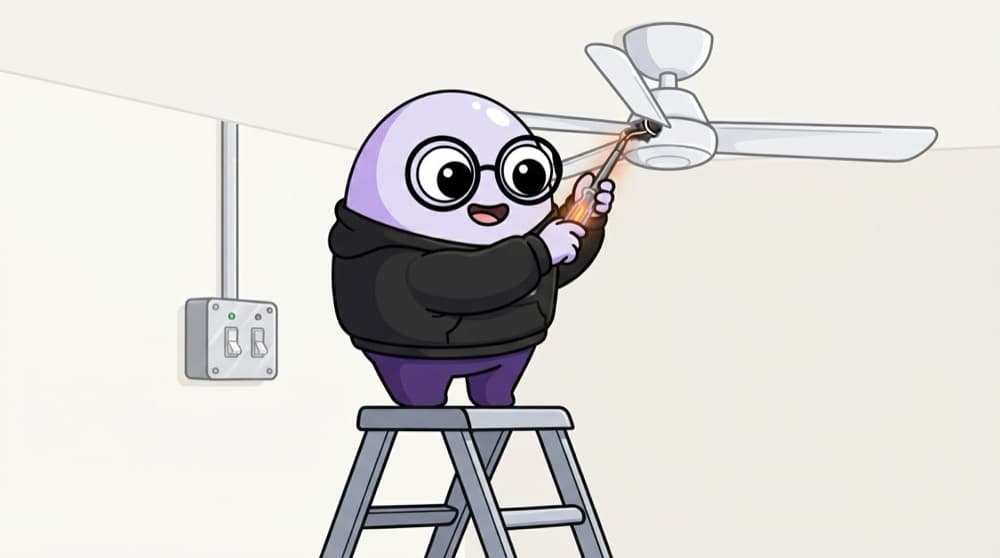
The electrician and the dead fan
A good electrician doesn't replace the whole wiring. They check the switch, then the regulator, then the fan, one at a time, until they find the faulty part. Debugging is the same: narrow it down step by step.
Watch it happen
A bug story interviewers remember
1/5'Some users saw a cart total of ₹0 right after logging in.'
The big ideas
What you need to know
Reproduce it first
If you can't make the bug happen on purpose, you can't be sure you fixed it.
Shrink the problem
Comment out parts, use git bisect, or test smaller inputs until you find the exact cause.
Use real tools
Breakpoints, the Network tab, React DevTools and console.table. Naming them shows hands-on experience.
Prevent it next time
Add a test or a type that would have caught it. Interviewers love hearing this step.
Save yourself the pain
Common mistakes
Oops
"I just googled the error and copied the Stack Overflow fix."
Do this instead
Searching is fine, but explain how you confirmed the cause and why the fix worked.
Oops
Changing five things at once until the bug disappears.
Do this instead
Change one thing at a time. Otherwise you don't know what fixed it, or what new bug you added.
Oops
Picking a bug that was just a typo.
Do this instead
Pick one with a real investigation, like a stale closure, a race condition or a timezone issue.
Your mission
Write your bug story
Quick check
The interviewer says 'the page shows no data in production but works locally'. What's the best first step?
Go deeper
- 1Prepare a real story: a tricky bug you found and how you systematically tracked it down.
- 2Practice narrating your debugging process out loud during mock problems.
- 3Structure your answer: reproduce, isolate, hypothesize, verify, fix.
More behavioral at this stop
 Explain your projects
 Team collaboration
 Code review experience
 Trade-off discussions

Stuck on this topic? Ask an Insider
Get 1:1 guidance from people who've walked this exact path — on the InsideEdge app.
