In short
Most hacks are not movie-style genius. They are the same handful of boring mistakes, repeated in app after app. OWASP keeps the list, so you can check yours first.
The industry-standard list of the ten most critical web application security risks — a baseline checklist covering both frontend and backend vulnerabilities every full-stack developer should know.
Think of it like this
The society guard's night checklist
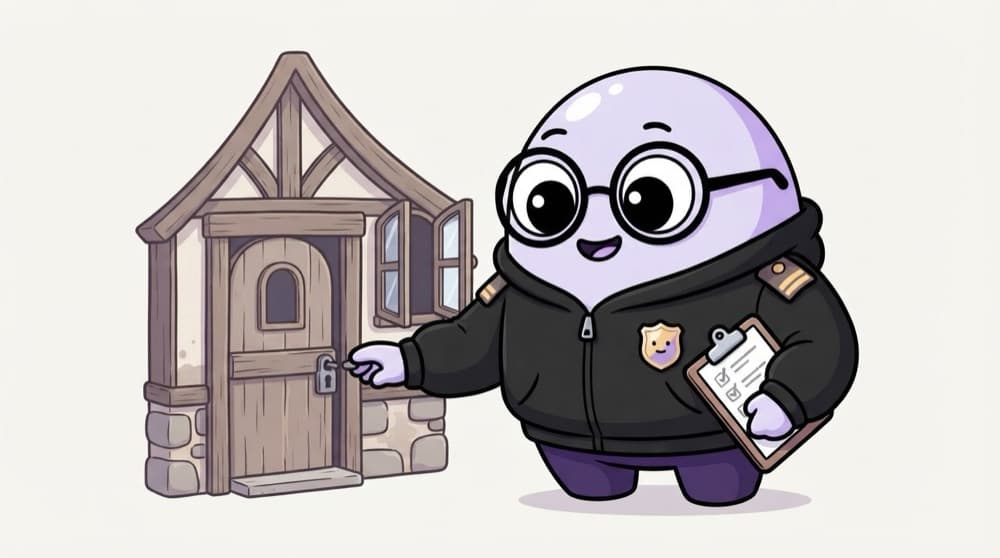
A good watchman doesn't guess. He walks the same round every night: main gate locked, terrace door shut, lift key removed, CCTV on. Thieves mostly use those same few gaps. OWASP Top 10 is that round for web apps.
Watch it happen
Where most real attacks get in
1/6OWASP is a non-profit that studies real breaches and groups the common causes into ten categories.
The big ideas
What you need to know
A checklist, not a rulebook
It names categories of risk. Each one links to causes, examples and fixes you can apply to your own code.
Access control tops the charts
Checking that a user is logged in is not enough. Check that this record belongs to this user, on every request.
It gets updated
OWASP revises the list every few years from fresh breach data, so read the current edition, not a blog post from 2017.
Use it in code review
Before merging a new endpoint, walk the list: who can call this, what input reaches the database, what leaks in errors?
See it in code
Walk through the code
1// Broken: any logged-in user can read any order2app.get("/orders/:id", requireLogin, async (req, res) => {3 const order = await db.order.findUnique({ where: { id: req.params.id } });4 res.json(order);5});6 7// Fixed: the order must also belong to the caller8app.get("/orders/:id", requireLogin, async (req, res) => {9 const order = await db.order.findFirst({10 where: { id: req.params.id, userId: req.user.id },11 });12 if (!order) return res.status(404).json({ error: "Not found" });13 res.json(order);14});1/3requireLogin only proves who you are. Any id in the URL is fetched, so changing 42 to 43 shows someone else's order.
This bug is called IDOR (insecure direct object reference). It's the most common access control hole in student projects and real startups alike.
Save yourself the pain
Common mistakes
Oops
Hiding the admin button in the frontend and calling it secure.
Do this instead
Anyone can call your API with curl. Check roles and ownership on the server for every protected route.
Oops
Treating the Top 10 as a one-time checklist before launch.
Do this instead
Revisit it whenever you add a feature. New endpoints bring new holes.
Your mission
Hunt for an IDOR in your own project
Quick check
Your API checks the JWT on GET /invoices/:id but nothing else. Which OWASP category is this?
Go deeper
- 1Read through the current OWASP Top 10 list and note which risks apply to your app.
- 2Audit one project against a specific risk, e.g. broken access control.
- 3Revisit this list periodically — the rankings shift as attack patterns evolve.
More topics at this stop
 Input Validation
 CORS Configuration
 Rate Limiting
 Secrets Management
 XSS & CSRF Protection
 HTTPS Everywhere

Stuck on this topic? Ask an Insider
Get 1:1 guidance from people who've walked this exact path — on the InsideEdge app.
