REST API Design
Part of the Full Stack Developer Roadmap
In short
Anyone can make an endpoint that works. A good REST API feels obvious: you can guess the next URL before opening the docs. Your frontend teammates will thank you for it.
Designing your endpoints around resources and standard HTTP methods with a consistent, predictable interface — the contract your React frontend will consume.

Think of it like this
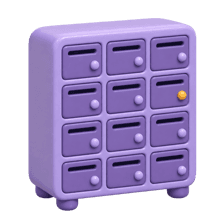
Post office pigeonholes
A well-run post office has one labelled slot per area and the same rules at every counter. Nobody asks where to drop a parcel. A REST API works the same way: one clear URL per thing, and the same rules for every request.
Watch it happen
One resource, predictable answers
GET /orders/42
1/7The client asks for one order. The URL names the thing (orders), not the action.
The big ideas
What you need to know
Nouns in URLs, verbs in methods
Use /orders and /orders/42. Let GET, POST, PATCH and DELETE say what you are doing.
Status codes carry meaning
200 OK, 201 created, 400 bad input, 401 not logged in, 404 missing, 500 your bug. Clients and tools trust these.
One error shape everywhere
Return errors like { error: { code, message } } on every route, so clients handle them in one place.
Consistency beats cleverness
Pick plural nouns, one JSON casing and ISO dates. Then never mix styles across endpoints.
See it in code
Walk through the code
1import express from "express";2const app = express();3app.use(express.json());4 5app.get("/orders/:id", async (req, res) => {6 const order = await db.orders.find(req.params.id);7 if (!order) {8 return res.status(404).json({ error: { code: "ORDER_NOT_FOUND", message: "No such order" } });9 }10 res.json(order);11});12 13app.post("/orders", async (req, res) => {14 const order = await db.orders.create(req.body);15 res.status(201).location(`/orders/${order.id}`).json(order);16});1/3GET on /orders/:id reads one order. The URL is the noun; the method is the verb.
db here stands for your data layer (Prisma, Knex, anything). Notice there are no verbs in the URLs at all.
Save yourself the pain
Common mistakes
Oops
URLs like /getUser, /createOrder and /deleteOrder?id=5.
Do this instead
Use /users/7 and /orders/5 with GET, POST or DELETE. The method already says the action.
Oops
Returning 200 OK with { success: false } when something fails.
Do this instead
Send the real status code, like 400 or 404. Clients, proxies and monitoring tools all read the code first.
Your mission
Clean up a messy API
Quick check
A client sends a signup form with the email missing. Which response fits best?
Go deeper
- 1Design a REST API for a resource, e.g. `/posts`, following proper conventions.
- 2Keep endpoint naming and response shapes consistent across your whole API.
- 3Design your API before writing frontend code against it — it saves a lot of rework.
More topics at this stop
 Node.js Runtime & Event Loop
 NPM & Package Management
 Express Basics & Routing
 Middleware
 Request Validation
 Error Handling
 Environment Variables

Stuck on this topic? Ask an Insider
Get 1:1 guidance from people who've walked this exact path — on the InsideEdge app.
