Cloud & Infra Basics
Part of the Product Management Roadmap
In short
When the app goes down, people say "AWS had an issue" or "the pods crashed". A basic picture of where software runs helps you follow the incident call and ask good questions.
High-level familiarity with concepts like servers, hosting, deployment and uptime — enough to understand why an outage happened without needing to fix it yourself.
Think of it like this
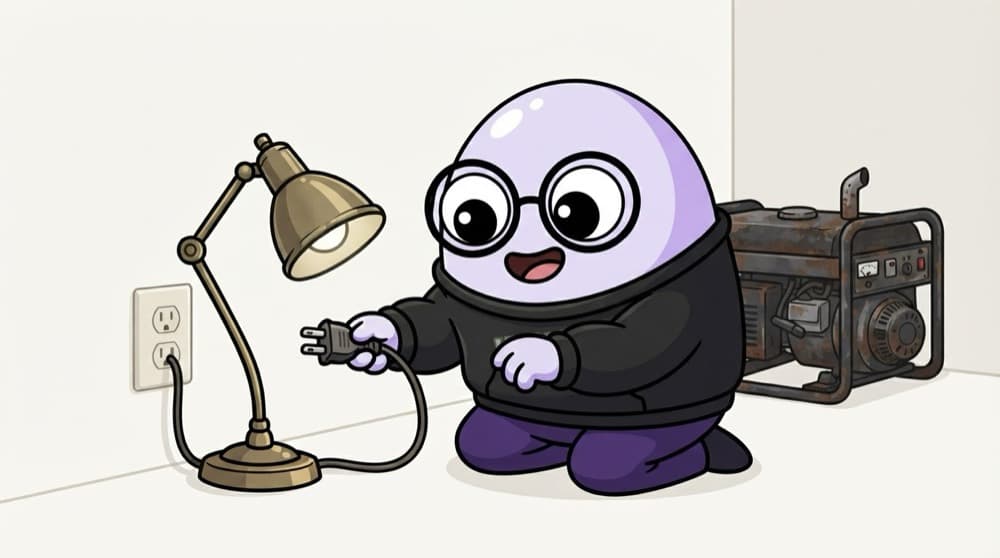
Grid power vs your own generator
You could buy a diesel generator, fuel it and fix it yourself. Or you plug into the grid and pay for what you use. The cloud is the grid for computing: rent servers by the hour instead of owning a server room.
Watch it happen
From code to running app
1/5Engineers merge code into the main branch.
The big ideas
What you need to know
Pay for what you use
Cloud costs grow with usage. A feature that stores lots of video can raise the bill a lot.
Scale up and down
Teams can add servers during a sale and remove them after, instead of buying for the peak.
Regions matter
Where data is stored affects speed for users and sometimes legal rules about data.
Uptime is a target
Teams often set a target like 99.9% uptime. Each extra nine costs much more effort.
Save yourself the pain
Common mistakes
Oops
Speccing a feature with no thought for running costs.
Do this instead
Ask engineers for a rough monthly cost estimate for heavy features, like video or AI calls.
Oops
Assuming the cloud means nothing ever goes down.
Do this instead
Cloud providers have outages too. Ask how your app behaves if one region fails.
Your mission
Explore a cloud console safely
Quick check
A flash sale will bring 10 times the usual traffic for one day. What does the cloud make easier?
Go deeper
- 1Learn the basic difference between a server, a database, and a CDN, in plain terms.
- 2Read a public post-mortem from a well-known outage and note the root cause.
- 3Understand what 'uptime' (e.g. 99.9%) means in practical downtime terms.
More topics at this stop
 How APIs Work
 Client-Server Basics
 Databases 101 for PMs
 System Design Basics for PMs
 Technical Debt
 Working Effectively With Engineers
 Estimation & Trade-off Conversations
 Latency, Scalability & Reliability Basics
 Reading a Technical Spec
 No-Code / Low-Code Tools for PMs

Stuck on this topic? Ask an Insider
Get 1:1 guidance from people who've walked this exact path — on the InsideEdge app.
