
In short
One complete, polished project says more than ten half-finished tutorials. Your capstone is the project you'll talk about in every interview, so build it like a real product.
One larger project in your chosen path, such as a deployed web app, an end-to-end data analysis or an AI-powered tool, built with tests, Git history, a clear README and a short write-up of design decisions.
Think of it like this
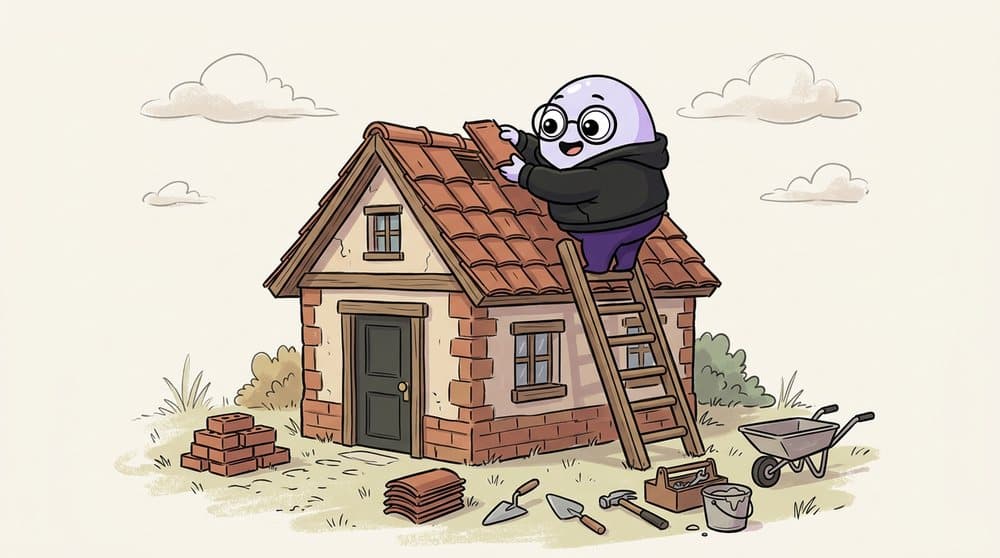
Building your own house
You've learnt to lay bricks, fit pipes and wire lights. Now you build a whole small house: plan it, lay the foundation, raise the walls, and invite people in. A capstone joins everything you learnt into one thing people can walk around in, and you can explain why every wall is where it is.
Watch it happen
Capstone milestones
1/5Pick a real problem you or people around you have, and cut it down to a version you can finish in four to six weeks.
The big ideas
What you need to know
Solve a real problem
A hostel mess feedback app, a shop's stock tracker or a study-notes Q&A bot is more memorable than another to-do list.
Match your path
Web: a deployed app with auth and a database. Data: an end-to-end analysis with a dashboard. AI: a tool built on a model API with evaluation.
Engineering habits
Virtual environment, pyproject.toml, type hints, tests, linting with ruff and a clean Git history.
Tell its story
Prepare a two-minute explanation: the problem, your design, one hard bug and what you'd do next.
How it works
Six-week plan
- 1
Week 1
Choose the idea, write a one-page scope and set up the repo, environment and CI.
- 2
Weeks 2 to 3
Build the core features with tests for the main logic.
- 3
Week 4
Add the second layer: auth, charts, or the AI feature.
- 4
Week 5
Deploy, fix bugs found by friends and tidy the code.
- 5
Week 6
Write the README and design notes, record a short demo and add it to your resume.
See it in code
Walk through the code
1[project]2name = "mess-feedback"3version = "0.1.0"4description = "Daily meal ratings and complaints for a college hostel mess"5requires-python = ">=3.12"6dependencies = [7 "fastapi[standard]>=0.115",8 "sqlalchemy>=2.0",9]10 11[project.optional-dependencies]12dev = ["pytest>=8", "ruff>=0.6"]13 14[tool.ruff]15line-length = 10016 17[tool.pytest.ini_options]18testpaths = ["tests"]1/4Project metadata, including the minimum Python version.
A pyproject.toml that makes the capstone easy to install and test with pip install -e ".[dev]". Adjust the dependencies to your path.
Save yourself the pain
Common mistakes
Oops
Picking a huge idea like 'the next Swiggy' and never finishing.
Do this instead
Scope down hard. A small app that is finished, deployed and tested beats an ambitious one that isn't.
Oops
One giant commit at the end called 'final'.
Do this instead
Commit small steps with clear messages. Interviewers do look at Git history.
Oops
Building it and never explaining it.
Do this instead
Write a design notes section and practise the two-minute story until it flows.
Your mission
Start your capstone today
Quick check
Which capstone is most likely to impress an interviewer?
Go deeper
- 1Choose a problem you or people around you actually have.
- 2Plan features in small milestones and commit regularly.
- 3Deploy it or record a short demo video and link it in your README.

Stuck on this topic? Ask an Insider
Get 1:1 guidance from people who've walked this exact path — on the InsideEdge app.
