
Stored Procedures Testing (Overview)
Part of the QA Testing Roadmap
In short
Some systems keep business logic inside the database as stored procedures. When fees, interest or stock updates live there, you test them like any other function.
Testing pre-written SQL routines stored in the database that encapsulate business logic — less common than application-layer testing, but essential in systems that push significant logic into the database itself.
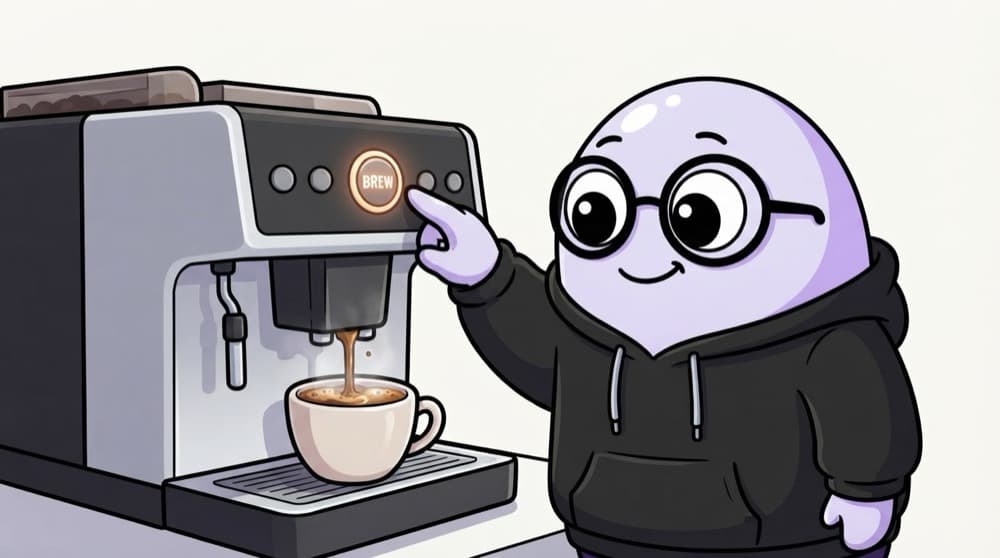
Think of it like this
The office coffee machine
Press 'cappuccino' and the machine runs its fixed recipe inside: grind, steam, pour. You can't see the steps, but you can test it: put in known inputs, check the cup, and check the milk tank went down.
Watch it happen
Testing one stored procedure
1/5Start a transaction and insert a known loan: a book returned 3 days late.
The big ideas
What you need to know
Treat it like a function
Known inputs in, expected outputs and table changes out. Design cases with partitions and boundaries.
Test the error paths
Unknown ids, NULL inputs and duplicate calls should fail safely, not half-update data.
Transactions keep it clean
BEGIN and ROLLBACK let you test on a shared database without leaving changes behind.
See it in code
Walk through the code
1BEGIN;2 3-- Arrange: a known loan, returned 3 days late4INSERT INTO loans (id, member_id, due_date, returned_on)5VALUES (900, 7, '2026-01-10', '2026-01-13');6 7-- Act: run the procedure under test8CALL apply_late_fee(900);9 10-- Assert: expect Rs 15 (Rs 5 per late day)11SELECT late_fee FROM loans WHERE id = 900;12 13ROLLBACK; -- leave the database exactly as it was1/4Open a transaction and insert data you fully control.
Arrange, act, assert, roll back. CALL works in PostgreSQL 11+ and MySQL. The fee rule here is a made-up example.
Save yourself the pain
Common mistakes
Oops
Testing procedures only through the UI that calls them.
Do this instead
Call them directly too. It isolates the logic and makes edge cases easy to try.
Oops
Leaving test rows behind on a shared database.
Do this instead
Wrap tests in a transaction and roll back, or clean up with a script.
Your mission
Test a tiny procedure
Quick check
Why wrap a stored procedure test in BEGIN ... ROLLBACK?
Go deeper
- 1Read a sample stored procedure and identify what business logic it implements.
- 2Learn why testing stored procedures directly matters in database-logic-heavy systems.
- 3Understand this is a more specialized skill, valuable in certain enterprise/legacy environments.
More topics at this stop
 SQL Fundamentals for Testers
 Writing Test Queries (SELECT, JOIN)
 Database Testing Basics
 Data Validation Techniques
 Backend Testing
 Database Schema Reading
 Data Integrity Testing

Stuck on this topic? Ask an Insider
Get 1:1 guidance from people who've walked this exact path — on the InsideEdge app.
