
Showcasing Process, Not Just Polish
Part of the UI/UX Design Roadmap
In short
Anyone can copy a pretty screen. Your rough sketches, dropped ideas and test notes are proof that you can think, and that's much harder to fake.
Including early sketches, rejected directions, and the reasoning behind key decisions — showing the messy middle of design work is often more convincing to an interviewer than a spotless final screen alone.
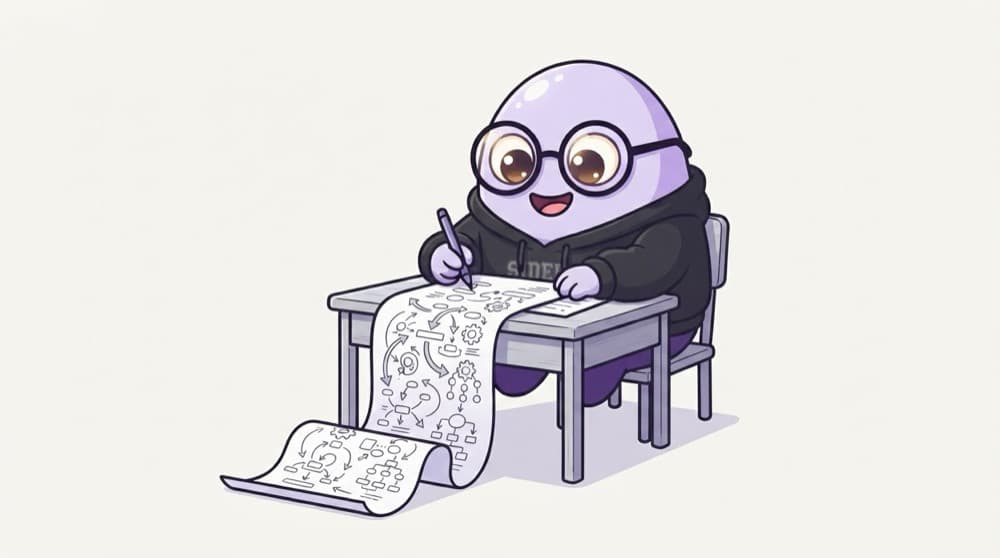
Think of it like this
Show your working in the maths exam
In a maths exam, the teacher gives marks for the steps, not just the final answer. A right answer with no working looks lucky or copied. A portfolio with only final screens raises the same doubt. Show your working.
Watch it happen
Choosing which process artefacts to show
1/5You made all of these. Showing only the final UI hides how you got there.
The big ideas
What you need to know
Show the forks
Point out where you had two paths and why you picked one. That's design thinking made visible.
Include dead ends
An idea that failed in testing, and what you learned, is more convincing than a perfect run.
Before and after
Put the early and final versions side by side, with a note on what changed and why.
Curate the mess
Show process, not your whole Figma file. Pick the moments that changed direction.
Save yourself the pain
Common mistakes
Oops
Recreating fake 'sketches' after the project to look like you had a process.
Do this instead
Use your real artefacts, even rough phone photos. Reviewers can tell, and real work builds trust.
Oops
Dumping 40 sticky-note photos with no explanation.
Do this instead
Show one or two, with a caption on what you found and what it changed.
Your mission
Find your turning points
Quick check
Which artefact best shows good design judgement?
Go deeper
- 1Add at least one 'rejected direction and why' section to a case study.
- 2Include a low-fidelity sketch or wireframe alongside the final polished screens.
- 3Learn that interviewers often care more about your reasoning than your final pixel choices.
More topics at this stop
 What Makes a Strong Design Portfolio
 Case Study Structure
 Choosing Portfolio Projects
 Portfolio Platforms (Behance, Personal Site)
 Writing About Your Design Decisions
 Tailoring Your Portfolio to a Role

Stuck on this topic? Ask an Insider
Get 1:1 guidance from people who've walked this exact path — on the InsideEdge app.
