REST API for a To-Do App
Part of the Web Development Roadmap
In short
The todo API is the 'hello world' of backends for a reason: it uses every CRUD operation. Build it properly once and you'll reuse the pattern in every project.
A REST API built with Express that lets clients create, read, update and delete tasks, with validation, proper status codes and clean route structure.
Think of it like this
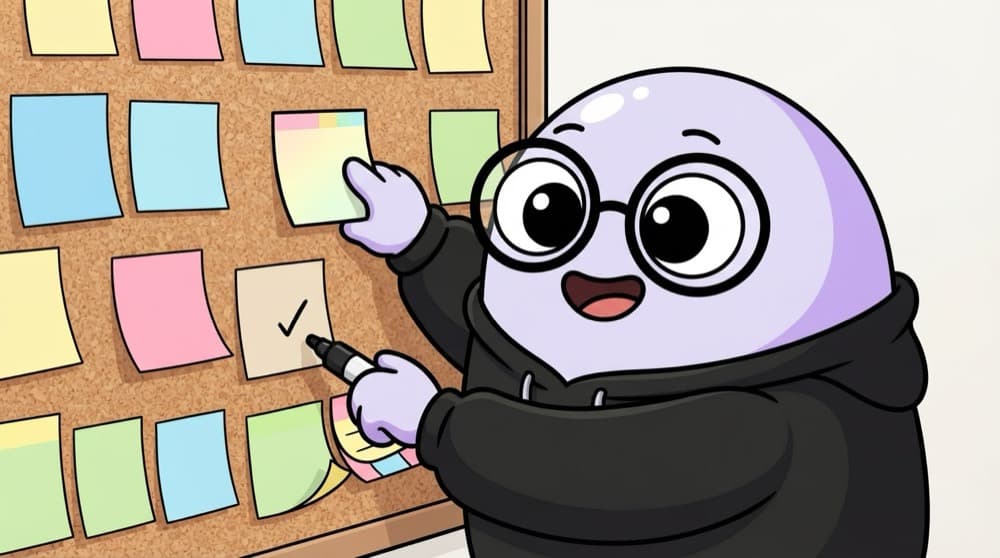
The sticky-note board
On your hostel wall, you stick notes, read them, tick some off, and peel others away. Create, read, update, delete. Your todo API does exactly this, except the board is a database and the notes are JSON.
Watch it happen
CRUD in five requests
POST /todos
1/6Body { "title": "Submit DBMS assignment" }. The API validates it.
The big ideas
What you need to know
Five endpoints
GET /todos, GET /todos/:id, POST /todos, PATCH /todos/:id, DELETE /todos/:id.
Correct status codes
201 on create, 204 on delete, 404 for a missing id, 400 for a bad body.
Validate every write
Title required and trimmed, sensible max length, done must be a boolean.
Filter the list
Support GET /todos?done=false so the app can show only pending tasks.
See it in code
Walk through the code
1const todos = new Map();2let nextId = 1;3app.patch("/todos/:id", (req, res) => {4 const todo = todos.get(Number(req.params.id));5 if (!todo) return res.status(404).json({ error: "Todo not found" });6 const { title, done } = req.body;7 if (title !== undefined && (typeof title !== "string" || !title.trim())) {8 return res.status(400).json({ error: "title must be a non-empty string" });9 }10 if (done !== undefined && typeof done !== "boolean") {11 return res.status(400).json({ error: "done must be true or false" });12 }13 if (title !== undefined) todo.title = title.trim();14 if (done !== undefined) todo.done = done;15 res.json(todo);16});1/4An in-memory Map is enough to start. Swap it for a database later.
PATCH is the trickiest route: every field is optional, but any field that is sent must still be valid.
Save yourself the pain
Common mistakes
Oops
Returning 200 with an empty body when a todo id doesn't exist.
Do this instead
Return 404 with a clear error. The client needs to tell 'gone' from 'success'.
Oops
Using PUT but only sending one field, wiping the rest.
Do this instead
Use PATCH for partial updates. PUT means 'replace the whole thing'.
Your mission
Milestone 1: working CRUD
Quick check
Which status code fits a successful DELETE /todos/1 that returns no body?
Go deeper
- 1Start with an in-memory array, then move to a database in the next phase.
- 2Add filtering with a query parameter like ?status=done.
- 3Document every endpoint in the README with an example request and response.

Stuck on this topic? Ask an Insider
Get 1:1 guidance from people who've walked this exact path — on the InsideEdge app.
