
Multi-AZ High Availability
Part of the AWS Roadmap
In short
Servers fail. Disks die, a whole data centre loses power. Highly available systems are built so users barely notice when one part breaks.
A multi-AZ architecture places each tier, such as load balancers, app servers and databases, in at least two Availability Zones so a failure in one does not take the whole app down. It is the baseline for reliable production systems on AWS.
Think of it like this
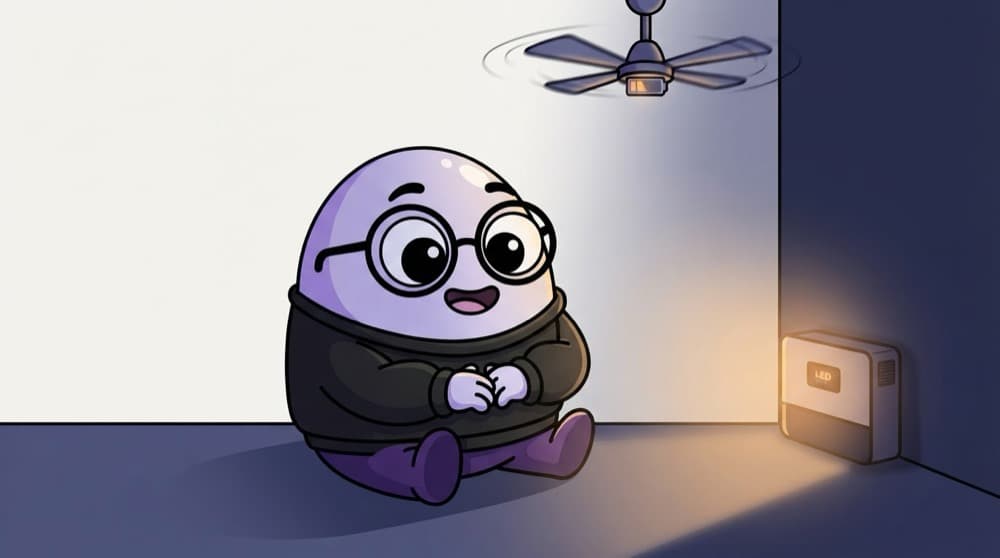
The home inverter
The power goes at 10 p.m. in the middle of a cricket match. Click, the inverter takes over, the fan keeps spinning and the TV stays on. You only find out because the neighbours are shouting. That's high availability.
Watch it happen
One zone goes dark
GET /
1/6Users hit one load balancer that spans two availability zones, separate data centres in one region.
The big ideas
What you need to know
Redundancy
At least two of everything important, in different availability zones: servers, database replicas, NAT gateways.
No single point of failure
Look for anything with exactly one copy. A single NAT gateway or one DB instance can take the whole app down.
Health checks
Load balancers and orchestrators need a real health endpoint to know which copies to stop using.
Nines
99.9% uptime allows about 43 minutes of downtime a month; 99.99% allows about 4. Each nine costs more.
See it in code
Walk through the code
1aws autoscaling create-auto-scaling-group \2 --auto-scaling-group-name web-asg \3 --launch-template LaunchTemplateName=web-lt,Version='$Latest' \4 --min-size 2 --max-size 6 --desired-capacity 2 \5 --vpc-zone-identifier "subnet-aaa111,subnet-bbb222" \6 --target-group-arns arn:aws:elasticloadbalancing:ap-south-1:123456789012:targetgroup/web/abc123 \7 --health-check-type ELB --health-check-grace-period 1201/4Every instance is launched from the same template, so any copy can replace any other.
The two subnet IDs must be in different availability zones. That's what spreads the instances.
Save yourself the pain
Common mistakes
Oops
Running two servers, both in the same availability zone.
Do this instead
Two copies in one zone fail together. Spread across at least two AZs.
Oops
A health check that only returns 200 without checking anything.
Do this instead
Check what the app really needs, like the DB connection, but keep it fast and avoid cascading failures.
Your mission
Kill a server, keep the site
Quick check
Your app has three servers across two AZs but one RDS instance with no standby. What's the weak point?
Go deeper
- 1Draw a three-tier multi-AZ architecture with ALB, Auto Scaling group and RDS Multi-AZ.
- 2Identify every single point of failure in a design that uses one EC2 instance.
- 3Read the Reliability pillar of the Well-Architected Framework.
More topics at this stop
 How Load Balancers Work
 Elastic Load Balancing: ALB vs NLB
 Target Groups & Health Checks
 EC2 Auto Scaling Groups
 Launch Templates
 Scaling Policies (Target Tracking, Step, Scheduled)
 Disaster Recovery Strategies on AWS

Stuck on this topic? Ask an Insider
Get 1:1 guidance from people who've walked this exact path — on the InsideEdge app.
