In short
PostgreSQL is free, open source and packed with features, from JSON columns to full-text search. Many teams pick it as their default database, which makes it a safe one to learn first.
A powerful, open-source relational database known for standards compliance, extensibility (JSON support, full-text search) and being the default choice for most new backend projects today.

Think of it like this
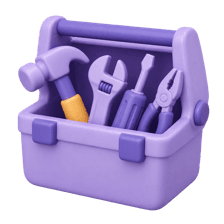
The giant toolbox
Some toolboxes have a hammer and two screwdrivers. Postgres is the one where every drawer has another surprise: a spirit level, a tiny saw, a stud finder. Tables, JSON, arrays, full-text search, all in one box.
Watch it happen
A few Postgres tricks
CREATE TABLE … JSONB
1/5Create a products table with a normal name column and a flexible JSONB specs column.
The big ideas
What you need to know
JSONB columns
Store flexible JSON next to normal columns, query inside it and index it. Half SQL, half document store.
RETURNING
INSERT, UPDATE and DELETE can send back the changed rows, saving a second query.
Full-text search built in
tsvector and tsquery give decent search for simple cases, without adding another service.
Extensions
Add features like PostGIS for locations or pgvector for AI embeddings with CREATE EXTENSION.
See it in code
Walk through the code
1CREATE TABLE products (2 id SERIAL PRIMARY KEY,3 name TEXT NOT NULL UNIQUE,4 specs JSONB NOT NULL DEFAULT '{}'5);6 7INSERT INTO products (name, specs)8VALUES ('Phone X', '{"ram": "8GB", "5g": true}')9RETURNING id;10 11SELECT name FROM products WHERE specs @> '{"ram": "8GB"}';12 13CREATE INDEX idx_products_specs ON products USING GIN (specs);1/4specs is JSONB: binary JSON that Postgres can search and index.
Use real columns for data every row has, and JSONB for the odd, changing extras.
Save yourself the pain
Common mistakes
Oops
Putting everything into one JSONB column because it feels like MongoDB.
Do this instead
Fields you filter, join or constrain belong in real columns. JSONB is for the genuinely variable bits.
Oops
Opening a new database connection for every request.
Do this instead
Use a pool, like pg's Pool or PgBouncer in front. Postgres connections are fairly heavy to create.
Your mission
Postgres in Docker
Quick check
What does RETURNING id do on an INSERT?
Go deeper
- 1Install PostgreSQL locally and connect to it with a GUI client (e.g. TablePlus, pgAdmin).
- 2Practice PostgreSQL-specific features like JSONB columns and array types.
- 3Learn `psql`, the command-line client, for quick queries and debugging.
More topics at this stop
 Relational Database Concepts
 SQL Basics (SELECT, INSERT, UPDATE, DELETE)
 Joins
 Indexes
 Normalization
 Transactions
 ACID Properties
 MySQL
 Constraints & Keys
 Views
 Stored Procedures
 Database Design & ER Diagrams
 Migrations

Stuck on this topic? Ask an Insider
Get 1:1 guidance from people who've walked this exact path — on the InsideEdge app.
