
In short
Money left your account but never reached your friend? A transaction makes sure a group of changes either all happen or none of them do.
A way to group multiple database operations so they all succeed together or all fail together — critical for operations like transferring money between two accounts.
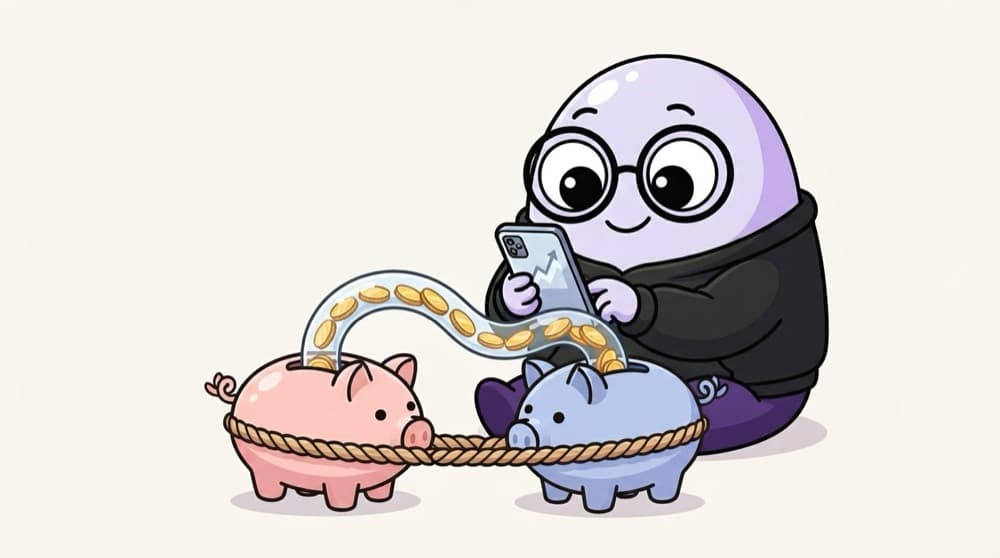
Think of it like this
A UPI transfer
When you send 500 rupees on UPI, two things must happen: your balance drops and your friend's rises. If the bank's server crashed halfway, you'd lose money. So both steps are treated as one unit: done fully, or undone fully.
Watch it happen
A transfer that fails, then works
BEGIN
1/6The API opens a transaction. Changes stay private until it commits.
The big ideas
What you need to know
One unit of work
Wrap related changes between BEGIN and COMMIT. They succeed together or fail together.
ROLLBACK undoes everything
If any step fails, ROLLBACK throws away every change made since BEGIN.
One connection
Every query in a transaction must go through the same database connection, not random ones from the pool.
Keep them short
An open transaction holds locks. Don't call slow APIs or wait for users while one is open.
See it in code
Walk through the code
1import { Pool } from "pg";2const pool = new Pool();3export async function transfer(from: number, to: number, amount: number) {4 const client = await pool.connect();5 try {6 await client.query("BEGIN");7 await client.query("UPDATE accounts SET balance = balance - $1 WHERE id = $2", [amount, from]);8 await client.query("UPDATE accounts SET balance = balance + $1 WHERE id = $2", [amount, to]);9 await client.query("COMMIT");10 } catch (err) {11 await client.query("ROLLBACK");12 throw err;13 } finally {14 client.release();15 }16}1/4Grab one dedicated connection. A transaction lives on a single connection.
pool.query() picks any free connection, so never run BEGIN with it. Check out one client with pool.connect(), as here.
Save yourself the pain
Common mistakes
Oops
Running BEGIN with pool.query() and the updates with more pool.query() calls.
Do this instead
Each pool.query can use a different connection. Check out one client and run the whole transaction on it.
Oops
Calling a payment gateway while the transaction is still open.
Do this instead
Do slow external calls before or after. Long transactions hold locks and block other users.
Your mission
Break a transfer on purpose
Quick check
Inside a transaction, the first UPDATE works and the second throws. You run ROLLBACK. What's in the database?
Go deeper
- 1Wrap a multi-step operation (e.g. debit one account, credit another) in a transaction.
- 2Deliberately trigger a failure mid-transaction and confirm the rollback works.
- 3Learn `BEGIN`, `COMMIT` and `ROLLBACK` at the SQL level.
More topics at this stop
 Relational Database Concepts
 SQL Basics (SELECT, INSERT, UPDATE, DELETE)
 Joins
 Indexes
 Normalization
 ACID Properties
 PostgreSQL
 MySQL
 Constraints & Keys
 Views
 Stored Procedures
 Database Design & ER Diagrams
 Migrations

Stuck on this topic? Ask an Insider
Get 1:1 guidance from people who've walked this exact path — on the InsideEdge app.
