In short
In SQL you model the data first and write queries later. In NoSQL you flip it: list your queries first, then shape the data so each one is fast.
Designing your document/collection structure around how your application will query the data — the opposite instinct from SQL's normalize-first approach.
Think of it like this
Arranging the kitchen by use
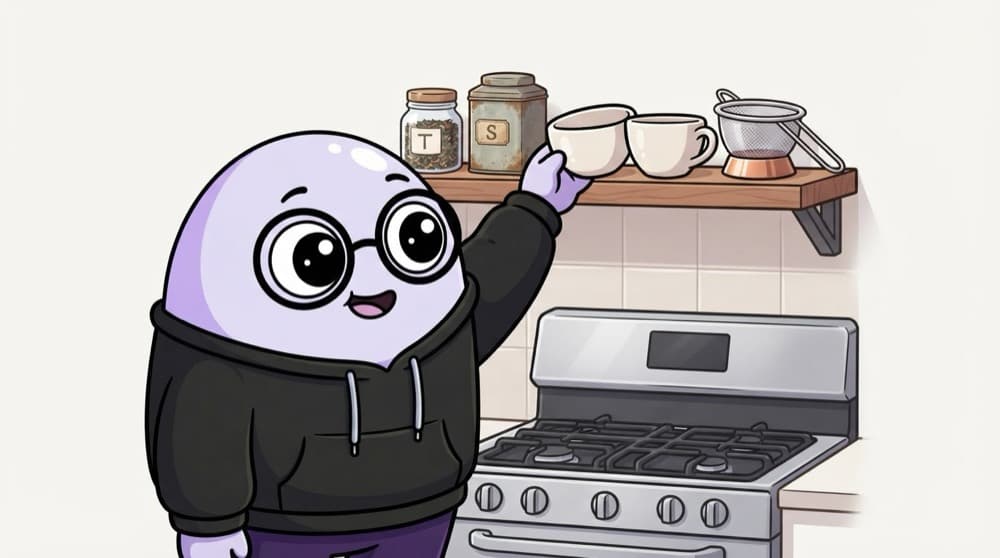
If you make chai five times a day, the tea, sugar, cups and strainer live together by the stove, even if there's more sugar on the baking shelf. You arrange by use, not by category. NoSQL modelling is the same: group data by how the app reads it.
Watch it happen
Designing from queries
1/5List the screens: order page, a user's order history, the kitchen's live queue.
The big ideas
What you need to know
Queries first
Write down every screen and API call before designing. The data shape follows from them.
Embed for one-read pages
Data that's always shown together goes in one document, so one query is enough.
Duplication is allowed
Copying a dish name into orders is normal. Just decide how you'll handle the copy if the name changes.
Watch what grows
Anything that grows without limit, like logs or comments, gets its own collection or partition.
See it in code
Walk through the code
1// Access patterns:2// 1. Order page by orderId 2. User's history, newest first3// 3. Kitchen queue by status4 5db.orders.insertOne({6 _id: "ord_1042",7 userId: 7,8 status: "preparing",9 items: [{ dishId: 3, name: "Masala dosa", qty: 2 }],10 placedAt: new Date(),11});12 13db.orders.createIndex({ userId: 1, placedAt: -1 }); // pattern 214db.orders.createIndex({ status: 1, placedAt: 1 }); // pattern 31/4Start by writing the access patterns down. Everything below serves these three.
Pattern 1 needs nothing extra, because every collection already has an index on _id.
Save yourself the pain
Common mistakes
Oops
Copying your SQL tables one-to-one into collections.
Do this instead
You'll end up doing joins in code. Start from the screens and design documents for them.
Oops
Duplicating data with no plan for updates.
Do this instead
Decide upfront: is a stale copy fine, like a name on an old order, or must every copy be updated?
Your mission
Model a college fest app
Quick check
Orders store a copy of the dish name. Later the dish is renamed. What's the usual approach?
Go deeper
- 1Design a MongoDB schema for an app by starting from your most common queries.
- 2Practice deciding what to embed vs reference for a one-to-many relationship.
- 3Learn that NoSQL modeling often means intentional, controlled duplication.
More topics at this stop
 NoSQL vs SQL
 MongoDB Basics
 Document Model
 CRUD Operations
 Aggregation Pipeline
 Indexing in MongoDB
 Redis Basics
 Key-Value Store
 When to Use NoSQL
 Cassandra (Overview)
 DynamoDB (Overview)

Stuck on this topic? Ask an Insider
Get 1:1 guidance from people who've walked this exact path — on the InsideEdge app.
