In short
Live cricket scores, chat apps and multiplayer games don't keep asking the server "anything new?". They keep one connection open and let the server push updates the moment they happen.
Applying persistent, bidirectional connections at an application level — powering live chat, collaborative editing, and real-time dashboards beyond the basic API.
Think of it like this
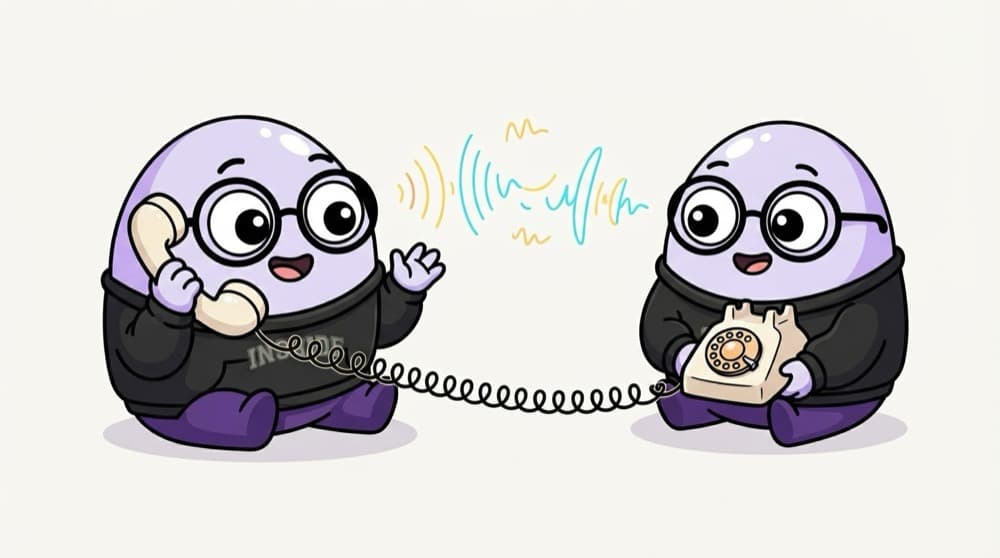
A phone call, not SMS
Normal HTTP is like SMS: you send, wait for a reply, and the chat ends. A WebSocket is a phone call. Once connected, both sides can talk whenever they want, until someone hangs up.
Watch it happen
One connection, both sides talking
GET / Upgrade: websocket
1/6The browser sends a normal HTTP request asking to switch protocols.
The big ideas
What you need to know
One long-lived connection
The browser opens a connection once and keeps it open, instead of a new request for every update.
Both sides can send
The server can push messages without waiting for the browser to ask. That's what makes it real-time.
Plan for drops
Mobile networks drop connections often. Reconnect automatically, with a growing delay between attempts.
Not always needed
If only the server sends updates, Server-Sent Events can be simpler. For rare updates, polling is fine.
See it in code
Walk through the code
1function connect() {2 const socket = new WebSocket("wss://chat.example.com");3 4 socket.onopen = () =>5 socket.send(JSON.stringify({ type: "join", room: "cse-a" }));6 7 socket.onmessage = (event) => showMessage(JSON.parse(event.data));8 9 // Network dropped? Try again after 2 seconds10 socket.onclose = () => setTimeout(connect, 2000);11}12 13connect();1/4Open a secure WebSocket connection.
wss:// is the secure version, like https://. Real apps increase the retry delay after each failure so thousands of clients don't hammer the server at once.
Save yourself the pain
Common mistakes
Oops
Opening a new WebSocket inside a React component on every render.
Do this instead
Open it once, in an effect with a cleanup that closes it, or in a shared module the whole app uses.
Oops
Assuming every message arrives because the connection was open.
Do this instead
Messages can be lost during a drop. After reconnecting, fetch anything missed, for example using the last message ID.
Your mission
Build a two-tab chat
Quick check
Your dashboard needs a new stock price every few seconds, and the browser never sends data back. Which option is often simpler than WebSockets?
Go deeper
- 1Build a small real-time feature (live chat or live counter) end-to-end.
- 2Handle reconnection logic when a WebSocket connection drops.
- 3Compare WebSockets to Server-Sent Events for one-way real-time updates.
More topics at this stop
 PWA
 Service Workers
 IndexedDB
 Offline Apps
 WebAssembly basics
 Micro Frontends
 Module Federation
 Internationalization (i18n)
 Localization (l10n)
 Feature Flags
 Monitoring (Sentry)
 Analytics (Google Analytics, Mixpanel)
 Security (XSS, CSRF, CSP)

Stuck on this topic? Ask an Insider
Get 1:1 guidance from people who've walked this exact path — on the InsideEdge app.
