
Conflict & Disagreement Stories
Part of the Product Management Roadmap
In short
"Tell me about a time you disagreed with an engineer." The interviewer isn't checking who was right. They're checking whether people would still want to work with you afterwards.
'Tell me about a time you disagreed with an engineer or designer' — testing emotional maturity and whether you can resolve conflict constructively, not just avoid it.
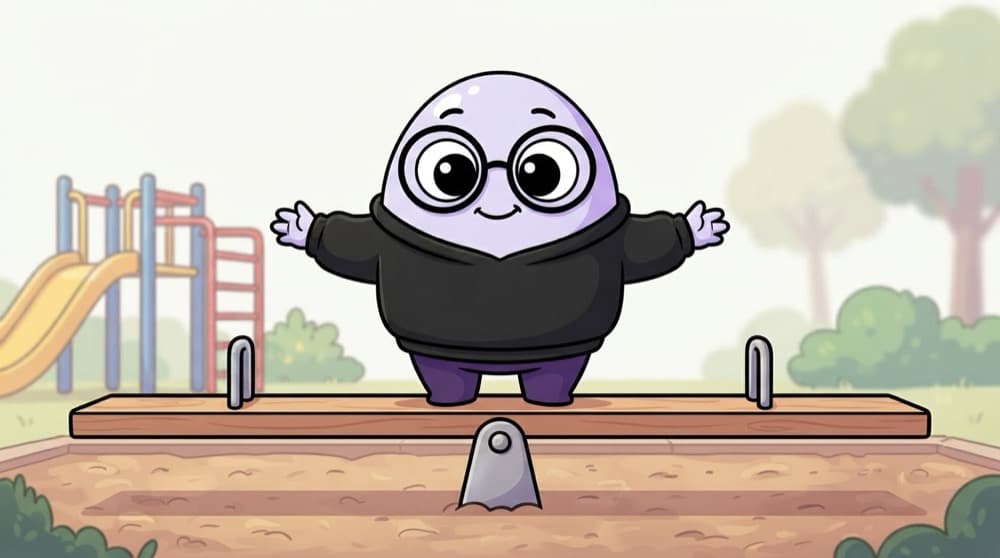
Think of it like this
Balancing the see-saw
On a see-saw, if one person slams down, the other gets bumped. The fun only happens when both adjust their weight. A good conflict story is the same: not how you won, but how you both moved until things balanced.
Watch it happen
The shape of a good conflict story
1/5Brief context: "In a group project, our developer wanted to rebuild the app; I wanted to ship the demo."
The big ideas
What you need to know
Respect the other side
Never make the other person the villain. Interviewers notice instantly.
Show curiosity
Explain how you learnt the reason behind their position.
Shared goal
Point to the common goal you both cared about. That's usually the turning point.
Own your part
Admit what you could have done better. It makes the story credible.
Save yourself the pain
Common mistakes
Oops
Telling a story where you were completely right and they were wrong.
Do this instead
Show the other view as reasonable and highlight how you met in the middle.
Oops
Picking a story with no real disagreement.
Do this instead
Choose a genuine conflict with real stakes, resolved constructively.
Your mission
Prepare one conflict story
Quick check
What makes a conflict story land well with interviewers?
Go deeper
- 1Prepare a real story where the disagreement was resolved productively, not just 'won'.
- 2Be honest about the other person's valid point, not just your own position.
- 3Avoid stories where you were clearly right and the other person clearly wrong — nuance reads better.
More behavioral at this stop
 Leadership & Ownership Stories
 Failure & Learning Stories
 Cross-Functional Collaboration Stories

Stuck on this topic? Ask an Insider
Get 1:1 guidance from people who've walked this exact path — on the InsideEdge app.
