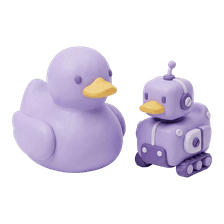
Polymorphism & Duck Typing
Part of the Python Roadmap
In short
Polymorphism lets one piece of code work with many different kinds of objects. Write pay(method) once, and it works for UPI, card or cash, without a single if-else on the type.
Polymorphism means different classes can be used through the same method name. Python uses duck typing: if an object has the method you call, it works, whatever its class is.

Think of it like this
If it quacks like a duck
At a talent show, the host just says 'perform!'. The singer sings, the dancer dances, the magician pulls a rabbit from a hat. The host doesn't need to know who's who, only that everyone can perform. Python works the same way: if an object has the method you call, it works.
Watch it happen
One call, three different behaviours
pay(499)
1/4checkout calls pay() on a UPI object. It sends a collect request.
The big ideas
What you need to know
Same name, different behaviour
Many classes can define a method with the same name. The right version runs based on the object.
Duck typing
Python doesn't care about the class, only that the method exists. Unrelated classes can be used interchangeably.
No type checks needed
Replace long if isinstance(...) chains with a method each class implements.
Easy to extend
Add a new WalletPay class with a pay() method and existing checkout code works with it, unchanged.
See it in code
Walk through the code
1class UPI:2 def __init__(self, vpa: str):3 self.vpa = vpa4 5 def pay(self, amount: float) -> str:6 return f"Collect request of Rs {amount} sent to {self.vpa}"7 8class Card:9 def __init__(self, last4: str):10 self.last4 = last411 12 def pay(self, amount: float) -> str:13 return f"OTP sent for Rs {amount} on card ending {self.last4}"14 15class Cash:16 def pay(self, amount: float) -> str:17 return f"Collect Rs {amount} at delivery"18 19def checkout(method, amount: float) -> None:20 print(method.pay(amount))21 22for m in [UPI("neha@okbank"), Card("4321"), Cash()]:23 checkout(m, 499)24 25print(len("hello"), len([1, 2, 3]), len({"a": 1}))1/6UPI has a pay() method that uses its VPA.
Three unrelated payment classes, one checkout function. The built-in len() is polymorphic too.
Save yourself the pain
Common mistakes
Oops
Writing if type(m) == UPI: ... elif type(m) == Card: ... inside checkout.
Do this instead
Give every class a pay() method and just call m.pay(). Adding a new type then needs no edits to checkout.
Oops
Assuming objects must share a parent class to be used the same way.
Do this instead
In Python, a matching method is enough. Use an abstract base class only when you want to enforce it.
Your mission
Notification senders
Quick check
What does duck typing mean in Python?
Go deeper
- 1Give Dog and Cat classes a speak() method and call it in one loop.
- 2Write a function that works with any object that has a read() method.
- 3Compare duck typing with checking isinstance() everywhere.
More topics at this stop
 Classes & Objects
 The __init__ Method & self
 Instance vs Class Attributes
 Instance, Class & Static Methods
 Inheritance & super()
 Encapsulation & Properties
 Dunder (Magic) Methods
 Abstract Base Classes
 Dataclasses

Stuck on this topic? Ask an Insider
Get 1:1 guidance from people who've walked this exact path — on the InsideEdge app.
