
Handling a Critical Production Bug
Part of the QA Testing Roadmap
In short
'Tell me about a time a critical bug reached production' tests how you behave under pressure. Calm, structured and blame-free beats any heroic story.
'Tell me about a time a critical bug reached production' — testing composure under pressure and a structured, blameless diagnostic process, even for a hypothetical or lab-based scenario.
Think of it like this
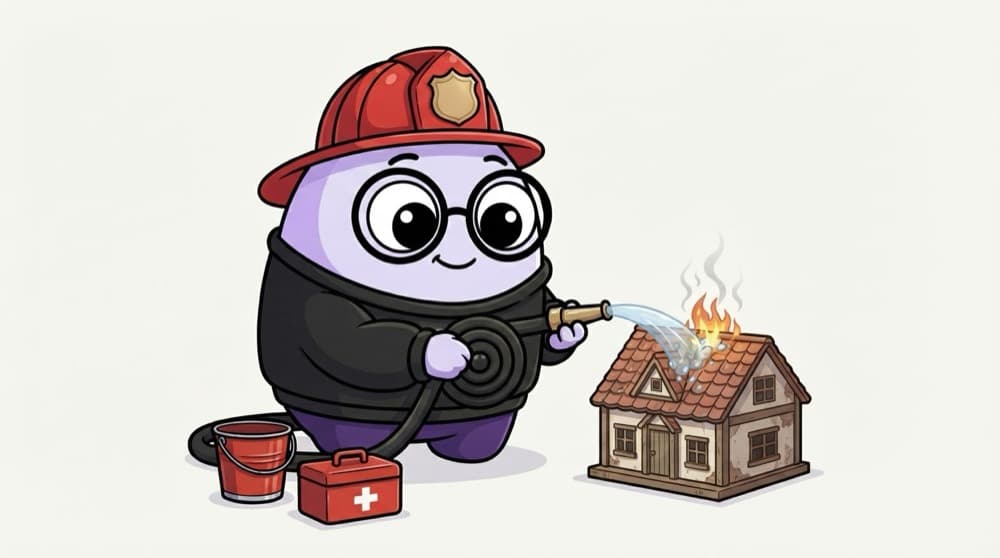
The fire brigade
Firefighters don't start by asking who left the stove on. They put the fire out, keep people safe, and only then investigate the cause. Production bugs work the same way: contain first, find out why later.
Watch it happen
How to handle it, and how to tell the story
1/5Reproduce it quickly and find the scope: which users, which platform, since when.
The big ideas
What you need to know
Stay calm
Interviewers listen for composure. Panic and blame are red flags, even in a story.
Blameless
Focus on what in the process let the bug through, not on who wrote the code.
Close the gap
Always end with the test, check or process change you added so it can't happen again.
Lab stories count
No job yet? Use a bug from a project or internship, and be honest that it was a smaller scale.
Save yourself the pain
Common mistakes
Oops
Telling the story as 'the developer messed up and I caught it'.
Do this instead
Share credit and focus on the process: what failed, what the team did, what changed.
Oops
Stopping the story at 'and then it was fixed'.
Do this instead
Finish with the root cause, the new test, and what you'd do differently.
Your mission
Prepare your story
Quick check
A payment bug hits production on a Friday evening. What's the first priority?
Go deeper
- 1Prepare a genuine story, even a small one from a practice project or lab exercise.
- 2Structure it with STAR (Situation, Task, Action, Result) for a tight answer.
- 3Focus on what you learned and changed in your process, not just the outcome.
More behavioral at this stop
 Explain a Past Testing Project
 Disagreement With Developers Over a Bug
 Staying Current With Testing Tools

Stuck on this topic? Ask an Insider
Get 1:1 guidance from people who've walked this exact path — on the InsideEdge app.
