
In short
GET, POST, PUT, PATCH, DELETE. Five verbs cover almost every API you'll build. Pick the right one and other developers understand your API before reading any docs.
GET, POST, PUT, PATCH and DELETE — the verbs that tell a server what kind of operation a request represents, and the basis of RESTful API design.
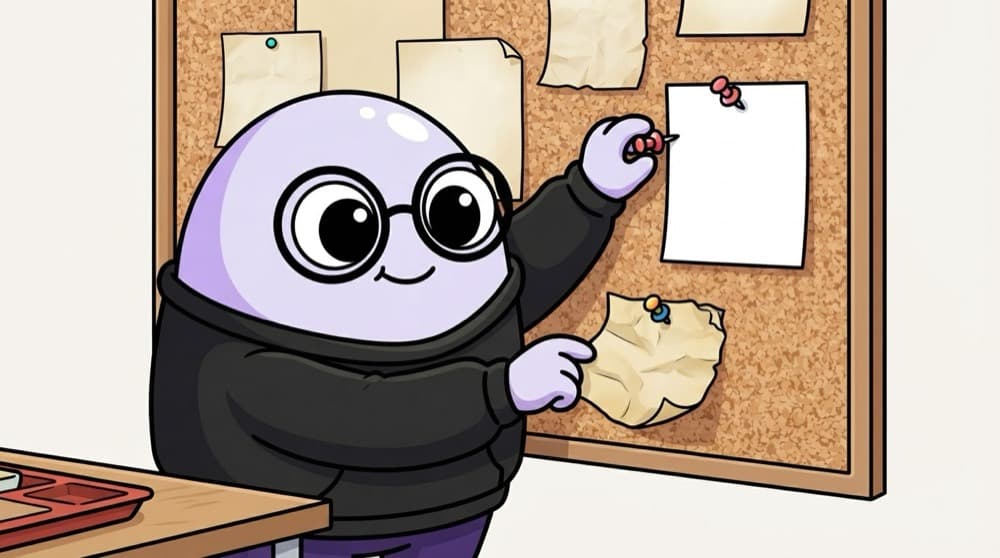
Think of it like this
The canteen notice board
Reading the board is GET. Pinning up a new notice is POST. Swapping a notice for a fresh full copy is PUT. Fixing just the date on it is PATCH. Taking it down is DELETE. Same board, five different actions.
Watch it happen
One notice, five methods
POST /notices
1/6Create a new notice. The client doesn't choose the id, the server does.
The big ideas
What you need to know
GET only reads
GET must not change data. Browsers, caches and link previews send GET requests freely, assuming they're harmless.
POST creates
POST adds something new or triggers an action. Sending it twice usually creates two things.
PUT replaces, PATCH edits
PUT sends the full new version of a resource. PATCH sends only the fields that changed.
DELETE removes
DELETE /notices/9 removes that notice. Repeating it leaves the same result: still gone.
See it in code
Walk through the code
1const notices = new Map();2let nextId = 1;3app.get("/notices/:id", (req, res) => {4 const n = notices.get(Number(req.params.id));5 n ? res.json(n) : res.sendStatus(404);6});7app.post("/notices", (req, res) => {8 const n = { ...req.body, id: nextId++ };9 notices.set(n.id, n);10 res.status(201).json(n);11});12app.patch("/notices/:id", (req, res) => {13 const n = notices.get(Number(req.params.id));14 if (!n) return res.sendStatus(404);15 res.json(Object.assign(n, req.body, { id: n.id }));16});1/3GET looks the notice up and returns it, or 404 if it doesn't exist.
Assumes const app = express() and app.use(express.json()). A PUT route would swap the whole object, and app.delete would call notices.delete(id) and reply 204.
Save yourself the pain
Common mistakes
Oops
Using GET /deleteUser?id=5 to delete things.
Do this instead
Crawlers and link previews fire GET requests on their own. Use DELETE /users/5 so nothing is removed by accident.
Oops
Sending a PUT with only the changed field and wiping out the rest.
Do this instead
PUT means 'here is the complete new version'. For a partial update, use PATCH.
Your mission
Finish the notice board API
Quick check
A mobile app wants to change only a user's profile photo URL. Which request fits best?
Go deeper
- 1Build a tiny API with one endpoint per method against the same resource.
- 2Learn which methods are idempotent (safe to retry) and which aren't.
- 3Understand when to use PUT (full replace) vs PATCH (partial update).
More topics at this stop
 Internet
 HTTP vs HTTPS
 DNS
 Client-Server Architecture
 Request-Response Cycle
 HTTP Status Codes
 Statelessness
 REST Principles
 JSON
 XML
 Headers & Cookies
 CORS
 Idempotency
 API Gateways

Stuck on this topic? Ask an Insider
Get 1:1 guidance from people who've walked this exact path — on the InsideEdge app.
