
Supervised vs Unsupervised vs Reinforcement Learning
Part of the Data Science Roadmap
In short
Every machine learning problem starts with one question: what kind of learning is this? The answer decides which algorithms, data and metrics you'll use.
Supervised learning learns from labeled examples (input → known output), unsupervised learning finds structure in unlabeled data, and reinforcement learning learns through trial, error and reward.
Think of it like this
Three ways a child learns
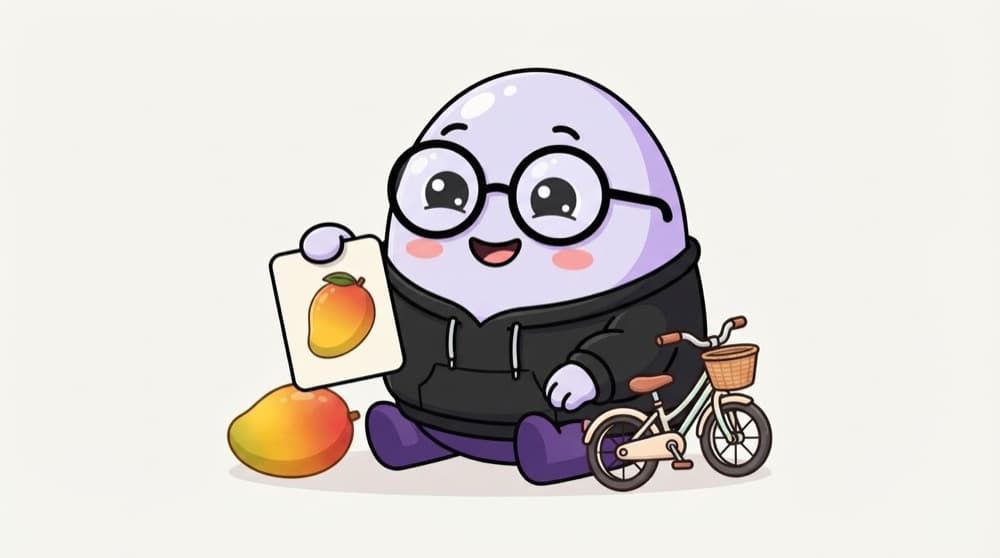
A parent shows flashcards: 'this is a mango'. That's supervised, learning from labelled answers. The child sorts a box of buttons into piles by colour with no names given: unsupervised. Learning to ride a cycle by wobbling, falling and trying again: reinforcement.
Watch it happen
The three families
1/4Three families, split by what feedback the model gets while learning.
The big ideas
What you need to know
Labels make it supervised
If your data has a target column you want to predict, it's supervised learning.
No labels, find structure
Unsupervised methods group or compress data. A human still decides what the groups mean.
Rewards drive RL
Reinforcement learning learns from trial and error. Common in games and robotics, rarer in everyday business work.
Most jobs are supervised
Churn, fraud, demand and pricing models are mostly supervised. Start your practice there.
See it in code
Walk through the code
1from sklearn.datasets import load_iris2from sklearn.linear_model import LogisticRegression3from sklearn.cluster import KMeans4 5X, y = load_iris(return_X_y=True)6 7clf = LogisticRegression(max_iter=1000).fit(X, y) # supervised: uses labels y8print(clf.predict(X[:3]))9 10km = KMeans(n_clusters=3, n_init=10, random_state=0).fit(X) # unsupervised: no y11print(km.labels_[:3])1/3X holds flower measurements, y holds the species labels.
Same flower measurements, two kinds of learning. One learns from the species labels, the other finds groups on its own.
Save yourself the pain
Common mistakes
Oops
Thinking clustering will tell you which customers will churn.
Do this instead
Churn is a labelled outcome, so it's a supervised problem. Clustering only groups similar customers.
Oops
Reaching for reinforcement learning for a normal prediction task.
Do this instead
If you have historical examples with answers, supervised learning is simpler and usually better.
Your mission
Classify ten problems
Quick check
You have past loan applications marked 'repaid' or 'defaulted'. Which type of learning fits?
Go deeper
- 1Classify 5 real-world ML applications you know into these 3 categories.
- 2Learn why most business data science work is supervised learning.
- 3Understand reinforcement learning conceptually even if you won't use it day-to-day.
More topics at this stop
 Train / Test / Validation Split
 Overfitting & Underfitting
 Bias-Variance Tradeoff
 Cross-Validation
 Linear Regression
 Logistic Regression
 Decision Trees
 Random Forests
 Gradient Boosting (XGBoost, LightGBM)
 K-Nearest Neighbors
 Support Vector Machines
 Naive Bayes

Stuck on this topic? Ask an Insider
Get 1:1 guidance from people who've walked this exact path — on the InsideEdge app.
