Handling a Production Incident
Part of the DevOps Roadmap
In short
'Tell me about a time something broke in production' checks how you behave under pressure. Even a personal project outage works, if you tell it with structure and honesty.
'Tell me about a time something broke in production' — testing composure under pressure and structured diagnostic thinking, even for a hypothetical or personal-project incident.
Think of it like this
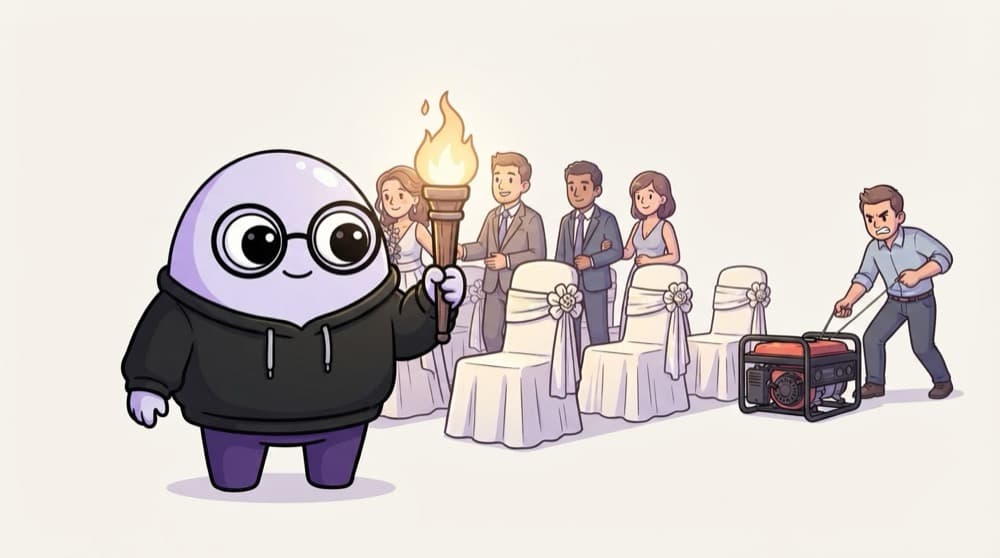
The power cut at the wedding
Halfway through the reception, the lights go out. One cousin panics. Another calmly switches on torches, gets the generator going, keeps guests seated and later finds the loose cable. When interviewers ask about incidents, they want to hear you were the second cousin.
Watch it happen
STAR, for an incident story
1/5Set the scene briefly: 'Our hackathon app's login stopped working an hour before judging.'
The big ideas
What you need to know
Show calm thinking
Describe how you narrowed down the cause step by step, not that you tried random fixes until one worked.
Mention communication
Who you told, and when. Keeping people informed is part of handling an incident well.
Own your part
If your change caused it, say so plainly. Interviewers respect ownership far more than excuses.
End with prevention
The best stories end with what you changed so it couldn't happen the same way again.
Save yourself the pain
Common mistakes
Oops
Blaming a teammate or another team for the outage.
Do this instead
Focus on the system and your actions. Blaming others is a red flag even if it was their change.
Oops
Making up a dramatic big-company outage you weren't really part of.
Do this instead
Use a true story, even a small one from a college project. Follow-up questions quickly expose invented details.
Your mission
Prepare two incident stories
Quick check
Which ending makes an incident story strongest?
Go deeper
- 1Prepare a genuine story, even a small one from a personal or practice project.
- 2Structure it with STAR (Situation, Task, Action, Result) for a tight answer.
- 3Focus on your diagnostic process and what you changed afterward, not just the fix itself.
More behavioral at this stop
 Explain a Past Infrastructure Project
 Cross-Team Collaboration Stories
 Staying Current With DevOps Tools

Stuck on this topic? Ask an Insider
Get 1:1 guidance from people who've walked this exact path — on the InsideEdge app.
