
Coding Rounds on LeetCode & HackerRank
Part of the Java Roadmap
In short
Most campus drives and many company hiring rounds start with an online coding test. Practising by pattern, not by random problem, is how you go from panic to calm in 90 minutes.
Many companies and campus placements start with an online coding test. Consistent practice by pattern on LeetCode, HackerRank or similar platforms is the most reliable preparation.
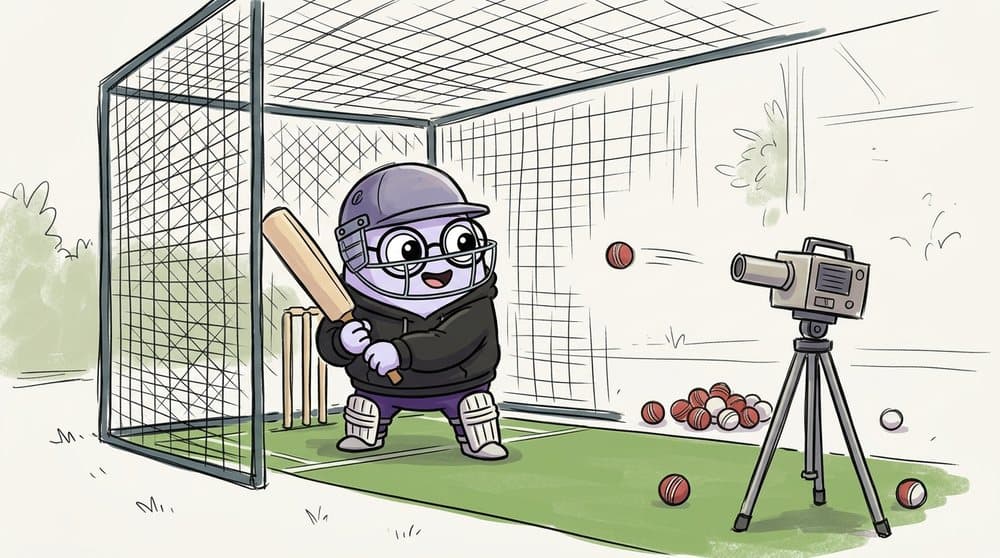
Think of it like this
Net practice before the match
A batsman doesn't wait for match day to face bouncers. In the nets he faces the same kind of ball again and again until his feet move on their own. Coding practice works the same way: twenty sliding-window problems in a week, and on test day you recognise the ball the moment it's bowled.
Watch it happen
Two Sum with a HashMap, target 9
1/4Find two numbers that add up to 9. Brute force checks every pair: O(n²).
The big ideas
What you need to know
Learn patterns
Two pointers, sliding window, hashing, binary search, BFS/DFS, recursion and backtracking, basic DP, heaps.
Consistency wins
Two problems a day for three months beats twenty problems the night before.
Say the complexity
State time and space complexity after every solution. Interviewers expect it.
Java speed tricks
Know HashMap, ArrayDeque, PriorityQueue, Arrays.sort and StringBuilder by heart. Use fast input on HackerRank for big inputs.
See it in code
Walk through the code
1import java.util.*;2 3class Solution {4 // Two Sum: return indexes of two numbers that add up to target5 public int[] twoSum(int[] nums, int target) {6 Map<Integer, Integer> seen = new HashMap<>();7 for (int i = 0; i < nums.length; i++) {8 int need = target - nums[i];9 if (seen.containsKey(need)) {10 return new int[] { seen.get(need), i };11 }12 seen.put(nums[i], i);13 }14 return new int[0];15 }16 17 // Longest substring without repeating characters: sliding window18 public int lengthOfLongestSubstring(String s) {19 Map<Character, Integer> last = new HashMap<>();20 int best = 0, left = 0;21 for (int right = 0; right < s.length(); right++) {22 char c = s.charAt(right);23 if (last.containsKey(c) && last.get(c) >= left) {24 left = last.get(c) + 1;25 }26 last.put(c, right);27 best = Math.max(best, right - left + 1);28 }29 return best;30 }31}1/5For each number, work out what partner it needs.
Two classic patterns in Java: hashing and sliding window. Both run in O(n).
Save yourself the pain
Common mistakes
Oops
Solving 500 random easy problems.
Do this instead
Go pattern by pattern, mixing easy and medium. Revisit problems you failed a week later.
Oops
Jumping into code the moment you read the problem.
Do this instead
Restate it, try a small example, discuss brute force, then improve. Talk through it in live rounds.
Oops
Ignoring edge cases.
Do this instead
Test empty input, one element, duplicates, negatives and very large values before submitting.
Your mission
A two-week pattern sprint
Quick check
What is the time complexity of the HashMap Two Sum solution?
Go deeper
- 1Solve problems grouped by pattern rather than at random.
- 2Practise under a timer on easy and medium problems.
- 3Keep notes of mistakes and revisit those problems weekly.
Also part of these roadmaps
More topics at this stop
 Building a Java Portfolio on GitHub
 Resume for Java Developer Roles
 Core Java Interview Questions
 OOP & Collections Interview Questions
 Spring Boot Interview Questions
 Low-Level Design Questions
 System Design Basics
 Explain Your Projects
 Debugging Approach

Stuck on this topic? Ask an Insider
Get 1:1 guidance from people who've walked this exact path — on the InsideEdge app.
