
Type Casting & Promotion
Part of the Java Roadmap
In short
Mixing an int with a double, or squeezing a decimal into an int, happens all the time. Java quietly handles the safe direction and makes you say "I know what I am doing" for the risky one.
Widening conversions (int to long or double) happen automatically, while narrowing conversions (double to int) need an explicit cast and may lose data.
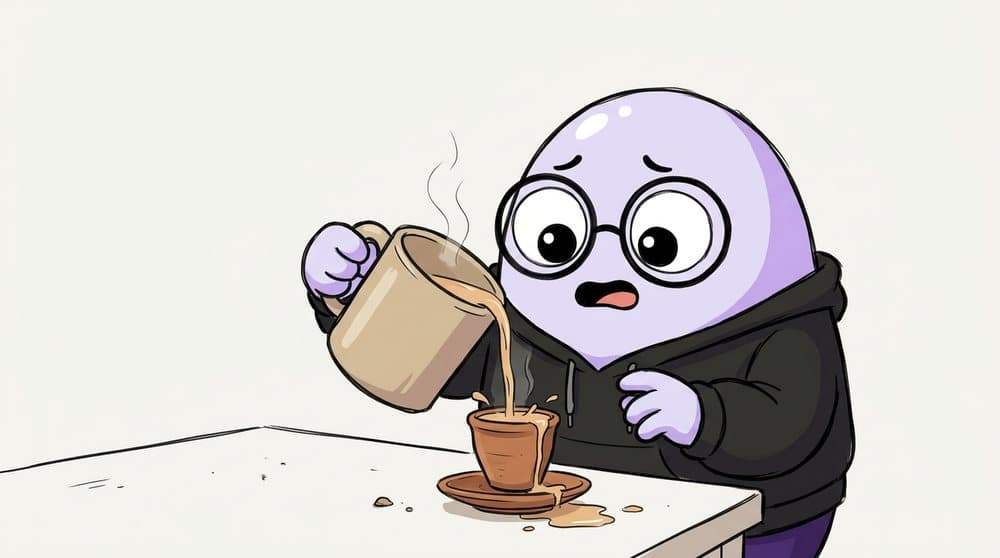
Think of it like this
Pouring between glasses
Pour a small cup of chai into a big mug and nothing spills. That is widening: int to long or double, done automatically. Pour a big mug into a small cup and some will overflow. Java makes you do that yourself, with a cast, so you own the spill.
Watch it happen
Widening happens automatically, left to right
1/5A byte can move right into any bigger type with no cast.
The big ideas
What you need to know
Widening is automatic
int to long, long to double and so on. No cast needed because nothing important is lost.
Narrowing needs a cast
(int) 9.99 is 9. The decimal part is cut off, not rounded. Use Math.round for rounding.
Promotion in expressions
byte, short and char become int in arithmetic. In a mix, the result takes the widest type.
Overflow is silent
(byte) 200 becomes -56. Casting to a smaller type can wrap around without any error.
See it in code
Walk through the code
1public class Casting {2 public static void main(String[] args) {3 int marks = 437;4 int total = 500;5 6 double percent = (double) marks / total * 100;7 System.out.println("Percent: " + percent);8 9 int rounded = (int) Math.round(percent);10 int truncated = (int) percent;11 System.out.println(rounded + " vs " + truncated);12 13 long big = marks; // widening: automatic14 byte small = (byte) 200; // narrowing: wraps around15 System.out.println(big + " " + small);16 17 char c = 'A';18 System.out.println(c + 1); // 6619 System.out.println((char) (c + 1)); // B20 }21}1/4The cast applies to marks first, so the division is done in double: 87.4.
Casting before dividing, rounding vs truncating, and what char arithmetic really does.
Save yourself the pain
Common mistakes
Oops
double percent = (double) (marks / total) * 100;
Do this instead
The brackets make integer division happen first, giving 0. Cast one operand: (double) marks / total * 100.
Oops
Using (int) to round a price.
Do this instead
(int) 99.9 is 99. Use Math.round(99.9), which returns 100 as a long.
Your mission
Percentage calculator
Quick check
What is the value of (int) 7.9?
Go deeper
- 1Cast a double to an int and observe the truncation.
- 2Convert strings to numbers with Integer.parseInt() and Double.parseDouble().
- 3See what happens when you cast a large long to an int.
More topics at this stop
 Variables & Primitive Data Types
 Type Inference with var
 Operators & Expressions
 Strings & String Methods
 StringBuilder
 Reading Input with Scanner

Stuck on this topic? Ask an Insider
Get 1:1 guidance from people who've walked this exact path — on the InsideEdge app.
