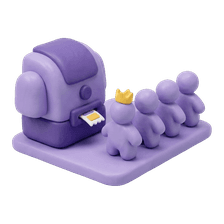
In short
Print jobs, customer support tickets, undo history, hospital emergencies: some things are served in arrival order, some in reverse, and some by priority. Java has a ready-made structure for each.
Queue is first-in, first-out, Deque supports both ends (ArrayDeque is the preferred stack and queue), and PriorityQueue always gives you the smallest (or highest-priority) element first.
Think of it like this
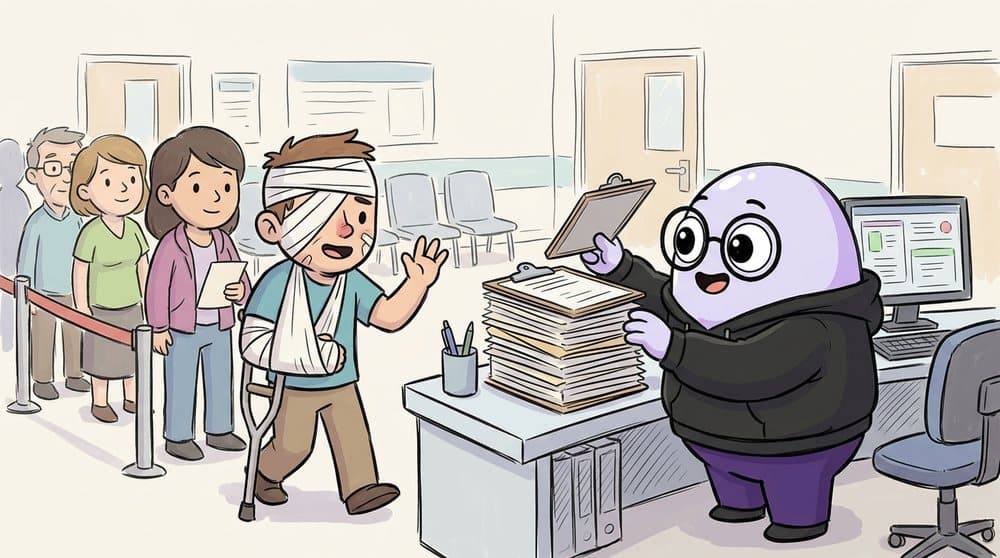
Railway counter, plate stack and hospital triage
A railway ticket counter serves whoever came first (Queue). A stack of plates at a wedding buffet gives you the plate placed last (stack, done with a Deque). The emergency ward sees the most serious patient first, no matter who arrived when (PriorityQueue).
Watch it happen
A ticket counter as a queue
Front of the queue is coloured
1/5offer("Ananya"): she joins at the back of the line.
The big ideas
What you need to know
Queue is FIFO
offer() adds at the back, poll() removes from the front, peek() looks without removing.
Deque works both ends
addFirst, addLast, pollFirst, pollLast. Use push and pop to treat it as a stack.
ArrayDeque is the default
It beats LinkedList as a queue and replaces the old Stack class, which is synchronized and slower.
PriorityQueue serves the smallest
It is a binary heap. poll() returns the smallest element, or the top one by your Comparator, in O(log n).
See it in code
Walk through the code
1import java.util.ArrayDeque;2import java.util.Comparator;3import java.util.Deque;4import java.util.PriorityQueue;5import java.util.Queue;6 7public class QueueDemo {8 record Patient(String name, int severity) {}9 10 public static void main(String[] args) {11 Queue<String> counter = new ArrayDeque<>();12 counter.offer("Ananya");13 counter.offer("Rohit");14 System.out.println(counter.poll()); // Ananya (first in, first out)15 16 Deque<String> history = new ArrayDeque<>();17 history.push("home");18 history.push("cart");19 System.out.println(history.pop()); // cart (last in, first out)20 21 PriorityQueue<Patient> er = new PriorityQueue<>(22 Comparator.comparingInt(Patient::severity).reversed());23 er.offer(new Patient("Vikram", 3));24 er.offer(new Patient("Sana", 9));25 er.offer(new Patient("Kiran", 5));26 System.out.println(er.poll().name()); // Sana, most severe first27 }28}1/4As a Queue, ArrayDeque serves the earliest arrival.
One ArrayDeque used as a queue, another as a stack, and a PriorityQueue ordered by severity, highest first.
Save yourself the pain
Common mistakes
Oops
Using the legacy Stack class for a stack.
Do this instead
Use Deque<T> stack = new ArrayDeque<>() with push, pop and peek.
Oops
Printing a PriorityQueue and expecting it to look sorted.
Do this instead
Only the head is guaranteed to be the smallest. Call poll() repeatedly to get elements in order.
Oops
Calling remove() or element() on an empty queue and getting an exception.
Do this instead
Use poll() and peek(), which return null when the queue is empty.
Your mission
Support desk simulator
Quick check
Which class is recommended for both stack and queue behaviour in modern Java?
Go deeper
- 1Use ArrayDeque as a stack with push() and pop().
- 2Use a PriorityQueue to find the k largest numbers in a list.
- 3Learn the difference between offer/poll/peek and add/remove/element.
More topics at this stop
 Collections Framework Overview
 ArrayList vs LinkedList
 HashMap & How Hashing Works
 TreeMap & LinkedHashMap
 HashSet & TreeSet
 Iterators & ConcurrentModificationException
 Comparable vs Comparator
 Generics & Bounded Types
 Immutable Collections & the Collections Utility Class

Stuck on this topic? Ask an Insider
Get 1:1 guidance from people who've walked this exact path — on the InsideEdge app.
