
Amazon-Style Written Narratives
Part of the Product Management Roadmap
In short
Slides let fuzzy thinking hide between bullet points. Amazon became known for replacing them with full written memos that everyone reads in silence before talking.
Amazon's practice of replacing slide decks with structured narrative documents (often 6-pagers) read silently at the start of a meeting — forcing clearer thinking than bullet points allow.
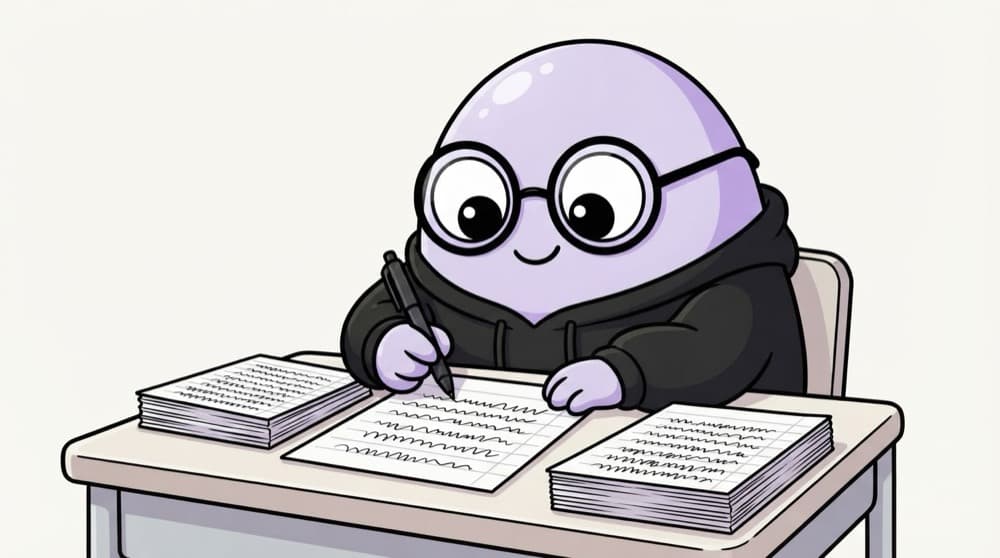
Think of it like this
The 10-mark exam answer
A two-word bullet can't fool the examiner in a 10-mark question. You have to explain, connect ideas and reach a conclusion. If you don't really understand the topic, it shows by the second paragraph. Written narratives do the same to product ideas.
Watch it happen
How a narrative meeting runs
1/5The PM writes a memo in full sentences: problem, data, proposal, risks. Often several pages long.
The big ideas
What you need to know
Writing forces clarity
Full sentences make you connect cause and effect. Gaps in logic become obvious.
Read together, in silence
Reading at the start means everyone begins with the same context.
Work backwards
Amazon also uses a PR/FAQ: a mock press release and FAQ written before building, from the customer's view.
A lasting record
Months later, anyone can read why a decision was made.
See it in code
Walk through the code
1Title: Reorder in one tap2 31. Problem4 Regular buyers rebuild the same cart every week.52. Evidence6 38% of orders repeat last week's items.73. Proposal8 A "Reorder" button on past orders.94. Risks and open questions10 Out-of-stock items; price changes since last order.115. What we need from this meeting12 Approve a 4-week build.1/3Problem and evidence come first, so readers agree on what's wrong before hearing a fix.
A short narrative skeleton. Real memos are longer, but the order is the same: problem, proof, proposal, risks, ask. The numbers here are made up.
Save yourself the pain
Common mistakes
Oops
Pasting bullet points into a doc and calling it a narrative.
Do this instead
Write in full sentences that explain why one point leads to the next.
Oops
Sending the memo a week early and assuming people read it.
Do this instead
Give reading time at the start of the meeting so everyone is truly on the same page.
Your mission
Write a one-page narrative
Quick check
Why do narrative-based meetings start with silent reading?
Go deeper
- 1Read a public example or summary of Amazon's 6-pager format.
- 2Try converting a slide deck you've made into full prose and see what gaps in logic appear.
- 3Learn why bullet points can hide sloppy reasoning that full sentences expose.
More topics at this stop
 Cross-Functional Collaboration
 Managing Up
 Influence Without Authority
 Executive Communication
 Presenting a Roadmap
 Handling Disagreement & Conflict
 Saying No Gracefully
 Facilitating Effective Meetings

Stuck on this topic? Ask an Insider
Get 1:1 guidance from people who've walked this exact path — on the InsideEdge app.
