
Edge Case Thinking
Part of the Product Management Roadmap
In short
Users rarely follow the happy path you designed. Edge case thinking means asking "what if…?" before users find the answer the hard way.
Systematically asking 'what happens when...' — empty states, network failures, permission errors, concurrent edits — before engineers discover them mid-sprint.
Think of it like this
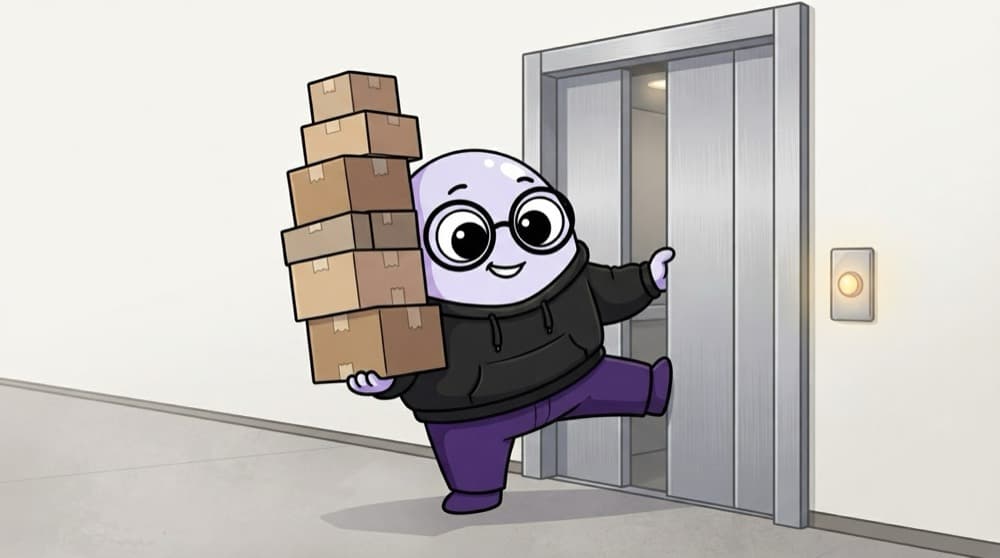
The apartment lift
A lift works fine on a normal trip. But what if it's overloaded, the power cuts mid-floor, or a child holds the door open? Good lifts have an alarm, a backup and a door sensor. Someone thought "what if" in advance.
Watch it happen
"What if" for a signup form
1/5The happy path: user types valid details and taps Sign up once. Easy to design. Now go through the rest.
The big ideas
What you need to know
Ask "what if" by category
Empty, too much, wrong type, slow, offline, repeated, no permission. Run every feature through the list.
Think of different users
New users, power users, users on old phones, users with screen readers. Each hits different edges.
Write them down
Each edge case becomes an acceptance criterion or a deliberate "not handling now" note.
Not every edge needs a fix
Weigh how often it happens and how bad it is. Some can wait; say so explicitly.
Save yourself the pain
Common mistakes
Oops
Leaving edge cases for engineers to discover while coding.
Do this instead
List common ones in the spec. Engineers will find more, but shouldn't have to find all.
Oops
Trying to handle every possible case before launch.
Do this instead
Fix the frequent and harmful ones. Log the rare ones and revisit with real data.
Your mission
Break a form
Quick check
A user taps "Pay" twice quickly on a slow network. What's the key edge case?
Go deeper
- 1Take a feature idea and list 10 edge cases across empty, error, and boundary states.
- 2Learn the categories: empty state, error state, loading state, permission state.
- 3Practice this on a feature you've used that clearly missed an edge case.
More topics at this stop
 Writing a PRD (Product Requirements Doc)
 User Stories & Acceptance Criteria
 Epics vs Stories vs Tasks
 One-Pagers & RFCs
 Non-Functional Requirements
 Wireframing Basics
 Writing Feature Specs
 Writing for Engineers vs Executives

Stuck on this topic? Ask an Insider
Get 1:1 guidance from people who've walked this exact path — on the InsideEdge app.
