In short
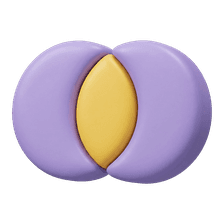
When you reconcile two lists, like your sales records against the bank's settlement report, you need to see what's missing on both sides. FULL OUTER JOIN shows you all of it in one result.
RIGHT JOIN keeps all rows from the right table, and FULL OUTER JOIN keeps all rows from both. MySQL does not support FULL OUTER JOIN directly, so it is emulated with UNION.
Think of it like this
Matching the bill book with the bank statement
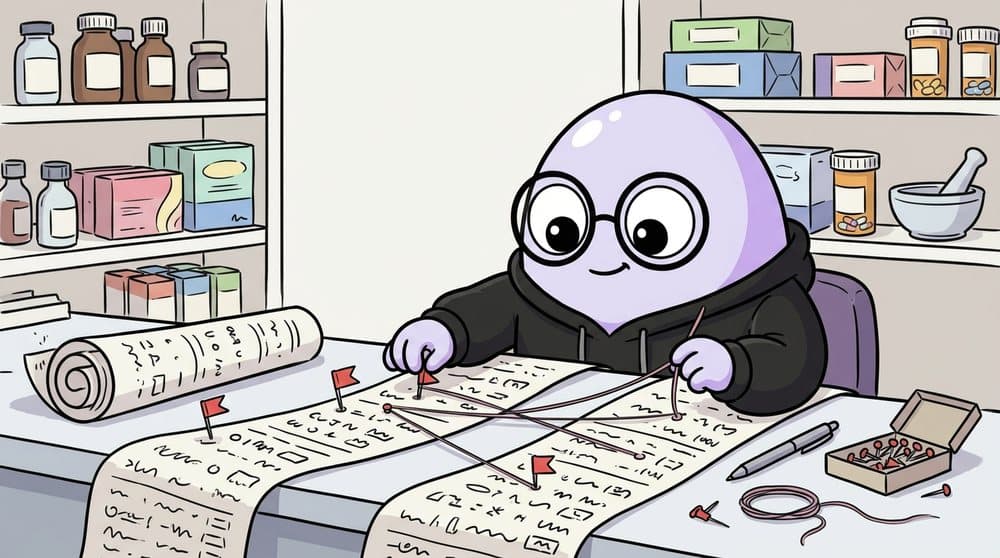
A medical store owner in Lucknow sits with two lists: her own bill book and the bank's UPI settlement statement. Most entries match. Some bills never reached the bank, and some bank credits have no bill. Ticking off only her bill book is a LEFT (or RIGHT) join. Laying both lists side by side and marking every gap is a FULL OUTER JOIN.
Watch it happen
Keep one side, or keep both
RIGHT JOIN
- Keeps every row of the right table
- Left columns are NULL when unmatched
- Same as a LEFT JOIN with the tables swapped
- Works in PostgreSQL, MySQL and SQL Server
FULL OUTER JOIN
- Keeps every row from both tables
- Matched rows are joined, unmatched get NULLs
- Perfect for reconciling two lists
- Not in MySQL, so emulate it with UNION
Most teams rewrite RIGHT JOIN as LEFT JOIN for readability. Use FULL OUTER JOIN when gaps on both sides matter.
The big ideas
What you need to know
RIGHT is LEFT flipped
A RIGHT JOIN B is the same as B LEFT JOIN A. Reading left-to-right is easier, so most people prefer LEFT.
FULL keeps everything
Every row from both tables appears once, matched where possible, with NULLs where not.
Built for reconciliation
Comparing two systems, two months or two vendors' lists is the classic FULL OUTER JOIN job.
MySQL workaround
MySQL has no FULL OUTER JOIN. Use a LEFT JOIN, then UNION a RIGHT JOIN of the same tables.
See it in code
Walk through the code
1SELECT2 COALESCE(b.txn_ref, u.txn_ref) AS txn_ref,3 b.amount AS bill_amount,4 u.amount AS bank_amount,5 CASE6 WHEN b.txn_ref IS NULL THEN 'Missing in bill book'7 WHEN u.txn_ref IS NULL THEN 'Missing in bank'8 WHEN b.amount <> u.amount THEN 'Amount mismatch'9 ELSE 'Matched'10 END AS status11FROM shop_bills AS b12FULL OUTER JOIN upi_settlements AS u13 ON u.txn_ref = b.txn_ref14ORDER BY status, txn_ref;1/3Unmatched rows have NULL on one side, so COALESCE picks whichever reference exists.
A UPI reconciliation report. In MySQL, write it as a LEFT JOIN UNION a RIGHT JOIN of the same two tables.
Save yourself the pain
Common mistakes
Oops
Mixing LEFT and RIGHT joins in one query.
Do this instead
It quickly becomes impossible to tell which rows are protected. Reorder the tables and use only LEFT JOINs.
Oops
Selecting b.txn_ref alone in a FULL OUTER JOIN.
Do this instead
It's NULL for bank-only rows. Use COALESCE(b.txn_ref, u.txn_ref) for the key.
Oops
Using UNION ALL for the MySQL workaround without care.
Do this instead
Matched rows appear in both halves. Use UNION, or add WHERE b.txn_ref IS NULL to the second half.
Your mission
Reconcile two lists
Quick check
Table A has IDs 1, 2, 3 and table B has IDs 2, 3, 4. How many rows does A FULL OUTER JOIN B ON A.id = B.id return?
Go deeper
- 1Rewrite a RIGHT JOIN as a LEFT JOIN by swapping table order.
- 2Use FULL OUTER JOIN to compare two lists and find what is missing from each.
- 3Learn the MySQL workaround with LEFT JOIN UNION RIGHT JOIN.
More topics at this stop
 How Joins Work
 INNER JOIN
 LEFT JOIN
 SELF JOIN
 CROSS JOIN
 Joining Multiple Tables
 Filtering in ON vs WHERE with Outer Joins
 Anti Joins (Finding Unmatched Rows)
 Duplicate Rows from Joins (Fan-Out)

Stuck on this topic? Ask an Insider
Get 1:1 guidance from people who've walked this exact path — on the InsideEdge app.
