Tone & Voice in Product Copy
Part of the UI/UX Design Roadmap
In short
Your product talks to people all day. Voice is its personality, which stays the same. Tone is its mood, which changes: cheerful on a success screen, calm when a payment fails.
A brand's consistent personality expressed through word choice — friendly versus formal, playful versus serious — applied consistently across every piece of interface copy.
Think of it like this
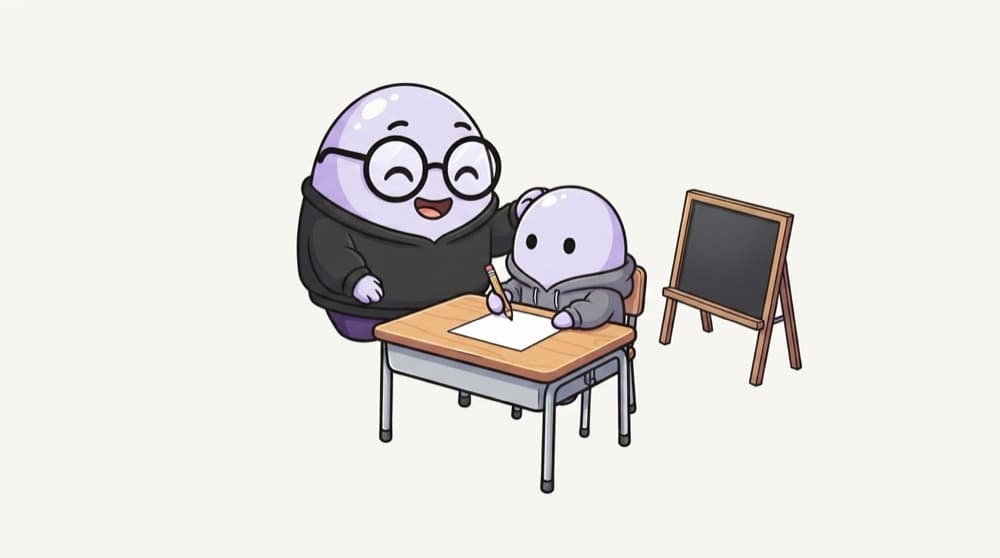
Your favourite teacher
Your favourite teacher is always warm and clear. That's her voice. She jokes in class, stays gentle when you fail a test, and gets firm before exams. Same person, different tone for each moment.
Watch it happen
One voice, many tones
1/4The voice is the base personality, written as a few traits like 'warm, clear, never pushy'. It doesn't change.
The big ideas
What you need to know
Voice is identity
Write three to four voice traits, each with a 'this, not that' example, like 'friendly, not silly'.
Tone follows emotion
Think about how the user feels right now. Stressed users need calm, short words.
Write a mini guide
A one-page voice guide with examples keeps copy consistent across designers, writers and developers.
Fit your audience
A banking app and a gaming app have very different voices. Match what your users trust.
Save yourself the pain
Common mistakes
Oops
Making every message playful, including account bans and failed payments.
Do this instead
Adjust tone to the moment. Serious situations need plain, reassuring words.
Oops
Defining voice as vague words like 'cool' and 'modern'.
Do this instead
Give each trait a clear definition and real examples of what to write and what to avoid.
Your mission
Write a mini voice guide
Quick check
What's the difference between voice and tone?
Go deeper
- 1Define 3 tone adjectives for a hypothetical product and write sample copy demonstrating each.
- 2Compare how 2 different apps' tone shows up in the same type of message (e.g. an error).
- 3Learn why tone should still flex situationally (a payment failure needs a calmer tone than a like button).
More topics at this stop
 UX Writing Fundamentals
 Microcopy & Button Labels
 Error Message Writing
 Content-First Design
 Localization Basics
 Writing for Accessibility

Stuck on this topic? Ask an Insider
Get 1:1 guidance from people who've walked this exact path — on the InsideEdge app.
