Feature Stores (Overview)
Part of the AI Engineer Roadmap
In short
Training used 'orders in the last 7 days' computed one way. Serving computed it slightly differently. The model quietly gets worse. Feature stores exist to stop exactly this.
Centralized systems for storing, sharing and serving ML features consistently between training and inference — solves the common bug where training and serving features silently drift apart.

Think of it like this
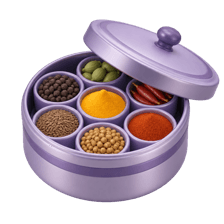
One shared masala dabba
If every cook in a dhaba grinds their own garam masala, the dal tastes different on every shift. So the head cook makes one batch and everyone uses the same dabba. A feature store is that shared dabba: features computed once, used the same way for training and serving.
Watch it happen
Same features for training and serving
write orders_7d history
1/5A scheduled job computes features from raw data and saves the full history for training.
The big ideas
What you need to know
One definition
Each feature is defined once in code. Training and serving both read from it.
Offline store
Holds history for building training sets. Usually a warehouse or files.
Online store
Holds the latest value per entity for fast lookups, often in a key-value database like Redis.
Point-in-time correct
Training rows only see feature values from before the label happened. This prevents subtle data leakage.
See it in code
Walk through the code
1from feast import FeatureStore2 3store = FeatureStore(repo_path=".")4 5features = store.get_online_features(6 features=[7 "user_stats:orders_last_7d",8 "user_stats:avg_order_value",9 ],10 entity_rows=[{"user_id": 1042}],11).to_dict()12 13print(features)1/3Point at a Feast repo that defines your features.
Reading online features with Feast, an open-source feature store. Training uses get_historical_features with the same names.
Save yourself the pain
Common mistakes
Oops
Rewriting feature logic in the API because 'it's just a quick sum'.
Do this instead
Two copies of logic drift apart. Compute once and read the stored value in both places.
Oops
Adding a feature store to a two-feature student project.
Do this instead
It's worth it with many features, models and teams. For small projects, a shared Python function is enough.
Your mission
Try Feast locally
Quick check
What problem does a feature store mainly solve?
Go deeper
- 1Read how a feature store keeps offline (training) and online (serving) features consistent.
- 2Understand the 'training-serving skew' problem a feature store is designed to prevent.
- 3Explore an open-source feature store (e.g. Feast) at a conceptual level.
More topics at this stop
 Model Serving (FastAPI/Flask)
 Docker for ML Models
 Model Versioning
 Experiment Tracking (MLflow, Weights & Biases)
 CI/CD for ML Pipelines
 Model Monitoring & Drift Detection
 A/B Testing Models
 Batch vs Real-time Inference
 Kubernetes for ML (Overview)

Stuck on this topic? Ask an Insider
Get 1:1 guidance from people who've walked this exact path — on the InsideEdge app.
