
Cryptography Fundamentals Deep Dive
Part of the Cybersecurity Roadmap
In short
You already know encryption scrambles data. Now learn which tool fits which job, because picking the wrong one, or using the right one badly, quietly breaks everything.
Going beyond Phase 4's introduction — understanding common algorithms (AES, RSA), key lengths, and why cryptographic implementation details matter as much as the underlying math.
Think of it like this
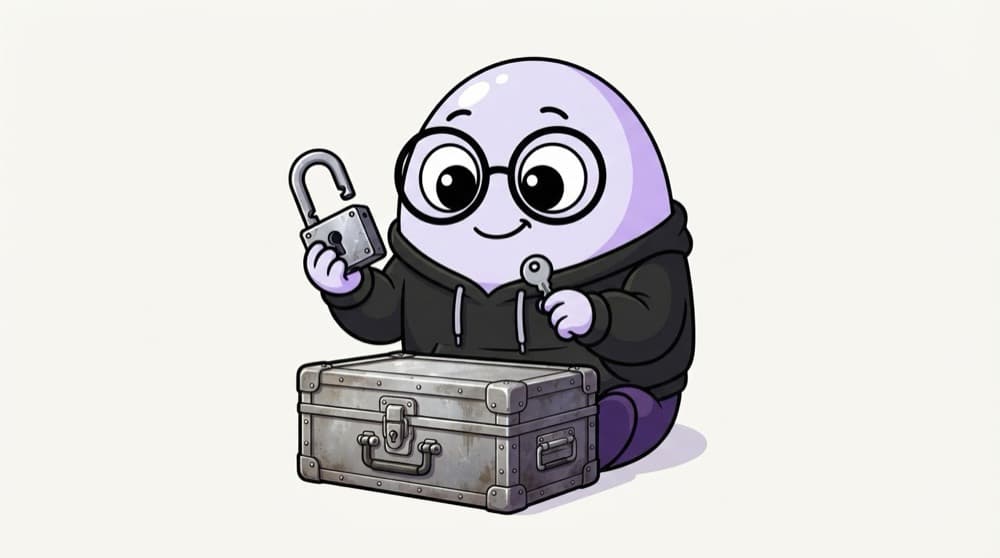
The trunk key and the open padlock
Your hostel trunk has one key; anyone with a copy can open it. That is symmetric: one shared secret. Now imagine handing out open padlocks. Anyone can snap one shut on a box for you, but only your key opens it. That is asymmetric.
Watch it happen
The crypto toolbox
1/4Symmetric: one key locks and unlocks. Fast, so it encrypts the bulk data. AES-GCM also detects tampering.
The big ideas
What you need to know
Hybrid in real life
Real systems mix them: asymmetric crypto agrees on a key, then fast symmetric crypto encrypts the actual data. TLS works this way.
Key size matters
AES-128 or AES-256 are fine today. RSA needs at least 2048 bits. Short or old keys fall to modern hardware.
Authenticated encryption
Modes like AES-GCM give secrecy and tamper detection together. Plain encryption without integrity can be silently altered.
Never roll your own
Use well tested libraries. Home made ciphers and clever tweaks are how most crypto failures happen.
See it in code
Walk through the code
1import os2from cryptography.hazmat.primitives.ciphers.aead import AESGCM3 4key = AESGCM.generate_key(bit_length=256)5aes = AESGCM(key)6nonce = os.urandom(12) # unique per message, never reuse7 8ct = aes.encrypt(nonce, b"roll 42: 88 marks", None)9print(aes.decrypt(nonce, ct, None))1/3Use a tested library and let it make a random 256 bit key for you.
Authenticated encryption with the well known cryptography library. If even one byte of ct is changed, decrypt raises an error instead of returning garbage.
Save yourself the pain
Common mistakes
Oops
Storing passwords with fast hashes like plain SHA-256 or MD5.
Do this instead
Use a slow, salted password hash such as Argon2id or bcrypt, designed to make guessing expensive.
Oops
Hard coding the encryption key next to the encrypted data.
Do this instead
Keep keys in a secrets manager or KMS. Encryption is only as strong as how you guard the key.
Your mission
Encrypt and tamper in your lab
Quick check
Why do real systems like TLS use both asymmetric and symmetric encryption?
Go deeper
- 1Learn the general strength differences between common key lengths (e.g. AES-128 vs AES-256).
- 2Understand why 'rolling your own crypto' is a well-known anti-pattern to avoid.
- 3Research a real-world cryptographic implementation flaw (not algorithm weakness) that caused a breach.
More topics at this stop
 Digital Signatures
 TLS/SSL Deep Dive
 Cryptographic Attacks
 Blockchain Security Basics
 IoT Security Basics
 AI & Security (Adversarial ML Overview)
 Emerging Threats Landscape

Stuck on this topic? Ask an Insider
Get 1:1 guidance from people who've walked this exact path — on the InsideEdge app.
