
Vulnerable & Outdated Components
Part of the Cybersecurity Roadmap
In short
Your app might have 30 direct dependencies and 800 hidden ones underneath. When a hole is found in any of them, it's your hole too, until you update.
Using libraries, frameworks, or dependencies with known vulnerabilities — often introduced unknowingly through transitive dependencies, making dependency scanning (Phase 10) essential.
Think of it like this
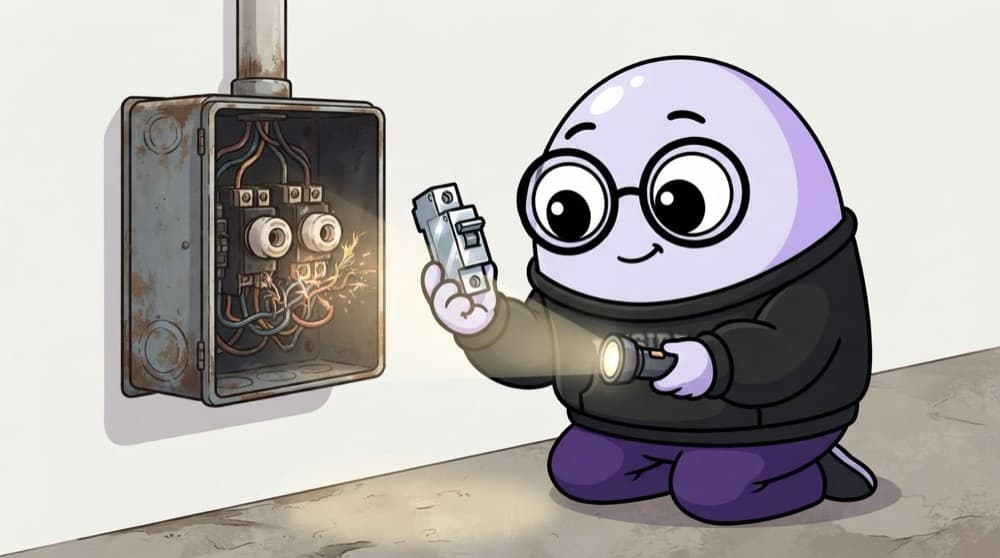
Old wiring in a rented flat
You buy shiny new appliances, but the flat still runs on 20-year-old wiring behind the walls. One day it sparks. You didn't install that wiring, yet your home is the one at risk. Dependencies are that hidden wiring under your code.
Watch it happen
Where a known hole hides
1/5Your package.json lists only a couple of direct dependencies.
The big ideas
What you need to know
Know what you ship
A lockfile and an SBOM (software bill of materials) list every package and version in your build.
Scan automatically
npm audit, Dependabot, Snyk or OSV-Scanner compare your packages against databases of published vulnerabilities.
Small, frequent updates
Updating a little every week is easy. Jumping three major versions after two years is painful.
Remove what you don't use
Every unused package is extra risk with zero benefit. Delete it.
See it in code
Walk through the code
1# Install exactly what the lockfile says2npm ci3 4# List known vulnerabilities in production dependencies5npm audit --omit=dev6 7# Fail CI only for high and critical issues8npm audit --audit-level=high9 10# See which package pulled in a vulnerable one11npm explain minimist1/4npm ci installs the exact versions in package-lock.json, so CI and production match.
Commit your lockfile. Without it, two installs of the same project can pull different versions.
Save yourself the pain
Common mistakes
Oops
Running npm audit fix --force and pushing straight to production.
Do this instead
--force can install breaking major versions. Update on a branch, run tests, then merge.
Oops
Ignoring audit warnings because "it's only a dev dependency".
Do this instead
Dev tools run on your machine and CI. Judge each finding by where the package actually runs.
Your mission
Audit an old project
Quick check
npm audit flags a package you never installed. What's the most likely explanation?
Go deeper
- 1Run a dependency scan on a sample project and review any flagged vulnerable libraries.
- 2Learn why a project can be vulnerable through a dependency it doesn't directly control.
- 3Understand why keeping dependencies updated is a simple but frequently neglected practice.
More topics at this stop
 OWASP Top 10 Overview
 SQL Injection
 Cross-Site Scripting (XSS)
 Cross-Site Request Forgery (CSRF)
 Broken Authentication
 Security Misconfiguration
 Insecure Deserialization
 Server-Side Request Forgery (SSRF)
 Broken Access Control
 Common Web App Attack Techniques

Stuck on this topic? Ask an Insider
Get 1:1 guidance from people who've walked this exact path — on the InsideEdge app.
