
In short
"Design the API for a restaurant menu and orders." This question tests whether a frontend developer would enjoy using your API, and whether it survives version two.
Being fluent in designing APIs that are pleasant for a frontend to consume — endpoint structure, status codes, and avoiding overly chatty request patterns.
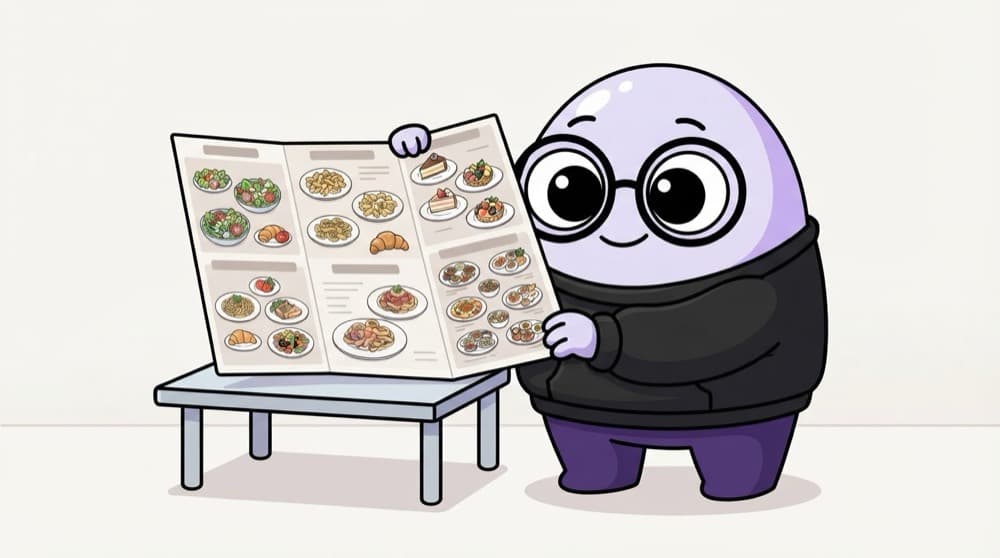
Think of it like this
A good restaurant menu card
A clear menu has sections, the same layout for every dish, prices in one format and notes like 'sold out'. You never need to ask the waiter how to read it. An API should feel that obvious to the frontend.
Watch it happen
Answering an API design question
1/6Name the nouns: restaurants, menu items, carts, orders. Plural, lowercase, no verbs.
The big ideas
What you need to know
Design from the screen
Ask what the menu screen shows and return it in one call, instead of making the app stitch five calls together.
Be boringly consistent
Same naming, same list shape, same error shape everywhere. Consistency beats cleverness.
Safe to retry
GET, PUT and DELETE should be idempotent. For POST /orders, accept an Idempotency-Key so a retry doesn't order twice.
Auth and limits
Say how clients authenticate, what each role may call, and how you rate limit.
See it in code
Walk through the code
1GET /v1/restaurants/42/menu?category=starters&limit=20&cursor=eyJpZCI6ODh92Authorization: Bearer <token>3 4HTTP/1.1 200 OK5Content-Type: application/json6 7{8 "data": [{ "id": "m_91", "name": "Paneer Tikka", "pricePaise": 24900, "veg": true }],9 "nextCursor": "eyJpZCI6MTA5fQ"10}11 12POST /v1/orders -> 422 Unprocessable Content13{ "error": { "code": "ITEM_UNAVAILABLE", "message": "Paneer Tikka is sold out", "field": "items[0]" } }1/3Versioned path, nested resource, a filter, a capped limit and an opaque cursor.
Writing a real request and response on the board makes your design concrete: version, filters, cursor, money format and the error shape.
Save yourself the pain
Common mistakes
Oops
Endpoints like /getMenu, /createOrder and /cancelOrderNow.
Do this instead
Use nouns and methods: GET /menu, POST /orders, PATCH /orders/:id with a status change.
Oops
Forgetting what happens when the client retries a POST after a timeout.
Do this instead
Mention idempotency keys for payments and orders so retries are safe.
Your mission
Design a menu API on paper
Quick check
A mobile app retries POST /orders after a timeout, and the user gets charged twice. What design fixes this?
Go deeper
- 1Be ready to design a REST API for a given feature on a whiteboard.
- 2Explain how you'd design an API knowing what the frontend needs to render.
- 3Practice justifying trade-offs like REST vs GraphQL for a specific scenario.
More technical at this stop
 Frontend fundamentals
 Backend fundamentals
 Database design
 System design (full-stack)
 Authentication & security
 Debugging full-stack issues
 Performance across the stack

Stuck on this topic? Ask an Insider
Get 1:1 guidance from people who've walked this exact path — on the InsideEdge app.
