Backend fundamentals
Part of the Full Stack Developer Roadmap
In short
The backend half of the interview checks whether you understand what happens behind the API: status codes, middleware, databases, transactions. Show the 'why', not just the syntax.
Being able to confidently explain Node.js, Express, and API design under interview pressure — the backend half of a full-stack interview.
Think of it like this
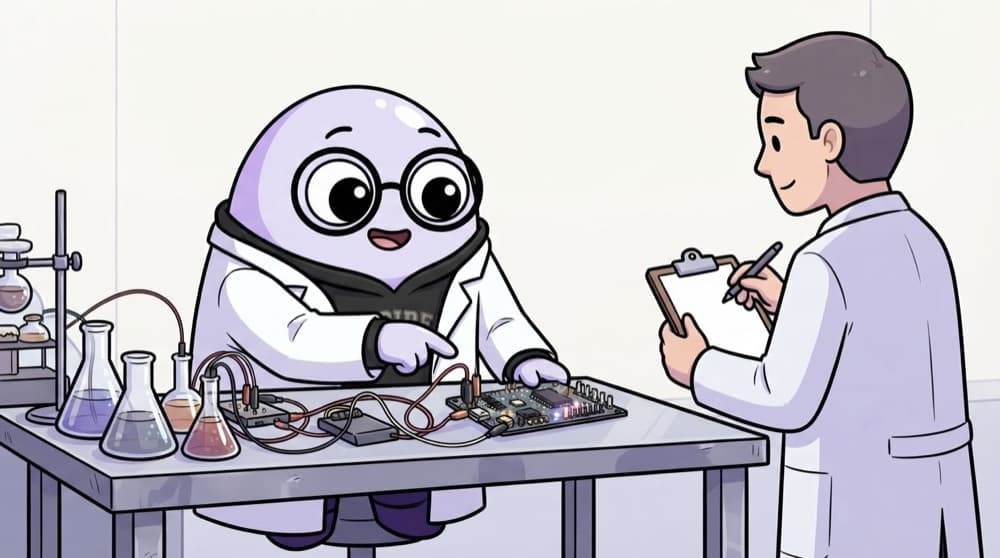
The practical exam viva
In the lab viva, the examiner points at your circuit and asks, "Why this resistor? What if it fails?" Getting the right reading isn't enough. Backend rounds are a viva on your server: explain each part and its failure.
Watch it happen
"Why would you use a transaction?"
1/5Start with the problem: a wallet transfer is two updates. If only one happens, money appears or vanishes.
The big ideas
What you need to know
HTTP and Express
Methods, status codes, headers, middleware order, error handling and how a request flows through your app.
SQL that matters
JOINs, indexes, EXPLAIN, transactions and the N+1 problem. Know when NoSQL would be a better fit.
Node's event loop
Why one blocking loop freezes every request, and how async I/O lets one process serve many users.
Validation and errors
Validate input at the edge, return honest codes, never leak stack traces to clients.
See it in code
Walk through the code
1app.post("/api/transfer", requireAuth, async (req, res) => {2 const { toId, amountPaise } = TransferSchema.parse(req.body);3 try {4 await db.$transaction(async (tx) => {5 const from = await tx.wallet.update({6 where: { userId: req.user.id },7 data: { balancePaise: { decrement: amountPaise } },8 });9 if (from.balancePaise < 0) throw new Error("INSUFFICIENT_FUNDS"); // rolls back the debit10 await tx.wallet.update({ where: { userId: toId }, data: { balancePaise: { increment: amountPaise } } });11 });12 res.json({ ok: true });13 } catch (e) {14 res.status(400).json({ error: { code: (e as Error).message } });15 }16});1/4Validate the body first, so a negative or text amount never reaches the database.
An interactive Prisma transaction. Both wallet updates commit together, or the throw undoes everything.
Save yourself the pain
Common mistakes
Oops
Saying 'I'd use a transaction' without saying what it protects against.
Do this instead
Name the exact failure (crash between two writes, two requests at once) and how the design prevents it.
Oops
Returning 200 with an error message, or 500 for bad input.
Do this instead
Use 400 or 422 for bad input, 401 or 403 for auth problems, 404 for missing, 409 for conflicts.
Your mission
Backend viva practice
Quick check
Without a transaction, your server debits wallet A and then crashes before crediting wallet B. What happens?
Go deeper
- 1Practice explaining the event loop, middleware, and REST conventions out loud, from memory.
- 2Do a live-coding practice session building a small API endpoint under time pressure.
- 3Review your weakest backend area specifically.
More technical at this stop
 Frontend fundamentals
 Database design
 System design (full-stack)
 API design
 Authentication & security
 Debugging full-stack issues
 Performance across the stack

Stuck on this topic? Ask an Insider
Get 1:1 guidance from people who've walked this exact path — on the InsideEdge app.
