
System design (full-stack)
Part of the Full Stack Developer Roadmap
In short
"Design live order tracking for a food app." A full stack design round wants the whole picture: what the screen shows, how it gets data, what the API looks like and where data lives.
Higher-level interview questions about architecting a complete feature or app — spanning frontend rendering strategy, API design, and backend data modeling together.
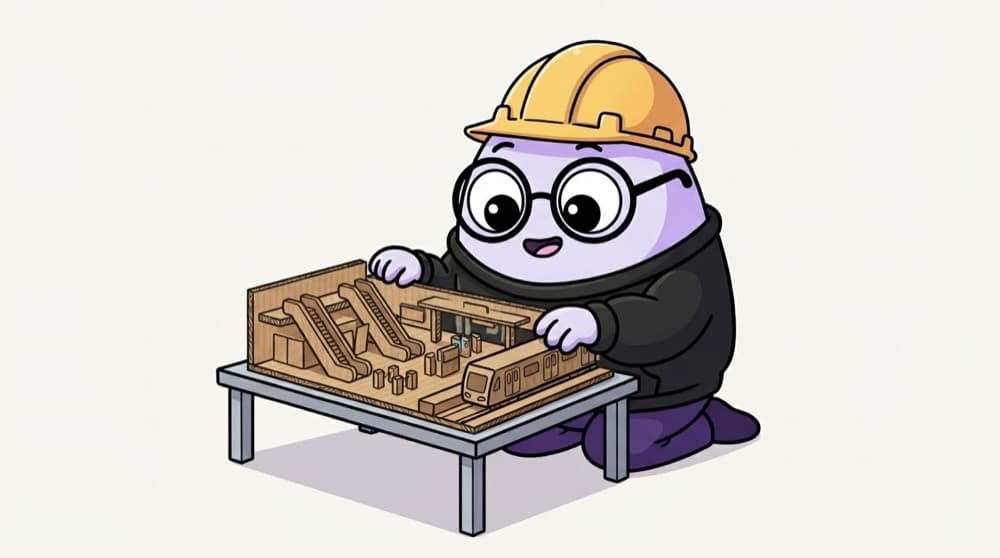
Think of it like this
Planning a new metro station
Engineers first ask how many people use it at rush hour, where they enter, and which platforms they need. Only then do they draw escalators and gates. Design rounds reward the same order: needs and numbers first, boxes later.
Watch it happen
A 40-minute design round, in order
1/6Ask: who uses it, what must they see, how fresh must it be? Agree on 3 to 5 core features.
The big ideas
What you need to know
Clarify before you draw
Spend the first five minutes on questions. A wrong assumption early wastes the whole round.
Numbers guide choices
Rough estimates tell you whether polling is fine or you need push, and whether one database is enough.
Cover every layer
Rendering choice, API shape, data model, caching and real-time. Full stack rounds expect all of them briefly.
Say the trade-offs
For each choice, name what you gave up. "SSE is simpler than WebSockets, but only server to client."
See it in code
Walk through the code
1// Live order tracking: write the contract before drawing boxes2type OrderStatus = "PLACED" | "ACCEPTED" | "PREPARING" | "PICKED_UP" | "DELIVERED";3 4// REST, first load of the tracking page: GET /api/orders/:id5interface OrderView {6 id: string;7 status: OrderStatus;8 items: { name: string; qty: number }[];9 rider?: { name: string; lat: number; lng: number };10 etaMinutes: number;11}12 13// Push, after that: small events over WebSocket or SSE14type OrderEvent =15 | { type: "status"; status: OrderStatus }16 | { type: "rider_location"; lat: number; lng: number };1/3A clear status enum. The UI, API and database all share these exact values.
Putting the contract on the whiteboard shows the interviewer exactly what moves between browser and server, and keeps the rest of the design grounded.
Save yourself the pain
Common mistakes
Oops
Jumping straight to Kafka, microservices and Kubernetes.
Do this instead
Start with the simplest design that meets the numbers, then scale the part that actually breaks.
Oops
Designing only the backend in a full stack round.
Do this instead
Cover the screen, rendering choice and client state too. That's what makes it full stack.
Your mission
Run a mock design round
Quick check
Rider locations update every few seconds for thousands of active orders. Where is the best place to keep them?
Go deeper
- 1Practice a mock full-stack system design question, e.g. 'design a Twitter-like feed'.
- 2Structure your answer across all layers: frontend, API, backend, database.
- 3Study how a real product you use is likely architected end-to-end.
More technical at this stop
 Frontend fundamentals
 Backend fundamentals
 Database design
 API design
 Authentication & security
 Debugging full-stack issues
 Performance across the stack

Stuck on this topic? Ask an Insider
Get 1:1 guidance from people who've walked this exact path — on the InsideEdge app.
