
Array & String Problems
Part of the Java Roadmap
In short
The first question in most coding rounds is about an array or a string. A handful of patterns, like prefix sums and frequency counting, crack a surprising number of them.
Most coding rounds start with array and string problems: prefix sums, two pointers, sliding window, frequency counting and in-place modification.
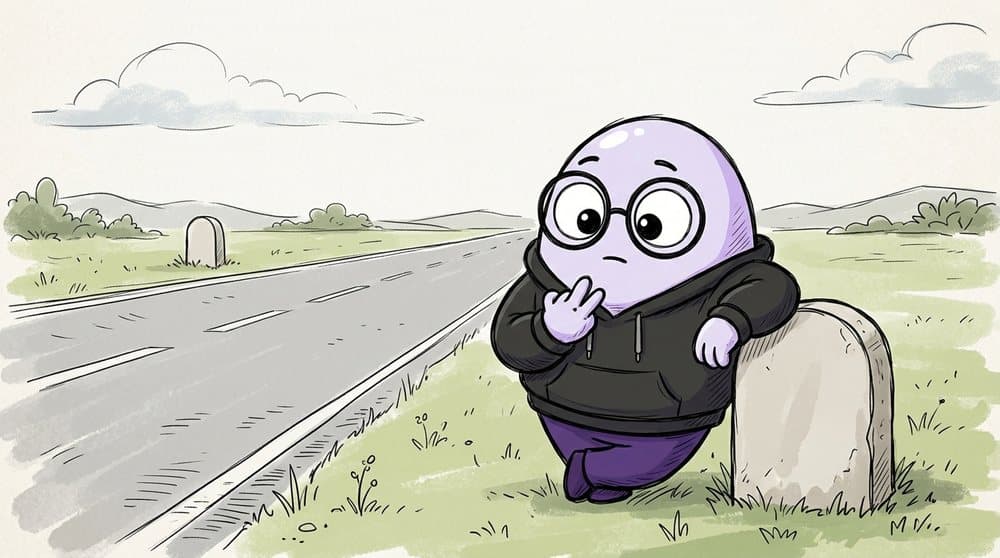
Think of it like this
Milestones on the highway
Driving from Mumbai to Pune, you don't measure the distance between two towns with a tape. You read the milestones: stone at km 120 minus stone at km 75 gives 45 km. A prefix sum array is a row of milestones, so any stretch is just one subtraction.
Watch it happen
Prefix sums of daily sales
1/4Units sold over five days. We want fast answers to 'how many sold from day i to day j?'.
The big ideas
What you need to know
Prefix sums
One O(n) pass lets you answer any range-sum question in O(1). Great for subarray sum problems.
Frequency counting
An int[26] for lowercase letters, or a HashMap<Character, Integer> for anything, solves anagram and first-unique problems.
Strings are immutable
s += c in a loop creates a new String each time, which is O(n²). Use StringBuilder and call toString() once.
equals, not ==
Compare string contents with equals(). == checks whether two variables point to the same object.
See it in code
Walk through the code
1import java.util.HashMap;2import java.util.Map;3 4public class ArrayStringProblems {5 // Prefix sums: answer any range-sum query in O(1)6 static int[] prefixSums(int[] nums) {7 int[] prefix = new int[nums.length + 1];8 for (int i = 0; i < nums.length; i++) {9 prefix[i + 1] = prefix[i] + nums[i];10 }11 return prefix;12 }13 14 // Frequency counting: are two lowercase words anagrams?15 static boolean isAnagram(String a, String b) {16 if (a.length() != b.length()) return false;17 int[] count = new int[26];18 for (int i = 0; i < a.length(); i++) {19 count[a.charAt(i) - 'a']++;20 count[b.charAt(i) - 'a']--;21 }22 for (int c : count) if (c != 0) return false;23 return true;24 }25 26 // HashMap: first character that appears only once27 static char firstUnique(String s) {28 Map<Character, Integer> freq = new HashMap<>();29 for (char c : s.toCharArray()) freq.merge(c, 1, Integer::sum);30 for (char c : s.toCharArray()) if (freq.get(c) == 1) return c;31 return '_';32 }33}1/4prefix has one extra slot so prefix[0] = 0 and the range formula needs no special case.
Three classic patterns. isAnagram("listen", "silent") is true and firstUnique("bharat") is 'b'.
Save yourself the pain
Common mistakes
Oops
Building a result with result += ch inside a loop.
Do this instead
Use StringBuilder sb = new StringBuilder(); sb.append(ch); then sb.toString() at the end.
Oops
Looping with i <= arr.length.
Do this instead
Valid indexes are 0 to length - 1. The extra step throws ArrayIndexOutOfBoundsException.
Oops
if (word == "java")
Do this instead
Use "java".equals(word). It compares contents and is safe even when word is null.
Your mission
Five warm-up problems
Quick check
Why is count[ch - 'a'] a valid index for lowercase letters?
Go deeper
- 1Solve 10 easy array and string problems on LeetCode.
- 2Learn the two pointers and sliding window patterns.
- 3Use char arrays or int[26] counters for fast character counting.
More topics at this stop
 Big-O Notation
 Two Pointers & Sliding Window
 Recursion & Backtracking
 Sorting & Binary Search
 Linked Lists
 Stacks & Queues
 Trees & Binary Search Trees
 Heaps
 Graphs (BFS & DFS)
 Dynamic Programming Basics

Stuck on this topic? Ask an Insider
Get 1:1 guidance from people who've walked this exact path — on the InsideEdge app.
