
PM vs Product Owner vs Project Manager
Part of the Product Management Roadmap
In short
Three job titles, all with "P" and "M", and companies mix them up constantly. Knowing the difference helps you read job posts and pick the right role.
A PM owns the 'why' and 'what' across a longer horizon, a Product Owner (a Scrum-specific role) owns the backlog for one team, and a Project Manager owns timelines and coordination — the titles blur heavily in practice.
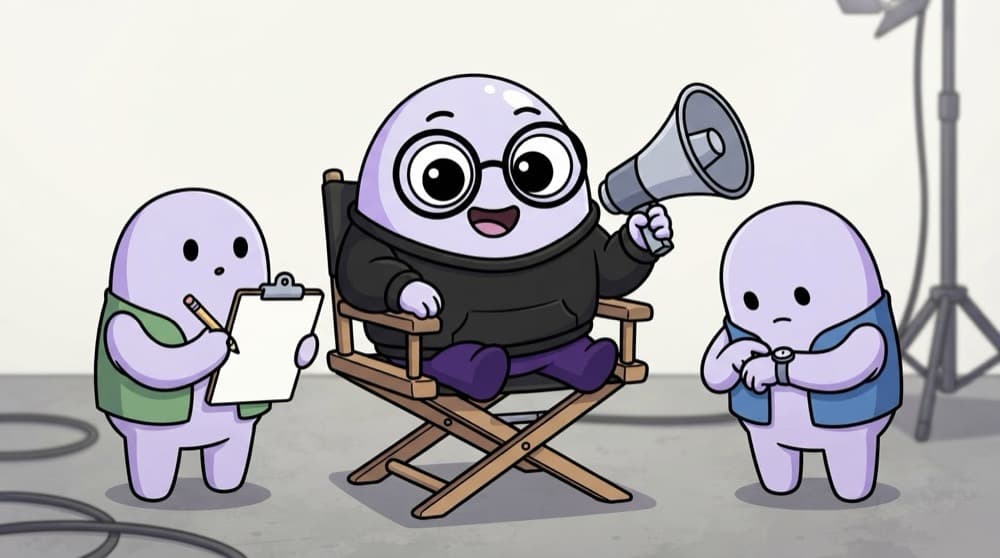
Think of it like this
The film set
The director decides what story the film tells and why. The assistant director runs today's shot list so the crew knows what's next. The line producer tracks money, dates and who is where. Same film, three very different jobs.
Watch it happen
Who owns what
1/5Every product needs a direction, a ready list of work, and a plan to deliver on time.
The big ideas
What you need to know
PM: why and what
Talks to users, studies data, sets direction for a product area over quarters, not just sprints.
PO: the backlog keeper
Comes from Scrum. Writes and orders user stories so one team always knows what to pick up next.
Project Manager: when and who
Owns schedules, budgets and coordination. Common in IT services, construction and large launches.
Titles blur in real life
Always read the responsibilities in a job post. Two "PM" roles can be completely different jobs.
Save yourself the pain
Common mistakes
Oops
Applying to every "PM" opening assuming they're all product roles.
Do this instead
Check the description. Words like Gantt chart, budget and delivery usually mean project management.
Oops
Thinking a Product Owner is a junior Product Manager.
Do this instead
PO is a role inside Scrum, not a level. A senior PM can also act as PO for their team.
Your mission
Decode three job posts
Quick check
A role's main duties are tracking milestones, managing vendor timelines and reporting delivery risk. Which title fits best?
Go deeper
- 1Compare 3 job descriptions across these titles and highlight overlapping responsibilities.
- 2Ask a working PM how their company actually splits these roles.
- 3Note that this distinction varies a lot by company size and industry.
More topics at this stop
 What Product Managers Actually Do
 Types of PMs (Growth, Platform, Technical, Core)
 The Product Lifecycle
 Startup PM vs Enterprise PM
 Product-Market Fit
 North Star Metric (Intro)
 The PM Career Ladder (APM → PM → Senior → Group → VP)
 A Day in the Life of a PM
 How Company Stage Changes the PM Role

Stuck on this topic? Ask an Insider
Get 1:1 guidance from people who've walked this exact path — on the InsideEdge app.
