
0-to-1 Product Design Case Study
Part of the UI/UX Design Roadmap
In short
No users, no screens, no data, just a fuzzy idea. A 0-to-1 project shows you can create structure out of ambiguity, which startups value a lot.
Design a brand-new product or feature from scratch, dealing with maximum ambiguity and no existing user base — showing you can create direction and structure from an open-ended problem.
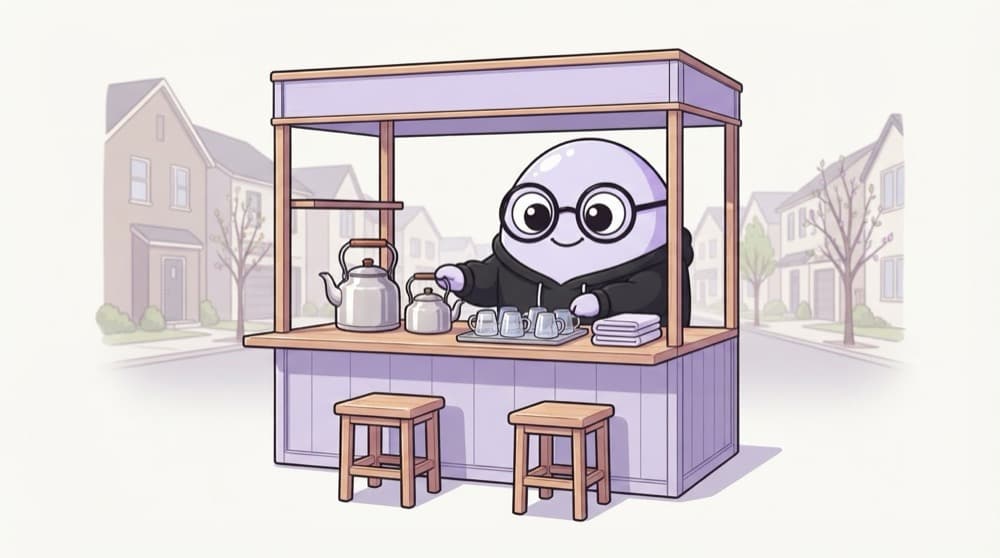
Think of it like this
Opening a chai stall in a new colony
The colony is new and nobody knows your stall. You don't build a big café first. You set up a small cart, test what time people come, which chai sells, and grow from there. A 0-to-1 product starts just as small.
Watch it happen
From fuzzy idea to first tested version
1/5Frame the problem: who has it, how they cope today and why it's worth solving.
The big ideas
What you need to know
Ambiguity is the test
Show how you made sense of an open problem. Your framing is as important as your screens.
Riskiest first
Test the assumption that would kill the idea, not the easy ones.
Ruthless scope
Show what you cut and why. Saying no is a big part of 0-to-1 design.
Next steps
End with what you'd test next. A 0-to-1 story is a beginning, not an ending.
See it in code
Walk through the code
1We believe that hostel students who cook together2will use a shared grocery list app3because they often buy the same things twice.4 5We'll know we're right when6at least 3 of 5 test groups add items7to one shared list within their first session.1/2Who, what they'll do, and the reason you believe it.
A hypothesis statement for your riskiest assumption. It turns 'I think people want this' into something you can actually test.
Save yourself the pain
Common mistakes
Oops
Designing 30 screens for every feature you can imagine.
Do this instead
Design the smallest flow that tests your biggest risk. Show the rest as a roadmap.
Oops
Skipping research because 'there are no users yet'.
Do this instead
Talk to people who have the problem today. They're your future users.
Your mission
Milestone 1: assumptions map
Quick check
In a 0-to-1 project, which assumption should you test first?
Go deeper
- 1Pick a genuinely unsolved problem, ideally one you've personally experienced.
- 2Show your research and validation process, since there's no existing product to reference.
- 3Be explicit about assumptions you'd want to test first if you built this for real.
More projects at this stop
 End-to-End App Design Case Study
 Website Redesign Case Study
 Design System Case Study
 Mobile App Case Study
 Accessibility Audit & Redesign
 Portfolio Website

Stuck on this topic? Ask an Insider
Get 1:1 guidance from people who've walked this exact path — on the InsideEdge app.
