
Document Analysis
Part of the Business Analyst Roadmap
In short
Before you book a single meeting, a lot of answers are already sitting in old documents, manuals and ticket logs. Reading them first makes your interviews sharper and shorter.
Reviewing existing documentation (old requirements, process manuals, system documentation) to understand current state before gathering new input — often surfaces requirements nobody thought to mention verbally.
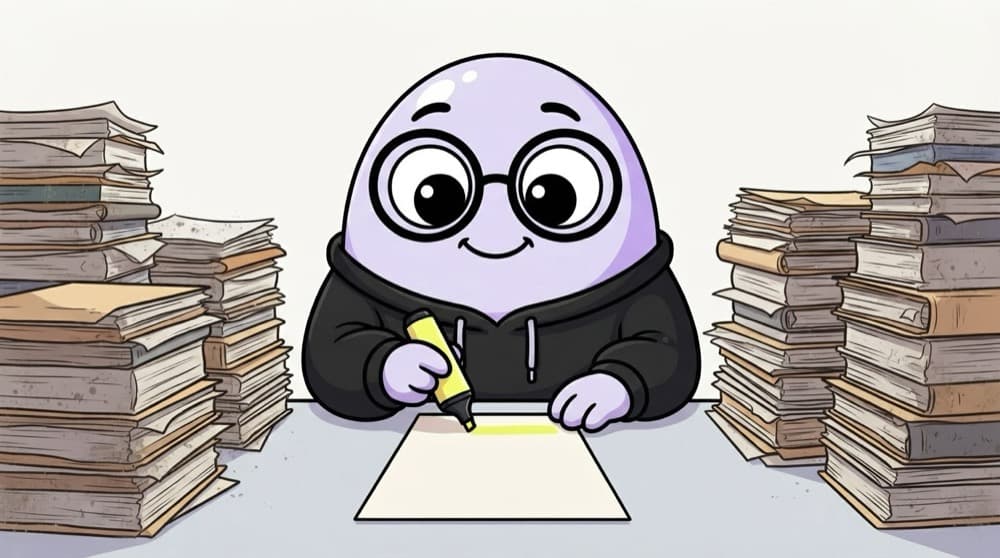
Think of it like this
Like solving past exam papers
Before the exam, you go through five years of question papers. You learn what's asked, what's repeated and what the syllabus quietly skips. Then when you meet the professor, you ask smart questions instead of 'what's in the exam?'
Watch it happen
What each document can tell you
1/6These are common sources a BA reads on a new project. Each answers a different question.
The big ideas
What you need to know
Learn the current state
Documents give you vocabulary, rules and system details so you don't waste stakeholders' time on basics.
Documents go stale
Manuals are often years out of date. Treat them as clues and confirm them with the people doing the work.
Extract, don't copy
Pull out rules, data fields, pain points and open questions into a simple list as you read.
Feed your interviews
Every unclear point becomes a sharp question: 'The manual says two approvals. Is that still true?'
Save yourself the pain
Common mistakes
Oops
Assuming the official manual is how work really happens.
Do this instead
Check it with observation or interviews. Gaps between the manual and reality are often the real requirements.
Oops
Reading everything end to end before starting.
Do this instead
Skim for structure, then dig into the parts linked to your problem. Note page references as you go.
Your mission
Analyse a real policy
Quick check
The process manual says invoices need two approvals, but staff say only one is used. What should you do?
Go deeper
- 1Practice reviewing a sample existing document and extracting implicit requirements from it.
- 2Learn why outdated documentation is a common, easy-to-miss source of misunderstanding.
- 3Understand this technique works best combined with interviews to confirm what's still accurate.
More topics at this stop
 Elicitation Techniques Overview
 Stakeholder Interviews
 Workshops & Facilitation
 Surveys & Questionnaires
 Observation & Job Shadowing
 Brainstorming Techniques
 Prototyping for Elicitation
 Focus Groups
 Choosing the Right Elicitation Technique

Stuck on this topic? Ask an Insider
Get 1:1 guidance from people who've walked this exact path — on the InsideEdge app.
