
Common Experimentation Pitfalls
Part of the Data Analyst Roadmap
In short
Most failed A/B tests don't fail on maths. They fail on process: stopping early, uneven groups, or checking twenty metrics until one looks good. Knowing the traps keeps your results honest.
Novelty effects (a change performs well just because it's new), seasonality, sample ratio mismatch, and running too many tests at once without correction — the recurring ways experiments mislead teams.
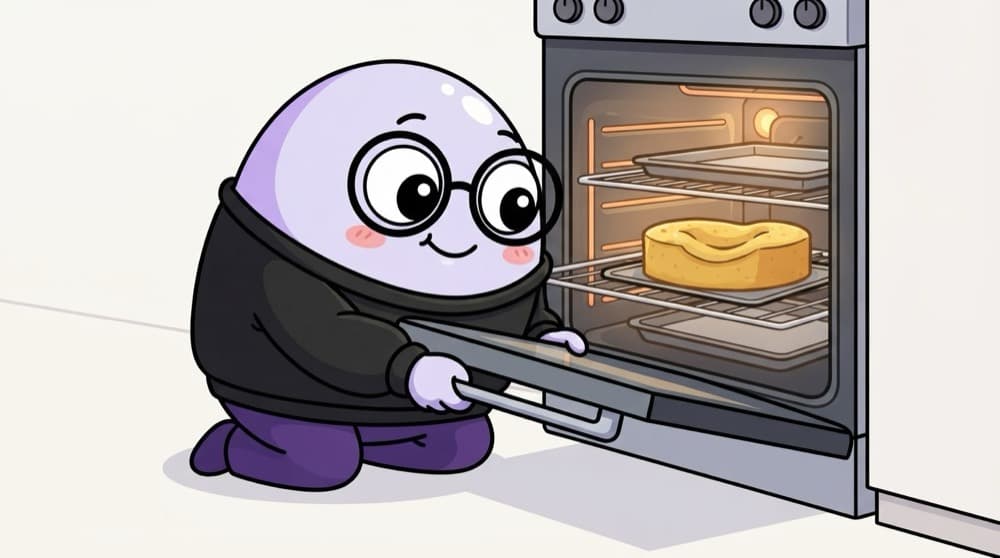
Think of it like this
Opening the oven too early
Open the oven every few minutes to check the cake and it sinks. You've changed the result by peeking. Checking an A/B test daily and stopping the moment it looks good does the same thing: you end up baking in a result that isn't really there.
Watch it happen
Where tests go wrong
1/5Underpowered: too few users to detect a realistic effect. A 'no result' tells you nothing.
The big ideas
What you need to know
Don't peek and stop
Fix the sample size in advance, or use a method designed for continuous monitoring.
Check the split
A chi-square test on group sizes catches broken assignment before you trust any metric.
Pre-register metrics
Primary and guardrails chosen before launch. Everything else is exploratory, labelled as such.
Watch for spillover
If A and B users interact, like riders and drivers sharing a market, one group affects the other.
See it in code
Walk through the code
1from scipy.stats import chisquare2 3a_users, b_users = 50_812, 48_9304total = a_users + b_users5expected = [total / 2, total / 2]6 7stat, p = chisquare([a_users, b_users], f_exp=expected)8print(f"split: {a_users/total:.1%} / {b_users/total:.1%}, p = {p:.2g}")9 10if p < 0.001:11 print("Sample ratio mismatch: investigate before reading results")1/3Users actually in each group, and what a perfect 50/50 split would be.
A sample ratio mismatch check. This 50.9/49.1 split looks small, but with this many users it's very unlikely by chance.
Save yourself the pain
Common mistakes
Oops
Stopping the test on day 3 because B is 'significant'.
Do this instead
Run to the planned sample size and full weeks. Early significance is often noise.
Oops
Ignoring a 53/47 split because 'it's close enough'.
Do this instead
Run an SRM check. An uneven split often means one group lost users due to a bug.
Your mission
See peeking in action
Quick check
A 50/50 test ends with 51,000 users in A and 47,000 in B. What should you do first?
Go deeper
- 1Learn the term 'novelty effect' and how a longer test duration helps detect it.
- 2Read about sample ratio mismatch (SRM) and why it can silently invalidate a test.
- 3List the pitfalls most likely to show up in your own team's testing process.
More topics at this stop
 Designing an A/B Test
 Sample Size & Test Duration
 Statistical Significance in A/B Tests
 Multivariate Testing (Overview)
 Reading an Experiment Readout
 Segmentation in Experiments
 Communicating Experiment Results

Stuck on this topic? Ask an Insider
Get 1:1 guidance from people who've walked this exact path — on the InsideEdge app.
