Chunking Strategies
Part of the AI Engineer Roadmap
In short
You can't embed a 200-page PDF as one vector and expect precise answers. You cut it into chunks first. How you cut decides whether retrieval finds the right paragraph or a useless half-sentence.
Splitting long documents into smaller pieces before embedding them — chunk size and overlap directly affect retrieval quality, and getting this wrong silently degrades a RAG system.
Think of it like this
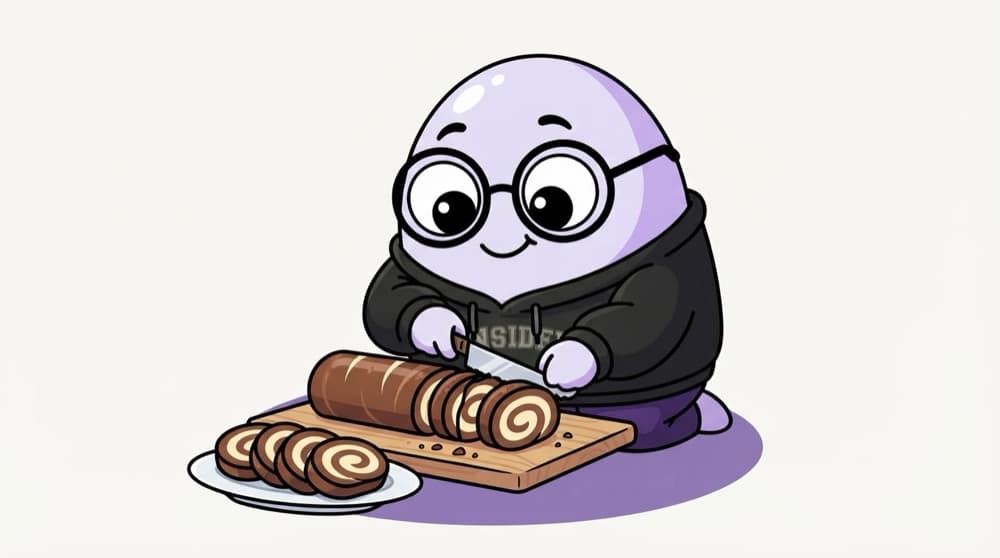
Slicing the swiss roll
Serve a whole swiss roll and nobody can eat it. Cut slices too thin and they crumble. Cut sensible slices, maybe with a little overlap so the swirl isn't lost, and every piece is complete. Chunking is slicing documents into pieces that each make sense alone.
Watch it happen
Fixed-size chunks with overlap
1/5A document of eight sentences. Each cell is one sentence.
The big ideas
What you need to know
Size is a trade-off
Small chunks are precise but lose context. Large chunks keep context but dilute the match. A few hundred tokens is a common start.
Overlap helps
A small overlap, like 10 to 20 percent, stops an answer being split across two chunks.
Respect structure
Split on headings, paragraphs or sections first. Recursive splitters fall back to sentences only when needed.
Carry metadata
Store the title, section and page with each chunk. It helps filtering and lets you cite sources.
See it in code
Walk through the code
1def chunk(text: str, size: int = 800, overlap: int = 150) -> list[str]:2 paras = [p.strip() for p in text.split("\n\n") if p.strip()]3 chunks, current = [], ""4 for p in paras:5 if len(current) + len(p) > size and current:6 chunks.append(current)7 current = current[-overlap:] # carry a tail forward8 current += ("\n\n" if current else "") + p9 if current:10 chunks.append(current)11 return chunks1/4Split on blank lines first, so paragraphs stay whole when possible.
A simple paragraph-aware chunker in characters. Libraries offer token-based and recursive splitters too.
Save yourself the pain
Common mistakes
Oops
Splitting every 500 characters, cutting sentences and tables in half.
Do this instead
Split on structure first: headings, paragraphs, then sentences. Keep tables and code blocks whole.
Oops
Choosing a chunk size once and never testing it.
Do this instead
Try two or three sizes on real questions and measure which retrieves the right chunk most often.
Your mission
Find the best chunk size
Quick check
Why add overlap between chunks?
Go deeper
- 1Compare retrieval quality across different chunk sizes on the same document set.
- 2Learn fixed-size, sentence-aware and semantic chunking strategies.
- 3Practice adding overlap between chunks to avoid splitting relevant context awkwardly.
More topics at this stop
 Embeddings & Semantic Search
 Vector Databases (Pinecone, Chroma, Weaviate, FAISS)
 RAG Architecture
 Hybrid Search (Keyword + Vector)
 Reranking
 Context Window Management
 Evaluating RAG Pipelines
 Knowledge Graphs (Overview)

Stuck on this topic? Ask an Insider
Get 1:1 guidance from people who've walked this exact path — on the InsideEdge app.
