
In short
Tokens, context windows, temperature, hallucination, RAG vs fine-tuning: interviewers now expect every AI engineer to explain these simply. Most candidates can use an LLM; fewer can say what it's actually doing.
A fast-growing interview category — expect questions on tokenization, context windows, RAG vs. fine-tuning, hallucination, and prompt engineering trade-offs.
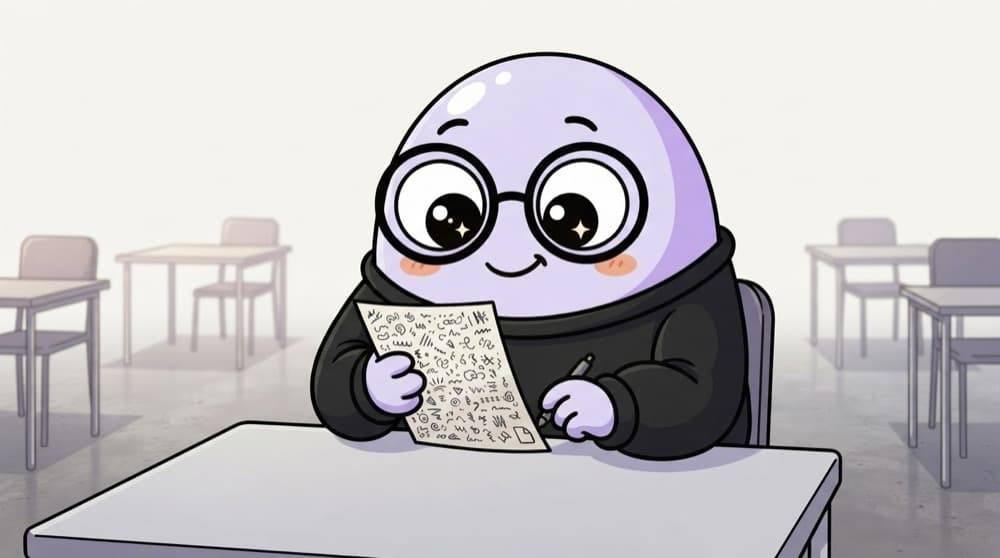
Think of it like this
One A4 sheet in the exam
Imagine an exam where you may bring one A4 sheet of notes. Everything you need must fit on that sheet; what doesn't fit, you can't use. That sheet is the context window. And when you don't know an answer but write something confident anyway, that's a hallucination.
Watch it happen
How an LLM writes one word
1/5Your prompt arrives as plain text: "Chai is ready, come".
The big ideas
What you need to know
Tokens, not words
Limits and pricing are in tokens. Other languages and code often use more tokens than English prose.
Temperature controls randomness
Low temperature picks likely tokens, good for extraction. Higher gives variety, good for brainstorming.
Hallucinations are built in
The model predicts plausible text, not checked facts. Grounding with RAG and asking for citations reduces it.
RAG vs fine-tuning
RAG adds fresh knowledge at question time. Fine-tuning changes behaviour, tone or format. Many systems use both.
See it in code
Walk through the code
1import numpy as np2import tiktoken3 4enc = tiktoken.get_encoding("cl100k_base")5ids = enc.encode("Chai is ready, come fast!")6print(len(ids), ids[:5]) # tokens, not words or characters7 8def sample_probs(logits, temperature):9 z = np.array(logits) / temperature10 p = np.exp(z - z.max())11 return p / p.sum()12 13logits = [2.0, 1.0, 0.1] # scores for three candidate next tokens14print(sample_probs(logits, 0.5)) # sharper: top token dominates15print(sample_probs(logits, 1.5)) # flatter: more random1/3Load a tokenizer and see how a sentence becomes token IDs.
Two ideas you can show in code: counting tokens with a real tokenizer, and how temperature changes the odds before a token is picked.
Save yourself the pain
Common mistakes
Oops
Saying temperature 0 makes the model accurate.
Do this instead
It makes output more repeatable, not more correct. A wrong answer at temperature 0 is just consistently wrong.
Oops
Treating context window and memory as the same thing.
Do this instead
The model only sees what's in this request. Chat apps fake memory by resending or summarising earlier messages.
Your mission
Explain five concepts simply
Quick check
A chatbot needs to answer questions about a product catalogue that changes daily. What's the best fit?
Go deeper
- 1Be ready to explain RAG vs. fine-tuning trade-offs clearly and with a concrete example.
- 2Practice explaining how a Transformer generates text token by token.
- 3Stay current — this area changes fast, so review recent developments before interviewing.
More technical at this stop
 ML Fundamentals & Math
 Deep Learning & Architectures
 System design (AI/ML)
 RAG & Vector Database Design
 Prompt Engineering Questions
 Model Evaluation & Trade-offs
 Debugging Model Performance Issues

Stuck on this topic? Ask an Insider
Get 1:1 guidance from people who've walked this exact path — on the InsideEdge app.
